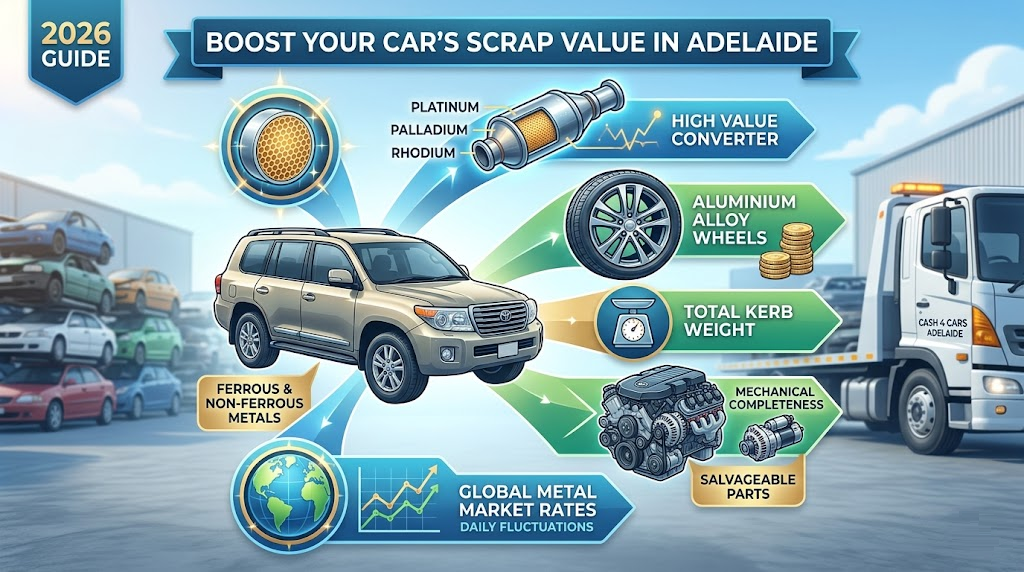
The most effective way to boost a vehicle’s scrap value in Adelaide is to ensure the car remains “complete” with its original catalytic converter and aluminium wheels intact. While the baseline price for an end-of-life vehicle depends on its weight in steel, the presence of precious metals and high-demand mechanical components significantly increases the final cash offer.
For vehicle owners across South Australia, from the northern suburbs of Salisbury to the southern reaches of Noarlunga, the scrap market operates on a fluctuating scale influenced by global metal exchange rates. Selling a car for scrap is a practical solution for disposing of “write-offs,” non-runners, or rusted shells that occupy valuable driveway space. Understanding the specific attributes that liquidators look for ensures you receive a quote that reflects the true market worth of the raw materials.
1. Total Kerb Weight and Metal Composition
A vehicle’s scrap value is primarily a calculation of its total weight multiplied by the current market rate for ferrous and non-ferrous metals. Heavier vehicles, such as the Toyota LandCruiser or Nissan Patrol, naturally command higher prices because they contain a greater volume of steel and iron.
To estimate your vehicle’s weight, refer to the manufacturer’s door placard or the owner’s manual. A standard compact hatchback typically weighs 1.2 tonnes, whereas a heavy-duty commercial van can exceed 2.2 tonnes. Scrap yards utilise weighbridges to provide precise measurements down to the kilogram, ensuring the transaction is based on quantifiable data.
- Ferrous Metals: These include steel and iron, which make up the bulk of the chassis and body panels.
- Non-Ferrous Metals: These are higher-value materials such as copper wiring, aluminium engine blocks, and brass fittings.
2. The Condition of the Catalytic Converter
The catalytic converter is the most valuable individual component in a scrap car due to the presence of 3 rare earth metals: platinum, palladium, and rhodium. Removing this part before the sale reduces the total scrap offer by $150 to $400 depending on the vehicle’s make.
Manufacturers design these components to filter exhaust gases, and as the rarity of these metals increases globally, so does the recycling value of the converter. European vehicles and hybrid models, such as the Toyota Prius, often feature larger or more metal-rich converters, making them highly sought after by Adelaide recyclers.
3. Presence of Aluminium Alloy Wheels
Aluminium wheels boost a car’s value because aluminium is more valuable than the standard pressed steel used for basic rims. A set of 4 aluminium alloy wheels adds approximately $60 to $120 to a scrap quote compared to a car fitted with steel “stock” wheels.
Many owners mistakenly replace alloy wheels with cheap steel alternatives before selling. This is counterproductive, as the weight and material premium of the alloys contribute more to the final price than a private second-hand sale often yields after accounting for the time and effort of listing them separately.
Comparison of Scrap Value Factors
| Factor | High Value Attributes | Low Value Attributes | Impact on Price |
| Vehicle Type | 4WDs, SUVs, Trucks | Hatchbacks, Coupes | High (Weight based) |
| Completeness | Engine and Gearbox present | Stripped shell | High |
| Wheels | Aluminium Alloys | Steel Rims / No Wheels | Medium |
| Electronics | Working GPS, ECUs, Sensors | Basic Analog systems | Low |
4. Mechanical Completeness and Salvageable Parts
A “complete” vehicle is one that contains its engine, transmission, and all major body panels, which allows the buyer to potentially salvage parts for the secondary market. If a car is “stripped” or “shelled,” the buyer treats it strictly as light-gauge steel, which carries a lower price per tonne.
Adelaide wreckers look for 5 specific salvageable items when determining if a car is worth more than its weight in scrap:
- Alternators and Starters: These contain significant copper windings.
- Transmissions: Functioning gearboxes are refurbished for resale.
- Body Panels: Undamaged doors and bonnets for popular models (like the Holden Commodore or Ford Falcon) are in high demand.
- Batteries: Lead-acid batteries have a stable, separate recycling value.
- Radiators: These are typically made of high-grade aluminium or copper-brass.
5. Current Global Metal Market Rates
The price of scrap metal in South Australia fluctuates daily based on the London Metal Exchange (LME) and local demand for recycled steel. In 2026, the push for sustainable manufacturing has kept the demand for recycled aluminium and copper at a 5-year high.
The location of the vehicle also influences the net value. To get the most competitive cash for cars service in Adelaide, ensure the vehicle is located in a spot accessible for a tilt-tray truck. Remote locations often require higher transport costs, which are subtracted from the gross metal value. Choosing a direct buyer like Cash 4 Cars eliminates middleman fees, as they operate their own fleet of 6 recovery vehicles across the metro area.
Pros and Cons of Scrap Disposal
Professional car removal provides a fast, legal way to clear property, though it differs from a private “collector” sale.
Pros:
- Immediate Removal: Vehicles are towed within 24 hours of a quote.
- Legal Protection: Professional buyers provide a “Notice of Disposal,” protecting the seller from future fines or registration issues.
- Environmental Responsibility: Fluids such as coolant and brake oil are drained and disposed of according to SA EPA guidelines.
Cons:
- Lower than Market Value: If a car is in perfect running condition, scrap value is usually lower than a private sale price.
- Fixed Pricing: Prices are non-negotiable once the weight and completeness are verified.
Target Audience and Situational Relevance
Scrap services cater to 3 specific types of Adelaide residents:
- Accident Victims: Owners of vehicles with chassis damage that makes them “statutory write-offs.”
- Estate Executors: People needing to clear deceased estate properties of non-functioning vehicles quickly.
- Home Renovators: Individuals clearing “project cars” that were never finished to make room for construction or landscaping.
Final Checklist to Maximize Your Quote
To ensure you receive the highest possible payout when the truck arrives, follow these 4 steps:
- Remove Personal Items: Check the glove box, under seats, and the boot for e-tags, paperwork, and spare change.
- Gather Documentation: Have your Photo ID and proof of ownership ready to speed up the transaction.
- Don’t Drain Fluids: Professional wreckers prefer to drain fluids at their facility to ensure 100% containment of hazardous chemicals.
- Check for “Hidden” Alloys: Even an old spare wheel in the boot could be an alloy that adds to the weight and material value.
By focusing on these factors, you transform a useless piece of machinery into a high-value source of recycled metal. Providing an accurate description of the car’s completeness allows you to lock in a price that reflects the current 2026 market peaks.
