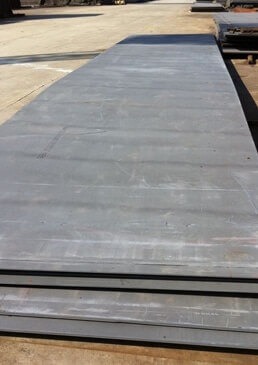
In the realm of industrial construction and engineering, selecting the right materials is paramount to ensuring the longevity and safety of structures. Among the various steel grades available, the S275JR plate stands out as a preferred choice due to its balanced properties of strength, weldability, and cost-effectiveness. This article delves into the significance of S275JR Plates in industrial projects, highlighting their characteristics, applications, and advantages.
Understanding S275JR Plate
What is S275JR Steel?
The S275JR plate is a non-alloy structural steel grade conforming to the European standard EN 10025-2. It is characterized by a minimum yield strength of 275 MPa, making it suitable for a wide range of structural applications. This grade of steel is primarily composed of carbon, with small amounts of manganese, silicon, and other elements, contributing to its overall properties.
Chemical Composition
The typical chemical composition of S275JR steel includes:
- Carbon (C): Up to 0.25%
- Manganese (Mn): Up to 1.60%
- Phosphorus (P): Up to 0.045%
- Sulfur (S): Up to 0.045%
- Silicon (Si): Up to 0.05%
These elements contribute to the steel’s strength, ductility, and weldability, making it versatile for various applications.
Mechanical Properties of S275JR Plate
Yield Strength
The yield strength of S275JR steel is a minimum of 275 MPa, indicating the stress at which the material begins to deform plastically. This property ensures that structures can withstand significant loads without permanent deformation.
Tensile Strength
S275JR steel exhibits a tensile strength ranging between 430 MPa and 580 MPa, depending on thickness. This high tensile strength allows the material to resist breaking under tension, which is crucial for structural integrity.
Ductility and Toughness
The steel’s ductility allows it to undergo significant plastic deformation before rupture, making it ideal for applications where flexibility is required. Additionally, its toughness ensures resistance to impact and shock loading, enhancing the safety of structures.
Advantages of Using S275JR Plate in Industrial Projects
1. Cost-Effectiveness
Being a low-carbon steel, S275JR is relatively inexpensive compared to higher alloy steels. This cost-effectiveness makes it an attractive option for large-scale industrial projects without compromising on quality.
2. Excellent Weldability
S275JR steel exhibits excellent weldability, allowing for the fabrication of complex structures without the need for preheating or post-weld heat treatment. This property simplifies the construction process and reduces labor costs.
3. Good Formability
The material’s formability enables it to be easily shaped into various profiles, such as beams, plates, and sections, facilitating its use in diverse structural applications.
4. Availability and Versatility
S275JR plates are widely available in various thicknesses and dimensions, ensuring their suitability for a broad range of applications, from residential buildings to large-scale industrial facilities.
Applications of S275JR Plate
Construction Industry
In the construction sector, S275JR plates are extensively used for:
- Building frames: Providing structural support for buildings.
- Bridges: Ensuring the stability and safety of bridge structures.
- Tanks and containers: Fabricating storage units for various materials.
Engineering and Manufacturing
S275JR steel is utilized in:
- Machinery bases: Offering a solid foundation for machinery.
- Chassis components: Providing structural integrity to vehicles.
- General fabrication: Serving as a base material for various fabricated products.
Oil and Gas Industry
In the oil and gas sector, S275JR plates are used for:
- Offshore platforms: Withstanding harsh marine environments.
- Pipeline construction: Ensuring the safe transport of materials.
Considerations When Using S275JR Plate
Corrosion Resistance
While S275JR steel offers moderate resistance to corrosion, it may require protective coatings or treatments when exposed to aggressive environments, such as coastal areas or chemical plants.
Strength Limitations
For applications requiring higher strength, such as heavy-duty machinery or high-rise buildings, alternative steel grades like S355JR may be more appropriate due to their superior strength properties.
Conclusion
The S275JR plate is a reliable and versatile material that ensures strength and reliability in industrial projects. Its balanced properties of strength, weldability, and cost-effectiveness make it a preferred choice for various applications in construction, engineering, and manufacturing. By understanding its characteristics and appropriate applications, engineers and fabricators can effectively utilize S275JR steel to create durable and safe structures.
