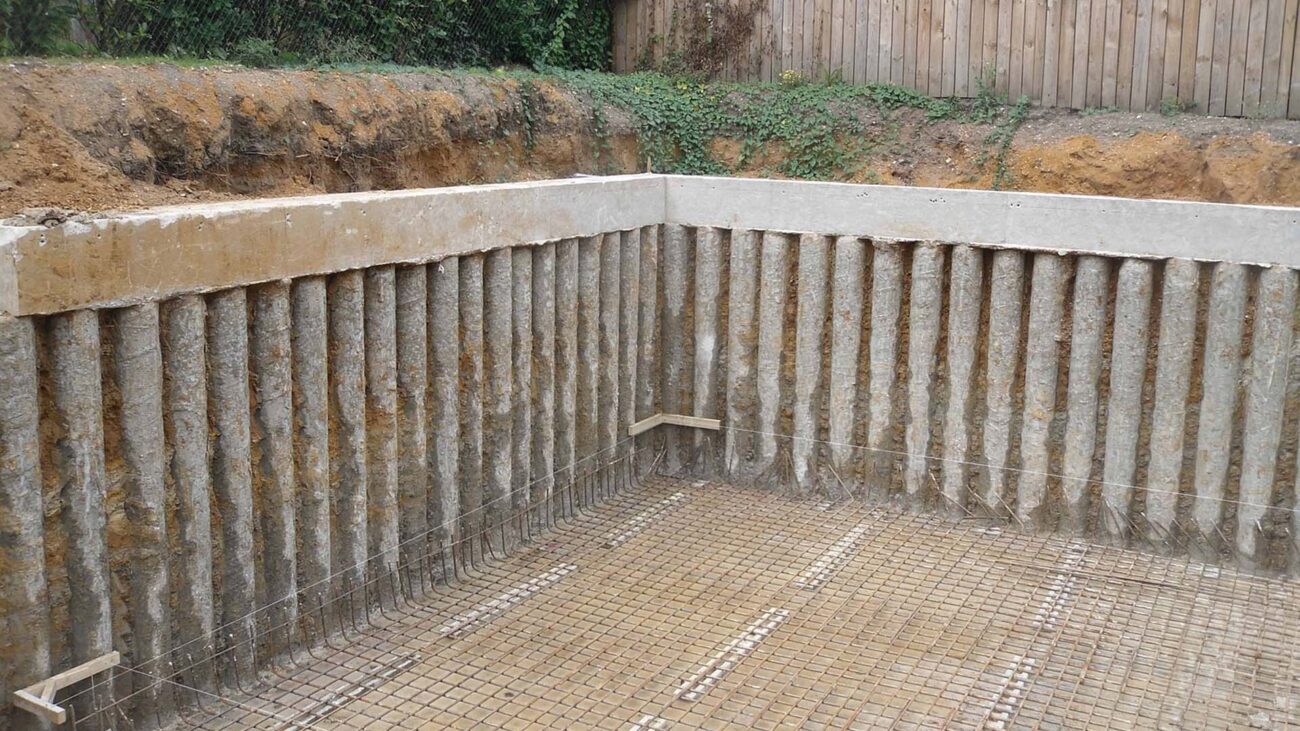
Contiguous Wall:
When it comes to deep excavations or basement construction, two popular retaining wall systems used in modern construction are contiguous pile walls and bored pile walls. Both are designed to provide lateral support, prevent soil collapse, and stabilise structures adjacent to excavated areas. However, while they share similar functions, they differ in their construction processes, time requirements, and labour needs.
Understanding Contiguous and Bored Pile Walls
Before comparing time and labour aspects, it’s important to understand what each wall type involves.
A contiguous pile wall is a retaining wall formed by drilling a line of bored piles with small gaps (typically 100mm–150mm) between adjacent piles. The gaps are left open or filled with lean concrete, depending on the design requirements. These walls are ideal for retaining dry or cohesive soil, where water ingress is minimal.
On the other hand, a bored pile wall, often referred to as a secant pile wall when piles overlap, is formed by drilling piles that either touch or interlock with each other. This type of wall offers greater strength and water-tightness, making it suitable for sites with high groundwater levels or where excavation depths are substantial.
Construction Time Requirements
The construction time for contiguous and bored pile walls depends on several factors, including pile diameter, wall length, ground conditions, site access, and the efficiency of the equipment used. However, some general comparisons can be made.
Contiguous Pile Wall – Faster Installation
Contiguous pile walls typically take less time to construct compared to bored pile walls. Since there is a small gap between piles, less drilling is required overall, and fewer piles are needed per linear metre.
For example, installing a contiguous wall for a medium-sized basement (approximately 100 metres in length and 10–12 metres deep) may take 3 to 4 weeks, depending on soil conditions and any weather-related interruptions.
Each pile usually requires about 1–2 hours of drilling time, depending on the diameter (commonly 450mm–750mm). The process involves:
- Setting out pile locations
- Drilling each pile
- Placing reinforcement cages
- Pouring concrete immediately after drilling
Because the piles are spaced apart, overall drilling and concreting volume is reduced, saving several days or even weeks on larger projects.
Bored (Secant) Pile Wall – Longer Construction Duration
Bored pile or secant walls, however, take more time to complete. The piles must be constructed closer together, often overlapping, and in many cases, secondary piles need to be cut into the previously installed primary piles.
For a similar wall length and depth as above, a bored pile wall could take 4 to 6 weeks or more. The main reason for the increased duration is the precise alignment required between piles and the need for continuous quality monitoring.
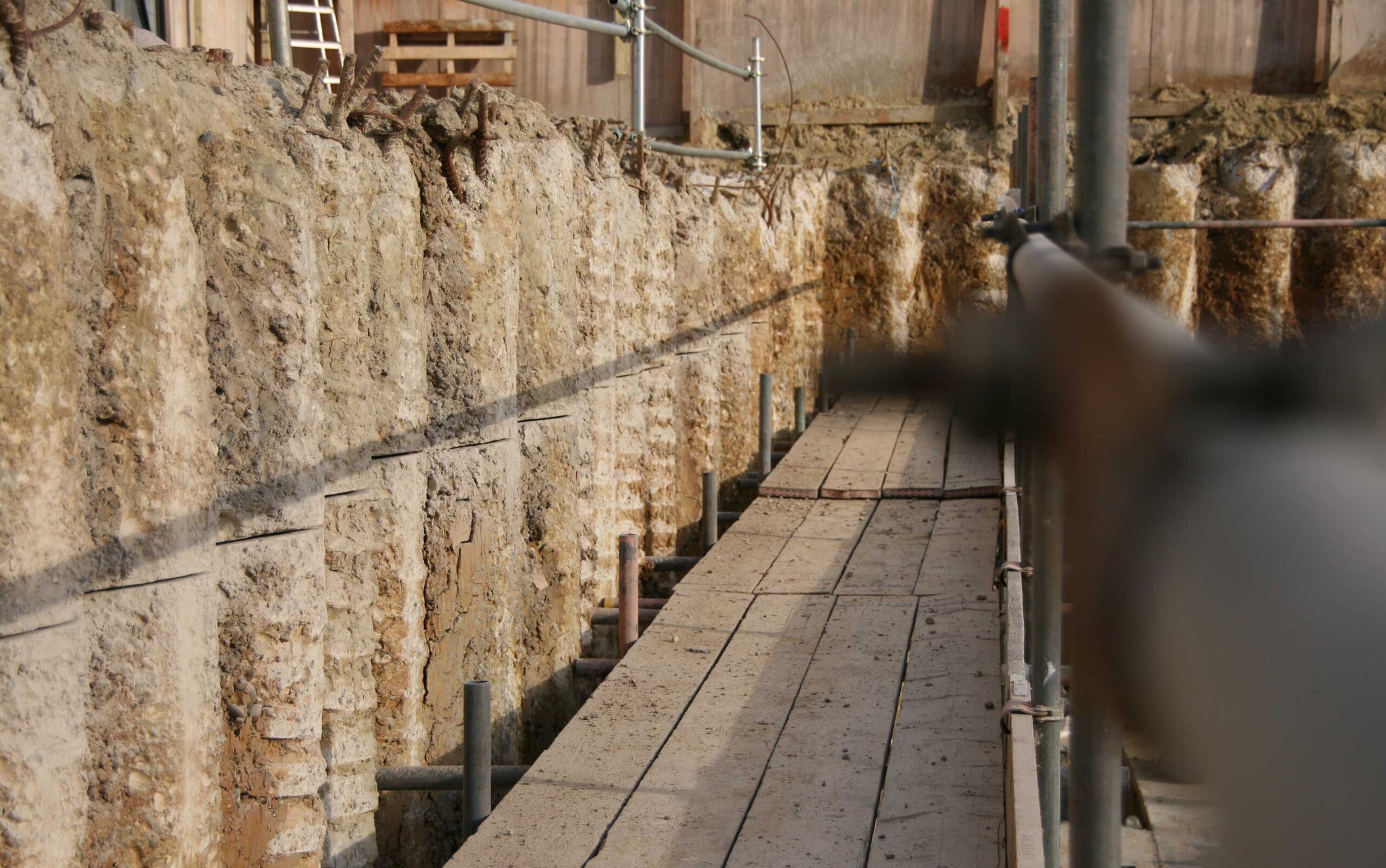
The sequence usually involves:
- Drilling and concreting alternate primary piles
- Allowing concrete to set for at least 24–48 hours
- Drilling secondary piles that interlock with primaries
- Inserting reinforcement and pouring concrete again
This two-phase process increases both the total duration and labour time. However, it ensures a more watertight and structurally robust wall suitable for deeper or wetter ground conditions.
Labour Requirements
The manpower needed for contiguous and bored pile walls also varies according to project size and site constraints.
Labour Requirement for Contiguous Pile Walls
A typical contiguous pile wall project requires a moderate-sized team working in coordination. Key personnel include:
- 1 Site engineer or foreman – supervising layout and progress
- 1–2 drilling rig operators – managing the equipment
- 2–3 general labourers – handling reinforcement and concrete pouring
- 1 concrete pump operator and 1 mixer driver – managing concrete delivery
In total, around 6–8 workers can complete the installation process efficiently on a medium-sized project. Since the work is straightforward and repetitive, the team can achieve a good rhythm, resulting in faster progress per day.
The workforce may operate in two shifts if the project is under time constraints. On average, 6–10 piles per day can be completed, depending on site efficiency and drilling conditions.
Labour Requirement for Bored or Secant Pile Walls
The bored pile or secant pile wall system demands slightly more skilled and technical labour. The precision of drilling and alignment is crucial, necessitating close supervision and regular equipment calibration.
A standard team may include:
- 1 senior site engineer – managing sequencing and accuracy
- 2 rig operators – alternating for continuous drilling
- 2–4 skilled labourers – handling reinforcement cages and pile trimming
- 2 concrete crew members – overseeing pumping and curing
- 1–2 surveyors – checking alignment and pile overlap accuracy
In total, 8–12 personnel are often needed on-site daily. Additionally, because secondary piles cannot be drilled immediately after primary ones, part of the team may remain idle or switch tasks while the concrete sets. This idle time indirectly adds to the project’s overall labour cost.
Despite higher labour input, bored pile walls require experienced specialists rather than a larger unskilled crew. Their precision ensures long-term stability and minimal maintenance issues in the future.
Conclusion:
Both contiguous and bored pile walls serve crucial roles in modern construction, offering reliable support for deep excavations and basement works. While contiguous pile walls are faster and require fewer workers, bored pile walls demand more time and skilled labour due to their interlocking structure.
Ultimately, the choice depends on the project’s specific needs, soil conditions, and safety requirements. Balancing time, cost, and quality is essential — and with careful planning and the right contractor, both systems can be delivered efficiently and effectively.
Popular Types of House Siding for Modern and Traditional Homes
How Can You Refinish Engineered Hardwood Floors Without Damage
The Main Advantages of Biaxial Geogrid in Road Construction
Can CoolSculpting Fat Freezing Shape the Abdomen?
Who Is the No 1 Fashion Designer in India and What Makes Them Truly Iconic
