


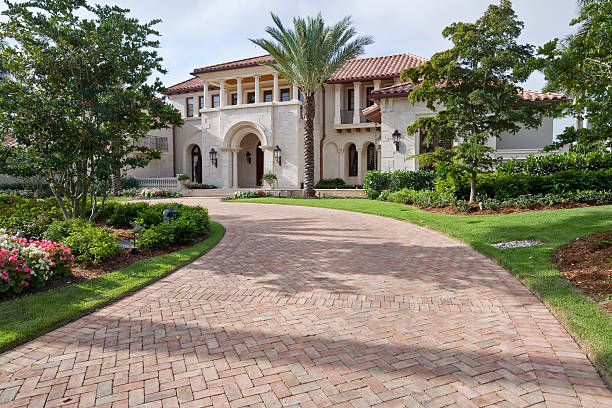
Brick pavers leading up to this beautiful estate home in Florida.
When it comes to upgrading your home’s exterior, using driveway travertine pavers offers one of the best combinations of beauty and functionality. These natural stone pavers elevate curb appeal, enhance durability, and deliver a timeless aesthetic that lasts. In this guest blog, we explore why travertine is an excellent choice for driveways, how it performs in diverse conditions, design tips, maintenance practices, and how to select the right installer for your project.
Why Choose Travertine for Your Driveway?
1. Natural Elegance & Visual Appeal
Travertine’s unique veining and tonal variations impart a sophisticated, luxurious look that concrete simply cannot match. Its warm, earthy hues complement landscaping and blend seamlessly with architectural styles ranging from Mediterranean to contemporary.
2. Long-Term Durability
Unlike typical paving materials that crack or degrade over time, travertine is highly resistant to heavy use and harsh climate conditions. Its dense yet porous structure helps absorb stresses without fracturing.
3. Slip Resistance & Safety
Because travertine has a naturally textured surface and absorbs moisture slightly, it offers enhanced traction even when wet. This makes it safer for driveways in rain or occasional spills.
4. Thermal Comfort
Travertine tends to remain cooler under sunlight compared to standard concrete or asphalt. Thus, walking on it is more comfortable, especially in hot climates.
5. Flexibility in Design
Travertine pavers come in multiple shapes, sizes, and finishes—such as tumbled, brushed, or honed—giving homeowners creative freedom. You can mix formats, incorporate borders, or create patterns that complement your home’s style.
Performance in Challenging Conditions
Driveways endure heavy vehicle loads, fluctuating temperatures, water runoff, and occasional oil or chemical spills. Here’s how travertine handles these:
- Weather Resilience: Travertine tolerates freeze-thaw cycles and resists UV-induced fading when sealed properly.
- Stain Resistance: Though naturally porous, when sealed, travertine becomes more resistant to stains from oils, sap, or chemicals.
- Maintenance Tolerance: Minor chips or scratches can often be repaired more seamlessly than with concrete.
- Resistance to Cracking: The stone’s structural integrity helps distribute loads, reducing the risk of cracks compared to monolithic concrete slabs.
Design Tips for a Stunning Travertine Driveway
Here are some best practices and ideas to guide your design:
- Choose complementary tones. Select travertine colors that harmonize with your roof, facade, and landscaping.
- Mix sizes and patterns. Combine rectangles, squares, or border strips to create visual interest.
- Include expansion joints. Leave proper gaps with flexible joint fillers to allow for expansion and settlement.
- Use contrasting borders. A darker or lighter travertine border frames the driveway and enhances definition.
- Ensure adequate base and drainage. A strong, compacted base with proper slope prevents shifting or water pooling under the surface.
Proper Installation & Best Practices
Even premium materials underperform if installed incorrectly. Key steps to ensure success:
- Site preparation & excavation: Remove unsuitable soil and bring the base to the right grade.
- Lay compacted base: Use crushed stone and compact it firmly for support.
- Set proper bedding: A screeded layer of sand or mortar helps seat the pavers uniformly.
- Place pavers precisely: Level each travertine piece and maintain consistent joint widths.
- Joint filling: Use polymeric sand or fine aggregates to lock pavers in place.
- Sealing: A high-quality sealer penetrates the stone and provides protection against stains and weathering.
- Final inspection & cleanup: Remove residue, check for unevenness, and confirm all edges are well supported.
Maintenance Tips to Extend Lifespan
- Regular sweeping & rinsing: Prevent debris buildup that can stain or scratch.
- Gentle cleaners only: Avoid harsh acids or bleach-based formulas—use stone-specific cleansers.
- Reseal every few years: Reapply a penetrating sealer when water no longer beads up on the surface.
- Prompt spill cleanup: Wipe oils or chemicals quickly to reduce absorption.
- Inspect for settling or movement: Re-grout or re-level pavers as necessary before issues worsen.
Choosing the Right Installer
Because installation is critical, follow these tips when selecting a contractor:
- Verify experience with travertine driveways. Stone requires different skills than typical pavers.
- Ask for a portfolio or references. See examples of completed driveways.
- Confirm use of quality materials. High-grade base, sealers, stone, and jointing products matter.
- Request a written process and warranty. A reliable company will stand behind its work.
In Conclusion
Upgrading your property with driveway travertine pavers is an investment in elegance, long-term performance, and curb appeal. With thoughtful design, expert installation, and proper upkeep, your driveway can remain a striking, functional feature of your home for decades.
For those seeking trusted professionals who understand every nuance of travertine installation and care, look no further than PUP Pavers and Turf—the same team behind the featured page—committed to delivering unmatched quality and results for your driveway and outdoor surfaces.
About the Author