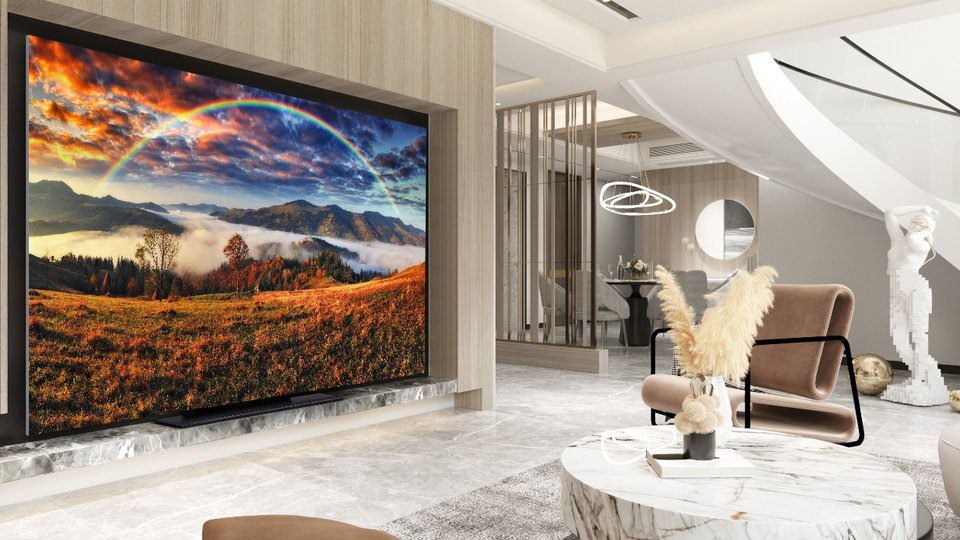
In the ever-evolving world of display technology, Direct View LED TVs have emerged as a game-changer, offering unparalleled brightness, contrast, and scalability. Once dominated by projectors and conventional video walls, the visual display industry is now witnessing a rapid shift toward Direct View LED (DVLED) solutions. But the question remains can these new-generation LED displays truly replace traditional projectors and video walls?
Let’s explore how Direct View LED Video Walls compare and whether they are ready to become the ultimate visual solution for both commercial and residential environments.
What Is a Direct View LED TV?
A Direct View LED TV is a type of display that uses light-emitting diodes (LEDs) to produce images directly on the screen, rather than relying on a backlight or projection system. Each pixel is an individual LED, capable of emitting its own light and color. This means better contrast, vibrant colors, and outstanding visibility even in bright environments.
Unlike LCD TVs or projectors that require light to pass through filters, Direct View LED Displays produce light directly from the source, resulting in clearer images, superior color accuracy, and higher brightness levels.
Direct View LED vs. Traditional Projectors
Projectors have long been the go-to choice for large-scale presentations, theaters, and educational setups due to their cost-effectiveness and portability. However, Direct View LED TVs are changing that narrative with their superior image quality and flexibility.
1. Brightness and Visibility
Projectors often struggle in brightly lit environments. Their visibility heavily depends on ambient light control. Direct View LED TVs, on the other hand, offer exceptional brightness levels sometimes exceeding 5,000 nits, making them ideal for both indoor and outdoor applications. Whether in a corporate lobby or a public venue, DVLED screens deliver crystal-clear visuals without dimming the lights.
2. Image Quality and Contrast
LED technology provides deeper blacks, higher contrast ratios, and vibrant colors. Projectors, especially older models, tend to lose clarity and sharpness over time. Direct View LED Video Walls maintain consistent performance with stunning visual impact, even after years of operation.
3. Maintenance and Longevity
Projectors require regular lamp replacements and calibration. In contrast, Direct View LED Displays boast longer lifespans, often exceeding 100,000 hours, with minimal maintenance needs. This long-term reliability reduces operating costs and downtime.
4. Scalability
A major advantage of Direct View LED Video Walls is modularity. Unlike projectors that are limited by lens throw and screen size, DVLED panels can be expanded to any dimension or aspect ratio, making them ideal for auditoriums, control rooms, and immersive digital experiences.
Direct View LED vs. Traditional Video Walls
Traditional video walls, typically made of multiple LCD panels, have served industries for decades. However, Direct View LED Video Walls are fast replacing them due to seamless design and advanced performance.
1. Seamless Visual Experience
LCD video walls have visible bezels between panels, which can distract from the viewing experience. Direct View LED Video Walls eliminate these gaps, offering a truly seamless, borderless visual canvas that enhances immersion.
2. Customization and Flexibility
With modular design and pixel-pitch options ranging from ultra-fine (for close viewing) to large-pitch (for outdoor use), Direct View LED Displays provide unmatched flexibility. They can be curved, flat, or even 3D, adapting to creative architectural needs.
3. Durability and Energy Efficiency
Unlike LCD panels, which can suffer from burn-in and color degradation, Direct View LED TVs are built for continuous operation. They are energy-efficient and designed to withstand heat, dust, and environmental challenges, making them suitable for retail displays, command centers, and entertainment venues.
Applications of Direct View LED Displays
The versatility of Direct View LED Displays allows them to serve across industries:
- Corporate environments: Large presentation displays, replacing both projectors and LCD screens.
- Retail and advertising: For eye-catching digital signage that draws attention.
- Broadcast studios: Offering high-resolution backdrops and virtual production environments.
- Entertainment and home theaters: With cinematic color reproduction and HDR capabilities, Direct View LED TVs bring true theater-quality visuals to living rooms.
- Control rooms and monitoring centers: For 24/7 performance with precision and reliability.
Are Direct View LED TVs the Future?
The answer is increasingly leaning toward “yes.” As costs decrease and fine-pitch technology advances, Direct View LED TVs are becoming more accessible. They combine the strengths of both projectors and traditional video walls, offering brightness, longevity, modularity, and stunning clarity in one package.
While projectors still hold a place for portable and cost-sensitive applications, and LCD video walls may be used where ultra-high pixel density is needed, Direct View LED Displays are steadily becoming the preferred choice for premium installations.
The move toward Direct View LED Video Walls represents not just a technological shift, but a visual revolution—one where quality, flexibility, and reliability define the viewing experience.
Final Words
Cinstar LED is a global leader in advanced Direct View LED Video Wall solutions, delivering exceptional display quality for events, retail, broadcast, and corporate environments. With cutting-edge technology, customizable designs, and reliable performance, Cinstar LED helps businesses transform visual communication into powerful brand experiences.
