

Build Smarter, Not Harder: Garden Shed Base
One of the most sensible improvements you may make is putting a shed in your garden. It can also be used as a workshop or hobby room and offers room to keep tools, appliances, or outdoor furniture. Before you start construction of the walls and roof, though, you must consider something less glamorous but utterly vital: the shed foundation.
A Shed Base is like a building without foundations if it lacks a suitable base. Initially, it might seem OK, but over time it will be afflicted by moisture, unsteadiness, or unequal flooring. Choosing the proper base could mean a shed still robust for decades rather than only a few years.
Why A Shed Base Matters
Three crucial responsibilities are performed by the foundation of a garden shed:
Stability: helps to level the shed and so stop it from leaning or sinking into soft ground.
Moisture Protection: Raising the shed above the ground and enhancing ventilation helps to lower the possibility of damp and decay.
Durability: A strong base helps to safeguard the shed structure and contents, therefore increasing the shed’s lifespan.
In essence, a shed base is a necessity rather than elective.
Types Of Garden Shed Bases
Garden shed bases come in a few distinct varieties. Depending on budget, ground conditions, and how permanent you want the foundation to be, each has benefits and drawbacks.
Concrete
The conventional material is concrete. It offers drawbacks: heavy labor, drying time, and high cost; yet, it establishes a rock solid basis. Once it is in position, it is everlasting.
Timber Frame
Though less robust, a timber base is quicker and less expensive than cement. Damp and pests compromise wood, hence it usually needs treating and may have to be replaced over time.
Paving Slabs
Slabs offer strong weight distribution and a sturdy base. They are, nevertheless, difficult to level, heavy to move, and usually demand more effort than homeowners anticipate.
Plastic Grids
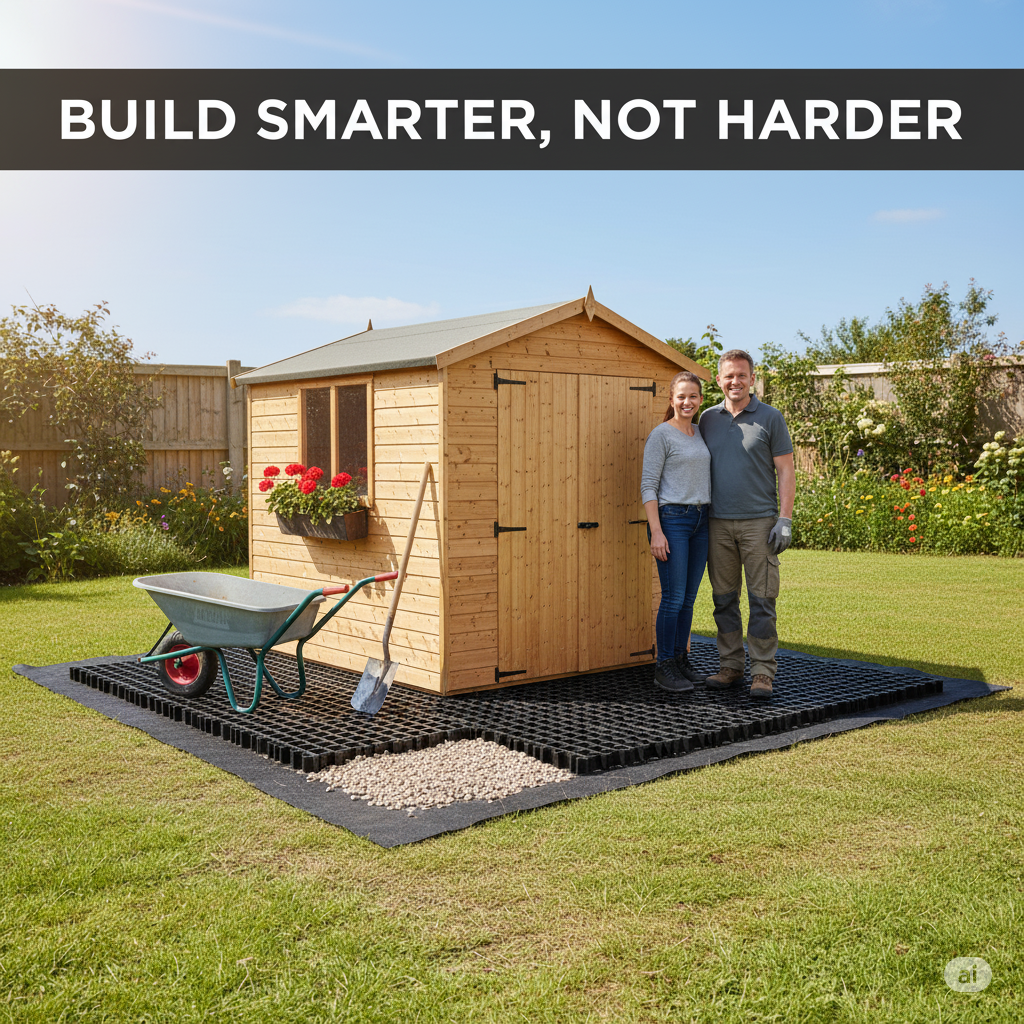
The contemporary solution are plastic shed bases. Usually recycled from sturdy, light plastic, these lock to create a stable surface. If you ever move your shed, they are simple to set up and give great drainage; moreover, they can be reused.
Benefits Of Plastic Garden Shed Bases
Plastic bases have grown more and more in popularity for evident reasons:
Lightweight: Simple to carry and manipulate without any specific tools.
Simple To Install: Panels that lock may be installed in a few hours.
Unlike wood, plastic won’t rot, distort, or draw insects; it is also weather resistant.
Eco-friendly: Many are constructed of recycled plastic, therefore lowering garbage output.
Good Drainage: The open grid design stops water from collecting under the shed.
Cost effective: With little maintenance needed, less expensive than concrete.
A plastic base strikes the ideal compromise of durability and simplicity for most gardening tasks.
Choosing The Right Base For Your Shed
Your requirements will determine the ideal foundation. Concrete might still be the ideal option if you’re constructing a heavy duty workshop that will remain in situ for decades. Usually the best solution if you want a dependable, low-maintenance choice you can install fast is a plastic base.
Though they demand greater maintenance or more labor for installation, timber frames and pavement slabs also work. Plastic Shed Base is most sensible for many homeowners searching for a simple, long-lasting solution.
Long-Term Value
Long life is one of the main benefits of a plastic base. Unlike concrete or decaying wood, it will not break. Once installed, it hardly needs any maintenance. If you choose to move or remove your shed, the panels can be lifted and repurposed somewhere else—something other kinds of bases do not allow. Read This
Conclusion
Constructing a shed does not necessarily call for costly concrete or backbreaking preparation. Your building will be stable, dry, and long-lasting thanks to the correct shed base. Although conventional techniques such concrete or paving slabs still find application, plastic shed bases are showing to be the wiser option for a lot of homeowners.
Offering a foundation designed to endure and simple to set up, they are light, strong, cheap, and environmentally friendly. Thus, bear in mind when it comes to your next garden project: start with the correct shed base and build smarter, not harder.
About the Author