In an age when supply chains are more dynamic than ever, businesses can’t afford to let something as small as a smudged barcode disrupt entire operations. The efficiency of a supply chain relies on precision — every scan, every tag, and every label must perform perfectly under pressure. That’s where thermal transfer labels for sale play a vital role. Designed to deliver consistent print quality and resist environmental wear, thermal transfer labels are the backbone of traceability and efficiency in modern logistics networks.
The Critical Role of Labeling in Modern Supply Chains
Every item that moves through a supply chain, from raw materials to finished goods, depends on a label for identification. A clear, readable barcode ensures that goods can be tracked seamlessly through manufacturing, warehousing, distribution, and retail. Yet, many companies underestimate just how much a label’s durability impacts operational performance.
Consider a busy fulfillment center where tens of thousands of items are processed daily. A faded barcode or torn label doesn’t just delay one shipment; it slows an entire workflow. Staff have to manually inspect items, reprint labels, or override scans — small inefficiencies that multiply quickly into lost hours and higher costs. Thermal transfer technology offers a simple but powerful way to prevent this. Its ability to create sharp, high-contrast images that remain legible despite handling, temperature swings, or chemical exposure makes it indispensable in fast-moving logistics.
Why Thermal Transfer Labels Deliver Lasting Results
To appreciate the value of thermal transfer labels, it helps to understand how they differ from other labeling methods. Unlike direct thermal labels, which darken when exposed to heat, thermal transfer labels use a ribbon to transfer ink onto the label material. This produces text and barcodes that are far more resistant to smudging, fading, and abrasion.
This process gives businesses greater control over print quality and longevity. In environments such as cold storage, outdoor yards, or manufacturing floors, where labels may encounter humidity, UV light, or friction, thermal transfer remains legible where others fail. The technology is particularly effective for long-life labels, asset tags, pallet labels, and product IDs, that must last months or years.
Thermal transfer labels also support a range of substrates, including polyester, polypropylene, and vinyl. These materials give companies flexibility to choose the right combination of appearance and durability for each application. It’s one reason industries such as pharmaceuticals, automotive manufacturing, and retail distribution rely so heavily on thermal transfer solutions.
Reducing Errors Through Durable Labeling
Barcode accuracy directly influences inventory accuracy. A single misread can cause a shipment to be misplaced, a return to be misrouted, or a delivery confirmation to fail. When hundreds of thousands of scans occur daily, even a one-percent error rate translates into major inefficiency.
Thermal transfer labels minimize those risks by maintaining their clarity from start to finish. In warehouse and distribution environments, where labels are applied early in the process, that resilience matters. Boxes stored outdoors or in varying temperatures often arrive at their destination after weeks in transit. With ordinary direct-thermal media, the labels might fade before they reach the retailer. Thermal transfer labels stay crisp, ensuring scanners capture data accurately, no matter the conditions.
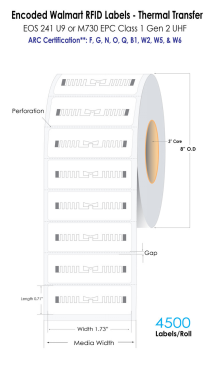
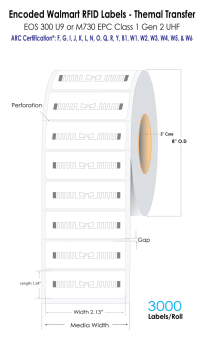
DuraFast Label Company provides a range of industrial-grade RFID and barcode labeling options suited to these demanding workflows. For instance, Walmart encoded RFID labels (2.13 × 1.34, thermal transfer) and Walmart encoded RFID labels (1.73 × 0.71, thermal transfer) are widely used by manufacturers and logistics providers that must meet Walmart’s RFID compliance requirements. These labels integrate RFID technology within a durable thermal transfer construction, combining visual barcode readability with encoded data tracking.
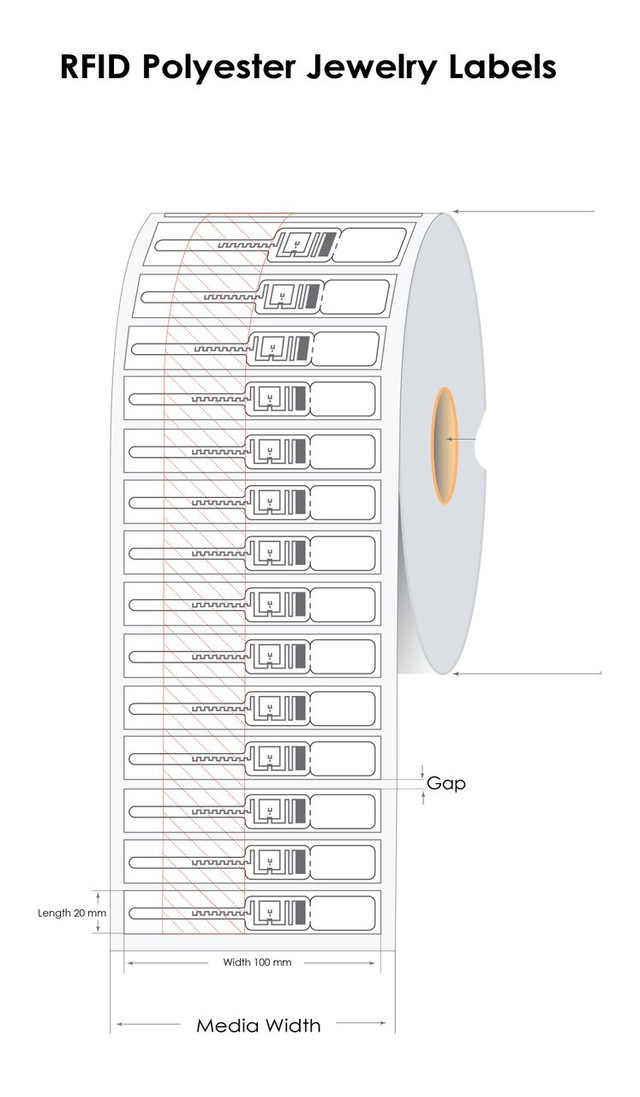
Similarly, specialized products such as 2.7 × 1-inch polyester UHF RFID jewellery tags demonstrate how precise printing and long-term durability can be achieved even on small, high-value items. Each of these options reflects the growing industry trend of merging durability with smart data capabilities — a critical step in improving end-to-end supply chain accuracy.
The Role of Printer Compatibility and Material Selection
The performance of a label depends not just on its material but on how it’s printed. When businesses buy thermal transfer printers, they should match the right ribbon type to their label media. Wax ribbons are ideal for paper labels used in controlled environments; wax-resin blends offer better smudge resistance for moderate conditions; and full-resin ribbons provide exceptional durability on synthetics like polyester and polypropylene.
Printer calibration is equally essential. Incorrect heat or pressure settings can produce faint or uneven images. By pairing premium ribbons with compatible materials, companies ensure that every label printed maintains the crisp definition that scanners require. It’s this harmony between printer, ribbon, and label that creates a reliable labeling system — one capable of scaling from a small warehouse to a multinational logistics operation.
Investing in quality equipment also helps prevent downtime. Printhead wear, ribbon wrinkles, and misfeeds can all result from poor-quality media. Using certified materials from reputable suppliers like DuraFast Label Company keeps operations running smoothly and reduces costly reprints or maintenance interventions.
Building a Resilient and Traceable Supply Chain
The value of durable labeling extends beyond operational efficiency. It directly supports compliance, traceability, and customer satisfaction. In industries governed by strict standards — such as food production, pharmaceuticals, and electronics — every item must be traceable back through the supply chain. A label that survives exposure, handling, and time ensures that traceability data remains intact.
In retail, RFID-enabled thermal transfer labels create new levels of visibility. Walmart’s ongoing initiative requiring RFID tagging across suppliers has accelerated adoption across the U.S. market. These tags allow real-time tracking of stock movement and faster inventory reconciliation at every node of the distribution network. Businesses that implement thermal transfer RFID solutions now are positioning themselves for smoother integration with major retailers’ systems and for compliance with emerging traceability standards.
There’s also an environmental benefit. Because thermal transfer labels don’t need frequent replacement, they reduce waste. Fewer reprints mean lower material usage and energy consumption over time, aligning with corporate sustainability goals — a growing priority across global supply chains.
Measuring the Return on Accuracy
Quantifying the benefits of durable labeling often reveals just how much efficiency gains can impact profitability. Companies that switch from standard direct-thermal labels to thermal transfer solutions often report a measurable drop in scanning errors and reprint frequency. Over a year, that can mean thousands of saved labor hours and significant cost avoidance.
Even more importantly, better labeling accuracy improves data reliability across warehouse management systems. When every item scan is accurate, downstream analytics — from forecasting to performance metrics — become more dependable. That data integrity fuels better planning and ultimately better customer satisfaction.
This is why many forward-thinking logistics leaders now view label performance as part of their digital transformation strategy. By modernizing labeling, they modernize data capture — a cornerstone of the connected, automated supply chain.
The Small Upgrade That Transforms Supply Chain Performance
Accuracy is the heart of every efficient supply chain, and thermal transfer labeling is one of the simplest ways to strengthen it. With robust materials, long-lasting print quality, and compatibility with emerging RFID technologies, these labels help ensure that every scan, shipment, and product movement is correctly recorded.
DuraFast Label Company continues to support manufacturers, logistics providers, and retailers with high-performance labeling systems that merge durability with innovation. To explore their full range of labeling and printing solutions, visit the Solutions page. For tailored recommendations and technical guidance on selecting the right thermal transfer labels for sale, contact DuraFast Label Company today.
About The Author
Jordan Ellis is a logistics technology writer with over a decade of experience covering labeling, automation, and warehouse optimization. He focuses on how innovative printing solutions help companies reduce errors and improve supply chain performance across industries.
