


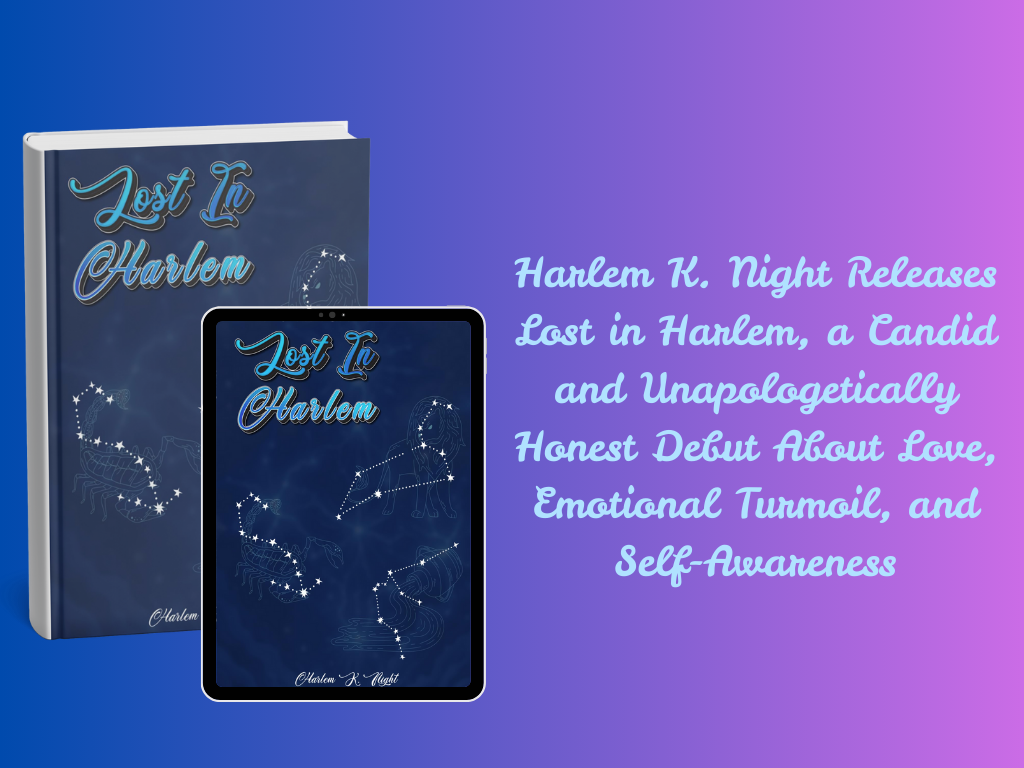
Harlem K. Night is proud to announce the release of Lost in Harlem, a deeply personal debut that captures the emotional turbulence of falling in love, losing it, and learning to understand oneself in the aftermath. Told through a dynamic blend of acts, introspective monologues, memory fragments, and emotionally charged scenes, the manuscript offers a rare, unfiltered glimpse into the mind of a young man navigating his most vulnerable experiences.
Rather than presenting a polished heroic version of himself, Harlem writes with genuine emotional exposure — revealing his flaws, fears, desires, regrets, and moments of clarity exactly as they unfolded.
A Structure Built From Emotion, Not Convention
In Lost in Harlem, Harlem abandons traditional narrative structure in favor of emotional truth. The story moves with the rhythm of memory and feeling, shifting between quiet reflection, raw internal dialogue, intimate confession, sudden realizations, and poetic cadence.
This style makes the book feel more like an emotional encounter than a scripted narrative, giving readers the chance to experience the journey in the same raw sequencing Harlem lived it.
The Subtle Origins of His Sensitivity
Although the book centers on adulthood, Harlem includes several understated but revealing glimpses into his early life:
- the absence of a brother who once shared his space
- the emotional distance he sensed from his mother
- the quiet stability of his father’s presence
These small details offer clarity about Harlem’s emotional makeup — why he feels deeply, why he longs for connection, and why he experiences heartbreak with such intensity.
Writing as His First Form of Understanding
Long before heartbreak changed the course of his life, Harlem turned to writing to understand himself. It wasn’t a career goal; it was a necessity — a way to process emotions too overwhelming to hold in silence. Writing became: his emotional anchor, his outlet for confusion, his way of breathing through pain, and the place where he could finally say what he truly felt. This emotional relationship with words shapes every page of the manuscript.
A Love Told Without Filters
At its emotional center, Lost in Harlem carries a love story that Harlem shares with striking honesty. He writes about the closeness, the chemistry, the trust, the physical pull, and the emotional vulnerability with a sincerity that feels rare and authentic.
He doesn’t try to make himself look perfect.
He doesn’t hide how deeply he cared.
He doesn’t downplay how much the relationship meant to him.
Readers feel the intensity of the love because Harlem isn’t afraid to reveal how fully he allowed himself to feel it.
Heartbreak That Arrives Quietly and Stays Loud Inside
The heartbreak in Lost in Harlem doesn’t arrive with fireworks — it unfolds subtly, painfully, and with emotional weight. Harlem lets readers into the private aftermath, the memories he replays, the regrets that surface slowly, the questions that don’t leave, the longing that lingers, the pieces of himself he must gather again. The honesty in this section stands out because it reflects how heartbreak actually feels — messy, slow, and deeply personal.
Act 3: The Emotional Core of the Book
Act 3 marks the turning point of Harlem’s emotional journey. In this section, he stops holding back and begins expressing truths he had avoided earlier, regret, apology, longing, self-awareness, and an aching honesty.
The tone becomes softer, more reflective, and more exposed. This act isn’t written for impact — it’s written because Harlem reached a moment where he couldn’t keep the words inside any longer.
QB: The Internal Voice He Confronts
One of the most compelling features of the manuscript is QB — a presence representing Harlem’s inner conflict and emotional shadow. QB embodies, impulsiveness, emotional confusion, self-doubt, and the parts of Harlem that resist change.
Their interactions bring psychological depth to the story, highlighting the push and pull between who Harlem is and who he is trying to become.
A City That Moves With His Emotions
Harlem — the city — weaves itself through the narrative like a second emotional pulse. Instead of focusing on the main landmarks, Harlem writes the city through the feeling and emotions it emits, giving a vivid and unique feel to the text surrounding the description of the city itself. Instead of focusing on landmarks, Harlem writes the city through its feeling, the noise, the creativity, the pressure, the beauty, the chaos, the intensity. The city’s rhythm mirrors Harlem’s internal world, making it feel like a character in its own right.
Contact:
Author: Harlem K. Night
Amazon: Lost in Harlem
Email: bradleyjackson730@gmail.com
About the Author