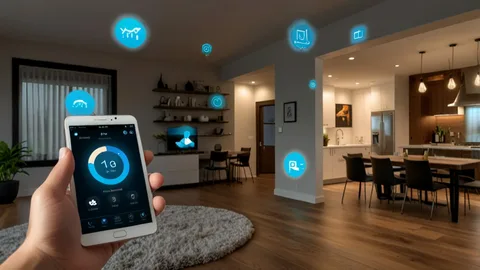
A well-executed smart home automation project turns scattered devices into a cohesive system that makes daily life easier, safer, and more energy-efficient. Smart home automation done right starts with clear outcomes, a resilient network backbone, deliberate device selection, predictable automation rules, and thorough commissioning. This guide walks you through planning, installation, security, commissioning, and long-term care so your smart home automation investment delivers value year after year.
Begin with outcomes, not gadgets
Too many projects begin with shopping lists and end in regret. The smartest approach is to define two or three outcomes—what you want the smart home automation to accomplish. Examples include cutting heating and cooling waste by a measurable percentage, simplifying evening routines for everyone in the household, providing secure short-term access for guests, or enabling accessible controls for a resident with mobility challenges. When the project is outcome-driven, every choice about thermostats, shades, locks, or sensors is evaluated based on whether it advances those goals. This keeps scope manageable and prevents feature creep that makes the system fragile.
Design the invisible backbone: network and power
The network and power choices you make early determine long-term reliability. Smart home automation depends on a strong wired backbone to an equipment closet and well-placed managed Wi-Fi access points. Cameras and high-bandwidth devices should prefer wired connections; mobile devices and many sensors will run over Wi-Fi. Segment IoT traffic on a separate VLAN or SSID to protect personal devices and simplify troubleshooting. For actuators and motors—motorized shades, garage doors, and frequently used locks—prefer hardwired power or low-voltage wiring over batteries; battery devices are great for flexibility but create an ongoing maintenance task. Investing in the backbone upfront saves repeated truck rolls and frustrated users later.
Choose devices and standards that give you options
When selecting hardware for smart home automation, prioritize interoperability and local control. Favor devices that support open or widely adopted protocols and standards so you can replace or upgrade components without redesigning the whole system. Controllers that run critical automations locally ensure that safety functions and access control continue to work even if cloud services are interrupted. For large projects, plan conduit or raceways and leave spare rack and switch capacity—small allowances make future upgrades painless and affordable.
Automation rules that people will actually use
Automation must be predictable and reversible. Start small with a handful of high-value scenes—arrival, away, night—and test them with the real household. People are far more likely to adopt automations that solve a daily annoyance than elaborate flows that require constant fine-tuning. Design automations using clear triggers (time, occupancy, sensor thresholds) and provide obvious manual overrides. Include a “pause automations” control so occupants can temporarily disable scheduled actions without losing their configuration. Over time, iterate based on actual usage data rather than assumptions.
Security and privacy are not optional
As you deploy smart home automation, treat cybersecurity and privacy as operational responsibilities. Change all default passwords during commissioning, enable two-factor authentication on cloud portals where available, and segment devices on separate networks. Document a camera and data-retention policy: define how long footage and logs are kept, who can access them, and how exports are handled. Keep a simple inventory of device serial numbers, firmware versions, and admin accounts so you can respond quickly to security advisories. A staged firmware update process—testing updates on a small pilot group before full rollout—reduces the risk of breaking automations across the home.
Commissioning: prove the system works under real conditions
Commissioning is the single most important technical phase of smart home automation. It validates that design intent translates to reliable operation. A commissioning pass includes a Wi-Fi heatmap while devices are active, execution of each automation scenario (including edge cases like internet outage or power loss), verification of sensor placement for representative readings, and baseline capture of logs and firmware versions. The installer should deliver a commissioning report documenting test results, signal strengths, and any adjustments made. That report becomes your baseline for future troubleshooting and warranty support.
Why commissioning matters more than component choice
Two identical lists of devices can produce very different outcomes depending on commissioning. Proper commissioning catches bad thermostat locations, weak Wi-Fi spots, miswired sensors, and rule conflicts that cause automation loops. It also teaches homeowners how to use the system and provides the documentation technicians need if something changes later. Skipping commissioning often converts a promising installation into a fragile one.
Handover and user training: make it approachable
Human factors matter. A clean handover includes a brief user training that shows everyday functions, how to create temporary guest access, and how to pause automations. Provide a concise admin guide for whoever will manage accounts, firmware updates, and device additions. Short how-to videos are especially effective for non-technical users. Without a good handover, even well-engineered smart home automation will under-deliver.
Maintenance and lifecycle care
Plan for maintenance. Battery-powered devices need scheduled replacement windows; motorized components benefit from periodic inspection; and firmware must be managed. Offer homeowners two sensible options: a self-managed checklist with reminders or a managed service that stages firmware updates, monitors device health remotely, and dispatches support for physical repairs. Either approach should include an annual review to re-commission critical automations and adapt rules to changing household habits.
Accessibility and inclusive design
Smart home automation is a powerful accessibility tool when designed intentionally. Include voice controls, large-format wall controls, automatic night lighting along routes, and simple one-touch scenes for routines. Test interfaces with intended users and adjust the layout and control surfaces until they are genuinely helpful. Accessibility gains are among the most meaningful outcomes a system can deliver.
Troubleshooting common issues and how to avoid them
When problems arise, work methodically. Validate the commissioning baseline first: check Wi-Fi signal strengths, compare firmware versions, and review automation logs to identify trigger chains. Common issues include overlapping automations that fight each other, poor sensor placement that yields noisy readings, and cloud-dependent automations that fail during outages. Keeping an organized inventory and a commissioning report shortens diagnosis and resolution times.
How to measure success and justify expansion
Measure smart home automation success against the outcomes you set at the start. If energy savings were a goal, compare utility data year-over-year and control for weather. If the goal was convenience, track the number of manual overrides or collect short user satisfaction surveys. Use these metrics to prioritize future phases and to demonstrate ROI to stakeholders or family members who decide on funding further upgrades.
Final thoughts
Smart home automation delivers the best returns when treated as infrastructure: define outcomes, build a resilient network and power backbone, choose interoperable devices, insist on commissioning, and plan for lifecycle maintenance. When these elements come together, the system becomes a reliable, invisible layer that improves comfort, security, and efficiency. Start small, measure results, and expand deliberately—this is how smart home automation becomes a lasting part of daily life rather than a short-lived experiment.
