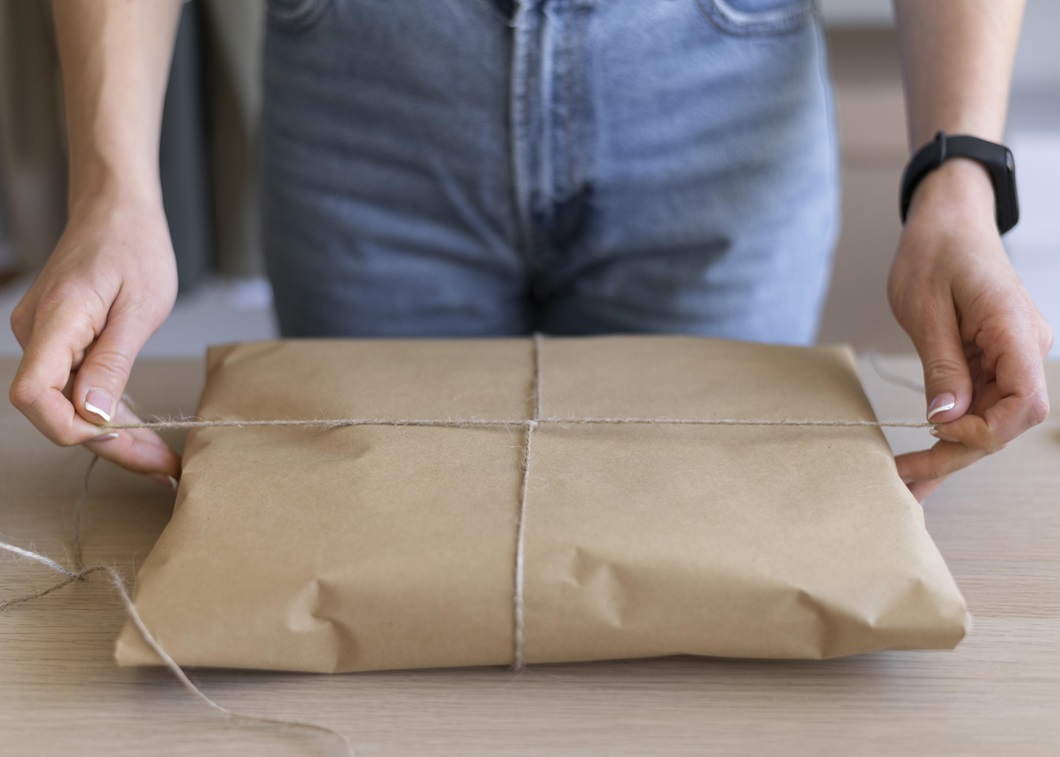
Most of us use whatever packaging we can find when sending packages, such as a large cardboard box or a thin postal envelope. However, have you ever considered the best option for your shipment? The decision between cardboard boxes and shipping envelopes may seem straightforward, but it can have a significant impact on several factors, including customer satisfaction, shipping costs, and product safety.
Knowing the differences between postal boxes, envelope packaging, bubble mailers, and other shipping materials can help you pack more efficiently, save money, and guarantee that your items arrive at their destination undamaged.
Let’s examine this subject in more detail to determine what best suits your shipping requirements, whether personal or professional.
The Basics: What are Shipping Envelopes?
Shipping envelopes, also known as bubble mailers or envelope packaging, are flexible, lightweight mailing solutions made for smaller, flatter, or less fragile items. Most likely, you have seen them when placing online orders for accessories, clothing, or paperwork.
Depending on the level of protection your item requires, these envelopes can be padded, non-padded, made of paper, or plastic. For example, bubble mailers have an inner bubble lining that protects fragile items, such as jewellery, electronics, and cosmetics, while they are in transit.
The greatest benefit? They are inexpensive, small, and convenient to store. Envelopes don’t need to be assembled or come with extra packing supplies, unlike cardboard boxes. All you need to do is insert your product, seal it, and you’re set to go!
Ideal for delivery:
- Soft goods, textiles, or clothing
- Books and documents
- tiny devices or add-ons
- Stationery or cosmetics
Paper-based envelope packaging is an excellent option if you’re looking for an environmentally friendly substitute because many of them are recyclable and biodegradable.
What Makes Cardboard Boxes Different?
For larger or delicate items, cardboard boxes are the best packaging choice. They are strong, stackable, and suitable for shipping electronics to home décor. You can select from various sizes and thicknesses based on your product’s weight and shape. Postal boxes are small but sturdy, perfect for storing valuable, small items that require support. They are reliable for long-distance or international shipping due to their resistance to external pressure, offering extra security against bumps, drops, or temperature changes.
Best for Shipping:
- Appliances and electronics
- Fragile décor or glass objects
- Retail shoes and boxed goods
- Several things are packed together.
Presentation is yet another critical benefit of cardboard boxes. If your business is online, a well-designed box can make the unboxing experience memorable for customers. A flat envelope can’t do that.
Size and Weight: Why It Matters
Consider the weight and size of your shipment when choosing between cardboard boxes and envelopes. Shipping envelopes or bubble mailers can save money on light items, as courier fees often depend on “volumetric weight.” Smaller, lighter packages cost less to ship. Envelopes are economical for small items because they are smaller and lighter than boxes. However, for large or irregular items, envelopes may lack sufficient protection, making cardboard boxes a better option. Their rigid design helps keep the product intact during transit.
As a quick guideline:
Items that are flexible, flat, or lightweight are typically packaged in bubble mailers or envelope packaging.
Items that are bulky, heavy, or fragile should be packaged in postal or cardboard boxes.
Durability and Protection: Which One Wins?
Cardboard boxes typically offer the best protection. Their multi-layered corrugated design protects your items from damage by absorbing impact. They can safely handle valuable or delicate items when used in conjunction with inner cushioning, such as foam or paper padding.
Nevertheless, padded envelope packaging and bubble mailers are not far behind. They are appropriate for less delicate products because their bubble-lined interiors can withstand mild bumps. When you want light protection without bulk, they work exceptionally well.
However, cardboard boxes are still the safer option if your item is susceptible to cracking, denting, or breaking when under pressure.
Pro tip: Before anything else, test-pack your product. Your item is safely packed if you can shake the box or envelope without hearing any movement inside.
Sustainability: Think Green
Sustainability considerations increasingly influence packaging choices. Cardboard boxes and envelopes can be eco-friendly, often made from recyclable or post-consumer waste. Recyclable or compostable bubble mailers and envelopes are now available, some of which use paper bubbles instead of plastic. Select recyclable packaging with water-based adhesives and minimal printing to align with eco-friendly goals.
Final Thoughts
In the shipping industry, both cardboard boxes and envelope packaging are essential, with the choice depending on your specific needs rather than one being superior to the other. Bubble mailers and shipping envelopes are lightweight and ideal for soft goods or small items with minimal cushioning. In contrast, cardboard and postal boxes are more reliable for heavier, delicate, or impactful items. Knowing these differences helps you ship smarter, protect better, and save money. When packing, consider the contents and select packaging that ensures customer satisfaction and product safety.
