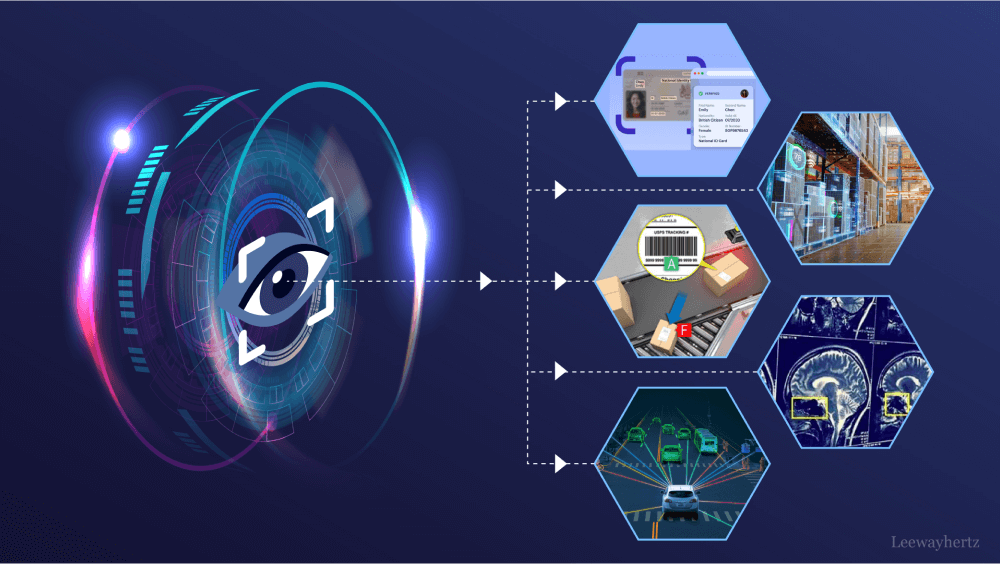
Computer vision development is transforming how digital systems interact with the physical world. By enabling machines to interpret images and video, computer vision bridges the gap between raw visual data and meaningful action. What once required human sight and judgment can now be performed at machine speed and scale, opening new possibilities across industries.
From recognizing faces in photos to detecting defects on factory lines, computer vision is no longer experimental—it is foundational. As visual data becomes one of the most abundant data types available, organizations that can harness it effectively gain a powerful competitive advantage.
The Evolution of Visual Intelligence
Early computer vision systems relied heavily on rule-based techniques. Engineers manually defined edges, shapes, and thresholds, which limited flexibility and accuracy. These systems struggled in real-world conditions where lighting, angles, and backgrounds constantly changed.
The rise of deep learning changed everything. Convolutional neural networks (CNNs) enabled systems to learn visual features directly from data. Instead of being told what to look for, models learned patterns on their own. This shift dramatically improved performance in image classification, object detection, and video analysis.
Today’s computer vision systems can recognize thousands of object categories, track motion across frames, and interpret complex scenes with remarkable precision.
Core Components of Computer Vision Development
At its foundation, computer vision development involves several interconnected components. Data collection is the first step. High-quality images or videos, captured under realistic conditions, form the backbone of any successful system. Poor or biased data leads to unreliable outcomes, regardless of model sophistication.
Data labeling follows, where visual elements are annotated to teach the model what it should learn. This process requires domain knowledge and consistency, especially in specialized applications like medical imaging or industrial inspection.
Model selection and training come next. Developers choose architectures based on the problem—classification, detection, segmentation, or tracking. Training involves optimizing model parameters so the system generalizes well to new, unseen data.
Finally, deployment and optimization ensure that models perform efficiently in real environments, whether on cloud servers, edge devices, or embedded systems.
Real-World Applications Driving Adoption
Computer vision is impacting nearly every major industry. In manufacturing, vision systems inspect products at high speed, identifying defects that humans might miss. This improves quality control while reducing waste and costs.
Retailers use computer vision to analyze customer behavior, manage inventory, and enable cashier-less checkout experiences. By understanding how shoppers move and interact with products, businesses can optimize store layouts and personalize experiences.
Healthcare applications include medical image analysis, such as detecting tumors in scans or monitoring patient movement. These systems support clinicians by providing faster insights and reducing diagnostic variability.
Transportation and logistics rely on computer vision for traffic monitoring, autonomous vehicles, and warehouse automation. Vision-enabled systems improve safety, efficiency, and real-time decision-making.
To bring these solutions from concept to production, many organizations rely on specialized computer vision development services that tailor models to specific environments, constraints, and business objectives.
Handling Complexity in Visual Data
Visual data is inherently complex. Images vary in resolution, lighting, perspective, and noise. Videos introduce additional challenges such as motion blur and temporal consistency. Effective computer vision development requires addressing these factors through preprocessing, data augmentation, and robust model design.
Edge cases are particularly important. A system trained only on ideal conditions may fail in real-world scenarios. Developers must anticipate variability and ensure models remain reliable under changing conditions.
Continuous evaluation and retraining help maintain performance over time, especially as environments evolve or new data patterns emerge.
Integration with Broader AI Systems
Computer vision rarely operates in isolation. It often feeds into larger AI pipelines that include natural language processing, predictive analytics, or decision intelligence systems. For example, a vision system may detect an object, while downstream logic determines the appropriate action.
This integration transforms visual recognition into operational intelligence. In smart cities, vision systems detect traffic incidents, triggering automated alerts and responses. In agriculture, crop monitoring systems analyze images and inform irrigation or harvesting decisions.
By embedding vision into broader workflows, organizations unlock greater value from their visual data.
Ethical and Practical Considerations
As computer vision becomes more pervasive, ethical considerations grow in importance. Applications involving surveillance or facial recognition raise questions about privacy, consent, and data security. Responsible development requires transparency, bias mitigation, and compliance with regulations.
Practical concerns also matter. Systems must balance accuracy with efficiency, especially on edge devices with limited resources. Deployment environments may impose constraints that influence model design and architecture choices.
Addressing these factors early reduces risk and increases long-term sustainability.
The Role of Human Expertise
Despite advances in automation, human expertise remains essential. Domain specialists guide data selection, interpret results, and validate system behavior. Human oversight ensures that models align with real-world needs and ethical standards.
Rather than replacing human judgment, computer vision augments it. By handling repetitive or high-volume visual tasks, systems free experts to focus on analysis, strategy, and decision-making.
This collaboration between humans and machines defines the most successful implementations.
Future Directions in Computer Vision Development
The future of computer vision lies in greater adaptability and multimodal understanding. Models will increasingly combine visual data with text, audio, and sensor inputs to build richer representations of the world.
Edge AI will continue to grow, enabling real-time vision processing on devices without constant cloud connectivity. Advances in self-supervised learning may reduce reliance on labeled data, making development faster and more scalable.
As these trends converge, computer vision will move from perception to deeper understanding, enabling systems that not only see but reason about what they observe.
Conclusion
Computer vision development is reshaping how machines perceive and interact with their surroundings. By transforming visual data into actionable insights, it enables automation, improves accuracy, and unlocks new forms of intelligence across industries.
Organizations that invest in robust, responsible, and scalable vision systems position themselves to thrive in a world increasingly driven by visual information. As technology continues to evolve, computer vision will remain a cornerstone of intelligent digital transformation.
