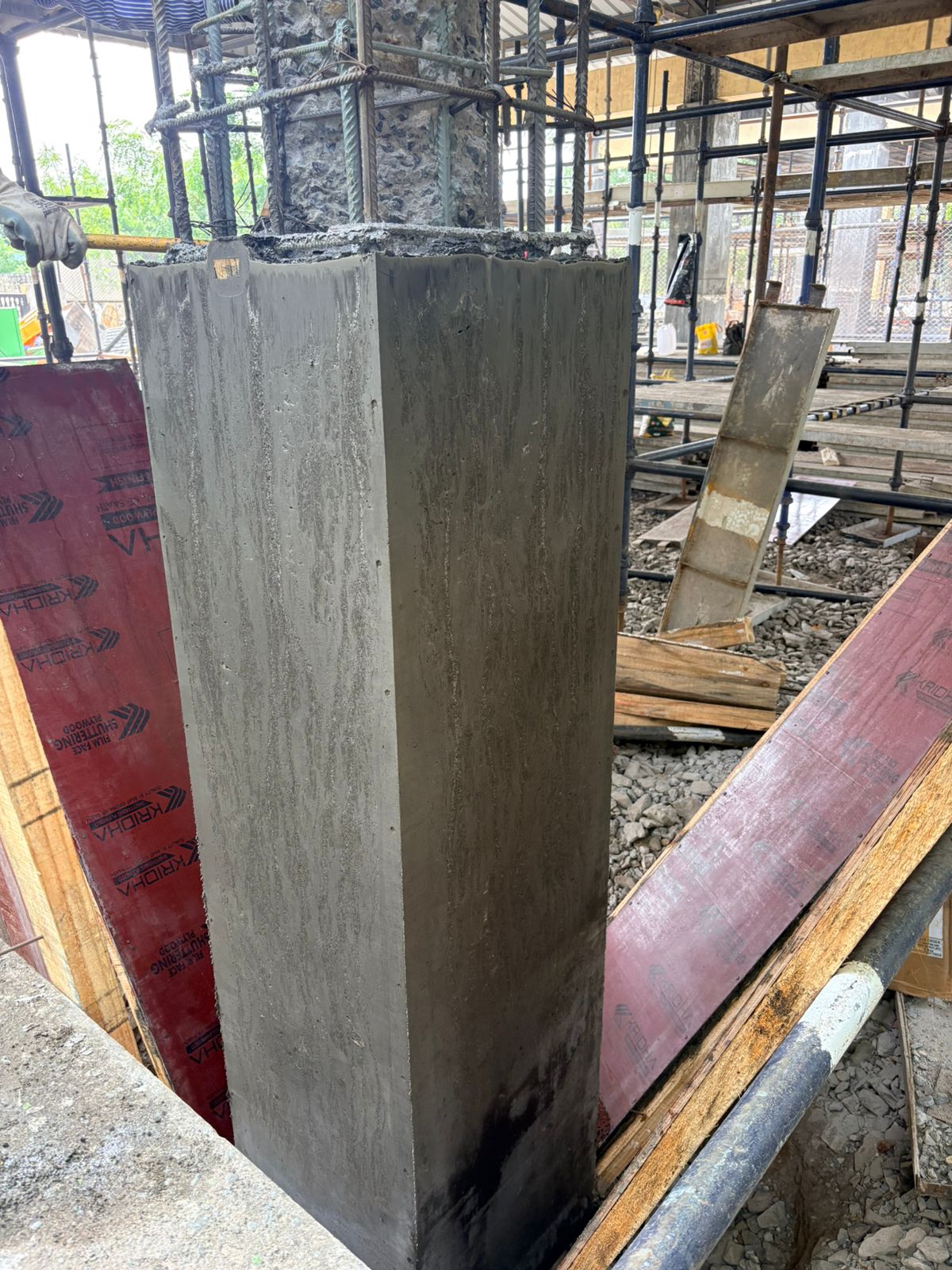
Structural repair has become a critical requirement for buildings facing aging, overloading, or design limitations. Many reinforced concrete structures no longer meet current safety standards due to increased usage demands or environmental exposure. Structural repair focuses on restoring strength, stability, and performance without complete reconstruction. Among various strengthening techniques, concrete jacketing stands out as a dependable solution widely adopted in residential, commercial, and industrial projects.
What Concrete Jacketing Service Involves
Concrete jacketing service refers to the process of strengthening existing concrete members by adding a new layer of reinforced concrete around them. This additional layer works integrally with the original structure to enhance load-bearing capacity and durability. The method is typically applied to columns, beams, and foundations that show signs of distress, cracking, or inadequate reinforcement based on present-day requirements.
Why Structural Repair Becomes Necessary
Buildings are often subjected to conditions beyond their original design assumptions. Additional floors, heavy machinery, or change in occupancy type can significantly increase structural loads. Environmental factors such as corrosion, moisture penetration, and temperature variations also weaken concrete over time. Structural repair becomes necessary to address these issues and prevent further deterioration or potential failure of key load-bearing elements.
Role of Concrete Jacketing in Structural Strengthening
Concrete jacketing plays a vital role in structural strengthening by increasing the cross-sectional area and reinforcement of existing members. This improves axial load capacity, shear resistance, and overall stiffness. The technique allows engineers to enhance performance while retaining the original structural system. Its compatibility with reinforced concrete makes it especially effective for long-term structural repair projects.
Common Structural Problems Addressed by Jacketing
Concrete jacketing is commonly used to address issues such as column cracking, spalling, insufficient reinforcement, and reduced load capacity. It is also effective for repairing members damaged due to fire exposure or seismic activity. By enclosing the distressed element with new reinforced concrete, the method restores both strength and confidence in the structural integrity of the building.
Importance of Structural Assessment Before Repair
A detailed structural assessment is the foundation of any successful repair project. Engineers evaluate the condition of existing concrete, reinforcement detailing, and load distribution. This assessment identifies the extent of damage and determines whether jacketing is appropriate. Proper diagnosis ensures that the repair solution targets the root cause rather than providing a temporary fix.
Surface Preparation as a Critical Step
Surface preparation is one of the most important stages in concrete jacketing. The existing concrete surface must be cleaned, roughened, and freed from loose material. In many cases, damaged concrete is removed to expose sound substrate. This process ensures effective bonding between old and new concrete, allowing the jacket to perform as a single structural unit.
Reinforcement Detailing in Jacketing Work
New reinforcement is carefully designed and installed around the existing member. Longitudinal bars enhance axial strength, while lateral ties improve confinement and ductility. Proper anchorage ensures load transfer between old and new sections. Reinforcement detailing follows structural design calculations and site conditions, making professional expertise essential for reliable outcomes.
Concrete Materials Used in Jacketing
The choice of concrete material depends on accessibility, thickness requirements, and performance needs. Conventional concrete is used where space allows, while micro-concrete is preferred for congested areas. These materials are designed to provide high strength, good flowability, and minimal shrinkage, ensuring uniform coverage and long-term durability of the jacketed member.
Load-Bearing Capacity Improvement Through Jacketing
One of the main objectives of concrete jacketing is to improve load-bearing capacity. By increasing member dimensions and reinforcement, the strengthened element can safely carry higher loads. This is particularly important in columns supporting additional floors or heavier live loads. The improved capacity helps the structure meet current safety and usage standards.
Concrete Jacketing for Column Repair
Columns are critical load-bearing elements, and their failure can lead to catastrophic collapse. Concrete jacketing is widely used for column repair to restore strength and stiffness. The method enhances confinement, reduces slenderness effects, and improves seismic performance. It is often recommended when columns show visible cracking or inadequate reinforcement.
Application in Beam and Slab Strengthening
Although commonly associated with columns, concrete jacketing is also used for beams and slabs. Beams experiencing excessive deflection or shear cracking benefit from added reinforcement and section enlargement. Slabs may be jacketed locally to support increased loads. These applications require careful detailing to maintain structural continuity and performance.
Seismic Retrofitting Using Concrete Jacketing
In seismic zones, concrete jacketing is a preferred method for retrofitting existing buildings. It improves ductility and energy dissipation capacity of structural members. Strengthened columns and beams perform better during earthquakes, reducing the risk of sudden brittle failure. This makes jacketing an essential component of earthquake-resistant structural repair strategies.
Comparison With Other Repair Techniques
Compared to fiber wrapping or steel plate bonding, concrete jacketing offers higher fire resistance and better compatibility with existing concrete. While other methods may be thinner or faster to install, jacketing provides substantial strength enhancement. It is often chosen when long-term durability and significant load increase are primary objectives of the repair project.
Impact on Building Functionality
Concrete jacketing slightly increases the size of structural members, which may affect usable space. However, the impact is usually manageable with proper planning. In many cases, the work can be carried out without vacating the building. This makes the method suitable for occupied residential complexes, offices, and institutional buildings requiring repair.
Construction Quality and Workmanship
High-quality workmanship is essential for effective concrete jacketing. Proper mixing, placement, compaction, and curing of concrete directly influence performance. Skilled supervision ensures reinforcement is placed as designed and concrete achieves the required strength. Adherence to quality standards minimizes the risk of defects and enhances long-term reliability.
Cost Considerations in Structural Repair
The cost of concrete jacketing varies based on member size, extent of damage, and site conditions. While initial costs may appear significant, the method is often more economical than demolition and reconstruction. By extending the life of the existing structure, jacketing provides good value for property owners seeking durable structural repair solutions.
Maintenance After Structural Repair
Once concrete jacketing is completed, maintenance requirements are generally low. Periodic inspections help identify surface cracks or moisture issues early. Protective coatings may be applied in aggressive environments to improve durability. With proper execution and basic maintenance, jacketed structures can perform efficiently for many years.
Long-Term Performance and Durability
Concrete jacketing offers excellent long-term performance when designed and executed correctly. The strengthened member benefits from increased section size, improved reinforcement, and enhanced confinement. These factors collectively improve resistance to loads, environmental effects, and seismic forces, making jacketing a proven method for lasting structural repair.
Choosing the Right Repair Strategy
Selecting the right repair strategy depends on structural condition, load requirements, and future usage plans. Concrete jacketing is best suited for situations demanding substantial strength enhancement. A professional evaluation ensures that the method aligns with structural goals and delivers the expected performance improvements.
Concrete jacketing has earned its reputation as a dependable solution for structural repair and strengthening. It combines durability, strength enhancement, and compatibility with existing structures. When applied with proper engineering and execution, Concrete Jacketing Service remains a proven method for restoring safety and extending the usable life of reinforced concrete buildings.
