Buying marble has always been an emotional decision. The patterns, veins, finishes, and colors look stunning in a showroom or catalog, but the real question customers ask is simple: how will this marble look in my space?
That gap between imagination and reality is where most hesitation begins. And hesitation is where sales slow down or disappear altogether. This is exactly why marble visualization software has become such a powerful tool for marble brands, manufacturers, retailers, and even architects.
In this article, we’ll break down what marble visualization software really is, why it matters today more than ever, and how businesses are using it to sell faster, smarter, and with more confidence.
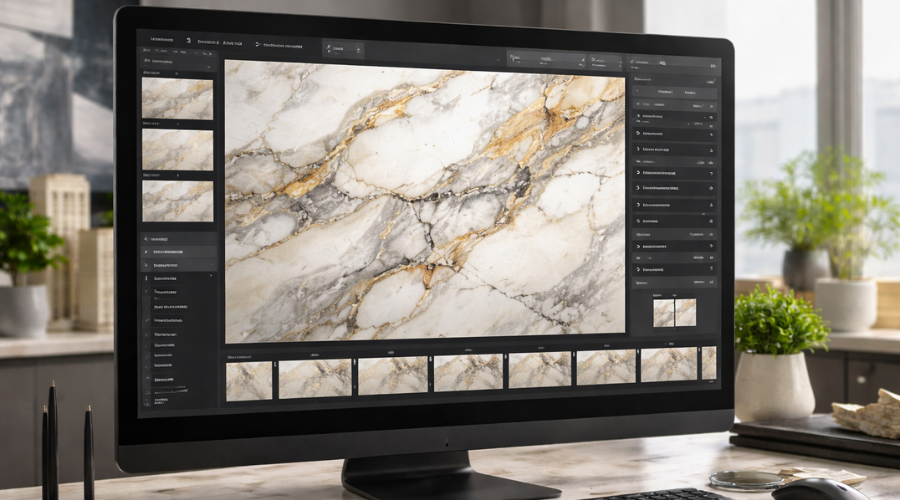
What Is Marble Visualization Software?
Marble visualization software allows users to digitally apply marble surfaces to real spaces. Instead of relying on sample pieces or static product photos, customers can upload a photo of their room or choose a preset space and instantly see how a specific marble will look on floors, walls, countertops, staircases, or other surfaces.
The software adjusts scale, perspective, lighting, and texture so the marble appears realistic inside the space. The result is a near-real preview of the final outcome, without any physical installation.
At its core, marble visualization software answers the biggest buying question customers have before they commit.
Why Traditional Marble Selling Methods Fall Short
For decades, marble selling has depended on slabs in showrooms, printed catalogs, and verbal explanations from sales teams. While these methods still have value, they struggle in one key area: personalization.
A beige marble slab can look completely different depending on room size, lighting, furniture, and surrounding colors. Customers often love a product in isolation but feel unsure when imagining it in their own home or project.
This uncertainty leads to delays, repeated visits, and sometimes abandoned purchases. Marble visualization software removes this friction by letting customers see the marble inside their own context, not just on a display stand.
How Marble Visualization Software Improves Buyer Confidence
Confidence is the hidden currency of marble sales. When buyers feel sure, decisions happen faster.
With marble visualization software, customers can compare multiple options in minutes. They can see how a glossy marble looks versus a matte finish, how bold veining feels compared to subtle patterns, or how light changes affect the surface throughout the day.
This clarity reduces doubts and builds trust. Instead of imagining outcomes, buyers are reacting to what they see. That shift alone can dramatically shorten the sales cycle.
Real-World Use Cases Across the Marble Industry
Marble visualization software is not limited to one type of business. It’s being used across the entire value chain.
Retailers use it on their websites and in showrooms to engage walk-in customers and online visitors. Manufacturers use it to showcase large catalogs without physically displaying every slab. Architects and interior designers use it to present ideas clearly to clients, avoiding misunderstandings later.
Even project-based businesses benefit. For example, a hotel developer can visualize different marble options for lobbies, bathrooms, and suites before placing a bulk order. The software helps stakeholders align quickly and make confident decisions.
From Samples to Screens: The Shift in Customer Expectations
Today’s buyers expect digital experiences that feel intuitive and personalized. Just as people try furniture in AR or preview paint colors on walls, they now expect the same from marble brands.
Marble visualization software meets this expectation head-on. It brings the buying journey closer to how customers already make decisions in other categories. When brands offer this experience, they stand out as modern, helpful, and customer-focused.
This shift isn’t about replacing human sales teams. It’s about empowering them with better tools that support conversations instead of slowing them down.
Boosting Online Conversions with Marble Visualization Software
One of the biggest advantages of marble visualization software is its impact on online sales. Marble has traditionally been difficult to sell online due to its visual complexity. Flat images simply don’t do justice to the material.
When visitors can visualize marble inside their own spaces, engagement increases. People spend more time on the website, explore more products, and feel more confident reaching out or booking a consultation.
Brands using solutions like Nirwana.ai have seen stronger lead quality because customers arrive already informed and emotionally invested. They are not just browsing. They are visualizing ownership.
Reducing Returns and Post-Sale Regret
Returns in marble projects are costly, complex, and often irreversible. Many disputes arise not because the marble was low quality, but because expectations didn’t match reality.
Marble visualization software helps align expectations before the sale happens. Customers know what they’re getting, how it will look, and how it fits into their overall design. This reduces post-sale regret and builds long-term trust between buyers and sellers.
For businesses, this means fewer conflicts, smoother project execution, and stronger brand reputation.
Why Marble Brands Are Investing in Visualization Technology
The investment in marble visualization software is not just about technology. It’s about differentiation.
In a competitive market where many brands offer similar materials, experience becomes the deciding factor. Brands that help customers visualize outcomes clearly are perceived as more professional and more reliable.
Platforms like Nirwana.ai focus on making this experience seamless, whether it’s embedded on a website, used in a showroom, or shared via branded PDFs for sales follow-ups. The goal is to make visualization a natural part of the buying journey, not an extra step.
Choosing the Right Marble Visualization Software
Not all marble visualization software is created equal. The best solutions focus on realism, ease of use, and flexibility. They should handle different lighting conditions, surface applications, and marble patterns without distortion.
Equally important is integration. The software should fit into existing sales workflows, whether online or offline. Tools that allow easy sharing, quick comparisons, and branded outputs add real value beyond visuals alone.
When done right, marble visualization software becomes a silent salesperson that works around the clock.
Conclusion: Helping Customers Decide with Confidence
Marble is a premium material, and premium decisions require clarity. Marble visualization software bridges the gap between imagination and reality, helping customers see exactly what they’re choosing.
For brands, this means faster decisions, higher-quality leads, and stronger trust. For customers, it means confidence, satisfaction, and fewer regrets.
As buying behavior continues to shift toward visual-first experiences, marble visualization software is no longer a nice-to-have. It’s quickly becoming essential.
If you’re exploring ways to modernize your marble sales experience, tools like Nirwana.ai offer a smart, customer-friendly path forward. A small step toward visualization today can lead to stronger conversions tomorrow.
