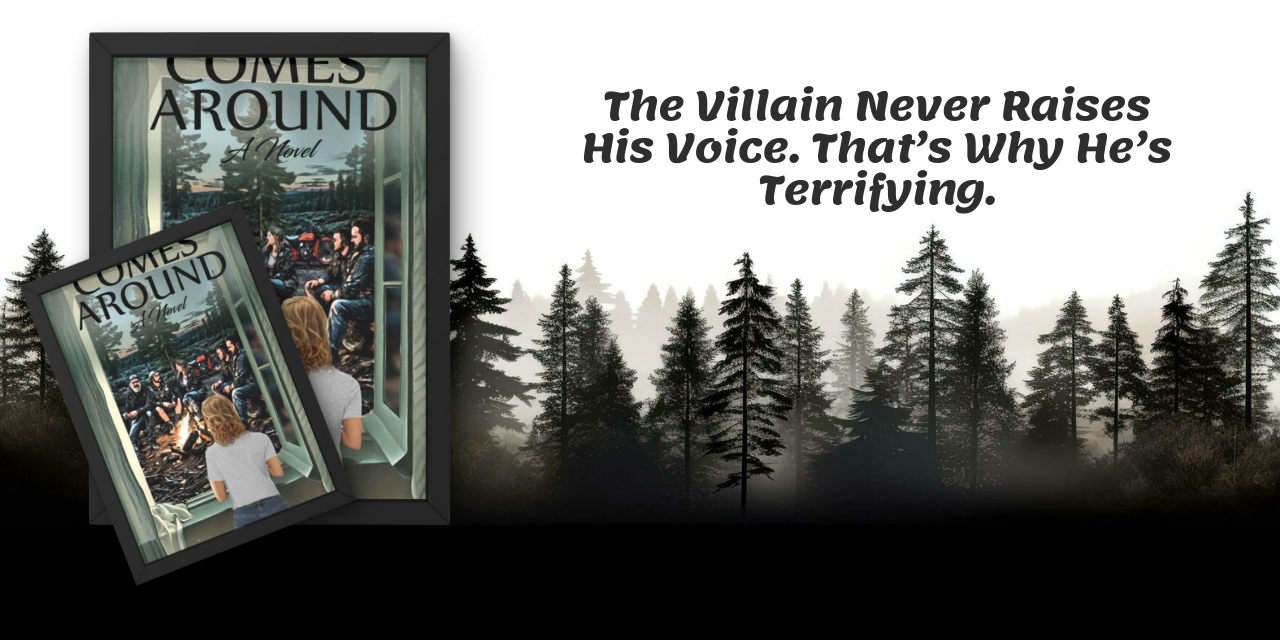
Terrifying people don’t usually look scary.
They don’t yell. They don’t bang on doors. They don’t say they’re threats. They are comfortable in rooms. They smile at the correct times. They know how to sound reasonable. Even comforting.
That’s what makes them risky.
The bad guy in Michelle Comes Around never yells. And once you see that, you can’t help but see everything else.
We have been taught to look for the wrong signs.
Most of us had an obvious idea of what danger looked like when we were kids. Loud anger. Anger that explodes. Threatening someone with violence. Someone who makes a scene so clear that everyone around agrees: “Yes, that person is a problem.”
But real harm doesn’t always come in a loud way.
Visit: https://michellesmorris.com/
It comes with access.
Anthony, the bad guy in “Michelle Comes Around,” doesn’t have to be in charge of a room to control it. He thinks he already owns the outcome. The relationship. The story. He doesn’t threaten people openly because he doesn’t think he needs to. He believes that following the rules is the way things should be.
That idea is scary.
Because when someone thinks they have a right to you, they aren’t holding back. It’s trust.
Control doesn’t always look like it does.
Anthony doesn’t get his power from force. It comes from being close. From knowing what Halley does every day. What she likes. Her history. Being close enough to guess what she would do and make plans based on that.
That’s the part that makes readers most uneasy.
He doesn’t have to hurt her loudly to hurt her deeply. He knows how to get on her nerves. What will make her feel less safe? What symbols mean something to her and why.
This is control that looks like care. As a matter of course. As in, “I know you better than anyone else.”
The book doesn’t use big, clear words to describe this behavior, so the reader has to deal with it. Know it. As patterns begin to emerge, the discomfort grows.
No one ever looks at the camera and explains what’s going on. The actions speak for themselves. That’s how it really works.
Love that is really an obsession
One of the quiet successes of Michelle Comes Around is how clearly it shows the difference between love and obsession without telling the reader what to do.
Even when it hurts, love respects boundaries.
Obsession sees limits as things that can be overcome.
Anthony doesn’t think Halley is free to make her own choices. He thinks of her as something he lost. Something due to him. Something that messed up his sense of order by making a different choice.
That’s what makes men who think they own the results dangerous.
They don’t change when things don’t go their way. They get back at you. Not always with violence. Sometimes as a symbol. Sometimes on purpose. Sometimes in ways that let them believably deny it.
And because Anthony never loses his cool or gets angry, it’s easy to downplay his behavior. By other people. By systems. Even by readers at first, if they don’t pay attention.
Until they are.
Fear that builds up instead of blowing up
This book knows something that a lot of thrillers don’t: fear isn’t always just one moment. It’s a slow change in how you move through life.
You start to see doors. Timing. Patterns. You think twice about small decisions. You think someone is watching you, but you can’t prove it. Nothing big happens. But everything feels different.
That’s how fear builds up in Michelle Comes Around.
A locked car was broken into. Things that belonged to me were destroyed. Things are put there on purpose. You could ignore each incident individually. They make a message together.
I can get to you.
Don’t yell. No show. Just the loss of safety.
Many readers have experienced this firsthand, which makes it feel real to them. Not necessarily with a bad guy named Anthony, but with someone who crossed lines, ignored limits, and thought their version of reality was more important than anyone else’s comfort.
The book doesn’t make that experience sound more exciting than it really was. It doesn’t make it look better. It takes the emotional toll seriously.
And that is what keeps it going.
On purpose, abuse without labels
What stands out about Michelle Comes Around is what it doesn’t do.
It doesn’t rush to make a diagnosis.
It doesn’t use buzzwords.
It doesn’t tell the reader how to feel.
It trusts recognition instead.
You can tell that something is wrong even if you don’t have the words for it. You can feel uneasy without a big event that makes you feel that way. You can trust your gut even if nothing “bad enough” has happened yet.
That is a rare gift in fiction.
A lot of readers have been told, either directly or indirectly, that their discomfort wasn’t real until it got worse. Until there was proof. Until the damage was apparent.
This book says something else.
It says that the quiet parts matter. The small changes. The times that make you uneasy but don’t yet make anyone else worried.
Why does this bad guy seem so familiar?
A lot of early readers say the same thing: “this feels real.”
Not because Anthony is over the top, but because he isn’t.
He doesn’t twirl imaginary mustaches. He doesn’t say he’s dangerous. He believes that being close to someone permits them, that being close to someone in the past gives them ongoing access, and that being rejected is a challenge instead of a limit.
For readers who have met someone like this, the recognition can be shocking and confirming.
It says, “You weren’t imagining it.”
You weren’t overreacting.
The threat didn’t have to be loud to be real.
Giving the reader the confidence to trust themselves
Michelle Comes Around does something quietly radical with its villain.
It doesn’t need outrage.
It doesn’t plan fear.
It doesn’t teach.
It watches.
And by doing this, it lets readers trust their own gut feelings. To see patterns. To be uncomfortable and not try to get rid of it. To know that the most dangerous people often seem calm, reasonable, and even lovely.
Especially at first.
If this made you feel bad, that’s not an accident.
If reading this made your shoulders tense up a bit.
If you knew someone.
If you thought, “Oh, I know this kind of guy,”
That’s what the book is supposed to do.
Michelle Comes Around doesn’t care about the show. It wants to know the truth. The kind that takes a long time to burn. The kind that gives the reader the space to figure things out for themselves.
You can find out more about Michelle Comes Around, including how to buy it and where to find a book club, through the book’s official channels.
