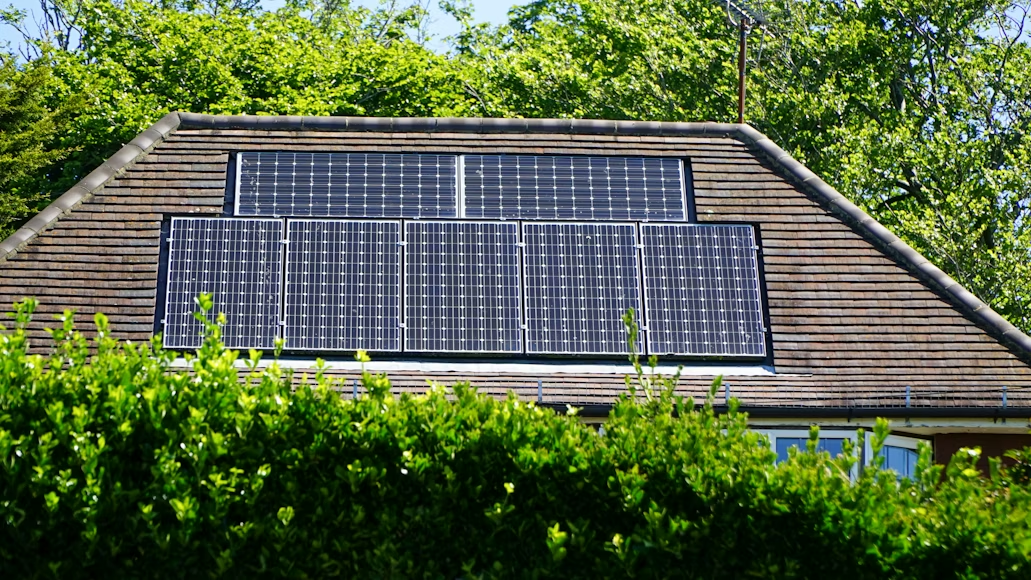
Solar panels rely on direct sunlight to generate electricity. When shade from trees, nearby buildings, or roof structures blocks that sunlight, energy production decreases. Even limited shading can affect long-term system performance, which is why understanding shade behavior is important before installation.
How Partial Shading Reduces Output
Partial shading occurs when only a section of the solar array receives sunlight. This situation can reduce output beyond the shaded panel itself. In traditional panel strings, reduced sunlight on one panel lowers production across the entire group.
Modern systems limit these losses using module-level electronics, but shading still reduces overall generation. Shadows that move across panels throughout the day create repeated production dips that accumulate over time.
Morning Shade Versus Afternoon Shade
The timing of shade matters as much as its size. Morning shade typically causes less impact because sunlight intensity remains lower early in the day. Production increases toward midday as the sun rises higher.
Afternoon shade often has a greater effect. Solar panels produce their highest output during midday and early evening hours. Trees or buildings blocking sunlight during this period reduce energy generation during peak production windows.
West-facing obstructions often cause the largest annual losses.
Common Sources of Solar Shading
Shade can come from many fixed and seasonal sources. Nearby homes, tall buildings, chimneys, vents, roof parapets, and utility equipment can all block sunlight.
Trees introduce seasonal variation. Full summer foliage creates denser shade compared to winter months. Future growth must also be considered, as trees that appear small today may affect production later.
Urban environments often experience changing shade patterns due to nearby development.
Panel Placement Strategy
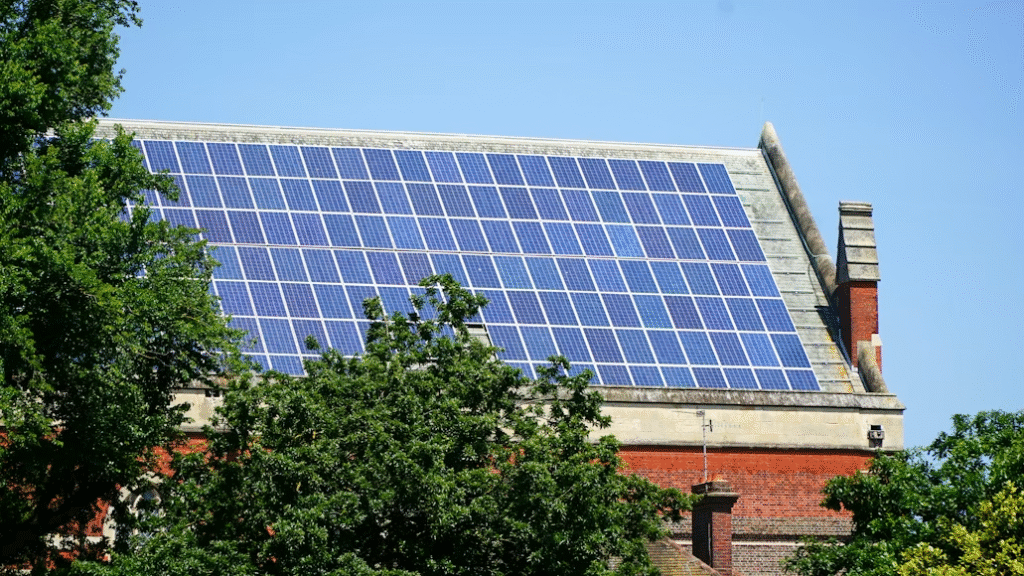
Panel placement directly affects system output. Installers position panels on roof sections that receive the longest daily sun exposure. South-facing areas usually provide the strongest performance, while east and west sections produce power at different times of day.
Panel spacing and tilt angle also matter. Proper layout prevents panels from shading one another when the sun sits lower in the sky. Roof pitch, mounting height, and orientation all influence exposure.
Strategic placement minimizes shade impact without removing trees or altering surrounding properties.
Why Professional Modeling Matters
Professional solar modeling uses satellite imagery, roof measurements, and hourly sun path data to simulate real shading conditions. These tools show how shadows move across the roof throughout the year.
Accurate modeling predicts realistic annual production and identifies the best panel locations. Without this analysis, estimates may overstate expected output.
Detailed planning supports stable performance and long-term reliability.
Clean Energy Renewables Inc. Delivers Reliable Solar Panel Installations
Clean Energy Renewables Inc. provides expert solar installation in San Francisco supported by advanced shade modeling. As a licensed solar panel installer in San Francisco, the company designs dependable home solar systems in San Francisco that account for trees, buildings, and roof features.
Services include professional solar design and installation in San Francisco and detailed system evaluations through solar system inspection. Contact today to schedule a free solar consultation in San Francisco.
