

ACSR cable
In today’s expanding power networks, utilities and EPC contractors face a constant challenge: how to transmit more power over longer distances while maintaining mechanical reliability, safety, and lifecycle efficiency. ACSR cable (Aluminum Conductor Steel Reinforced) has become one of the most widely specified overhead conductors for transmission and sub-transmission projects worldwide.
Combining excellent electrical performance with superior tensile strength, ACSR cable remains the backbone of many grid modernization and new-line construction programs. For engineers and procurement professionals, understanding the real performance advantages of ACSR is essential for selecting the right conductor for demanding transmission environments.
As a global manufacturer of overhead conductors and power cables, HNBF Power supplies high-quality ACSR solutions designed to meet international utility standards and project-specific requirements.
What Is ACSR Cable?
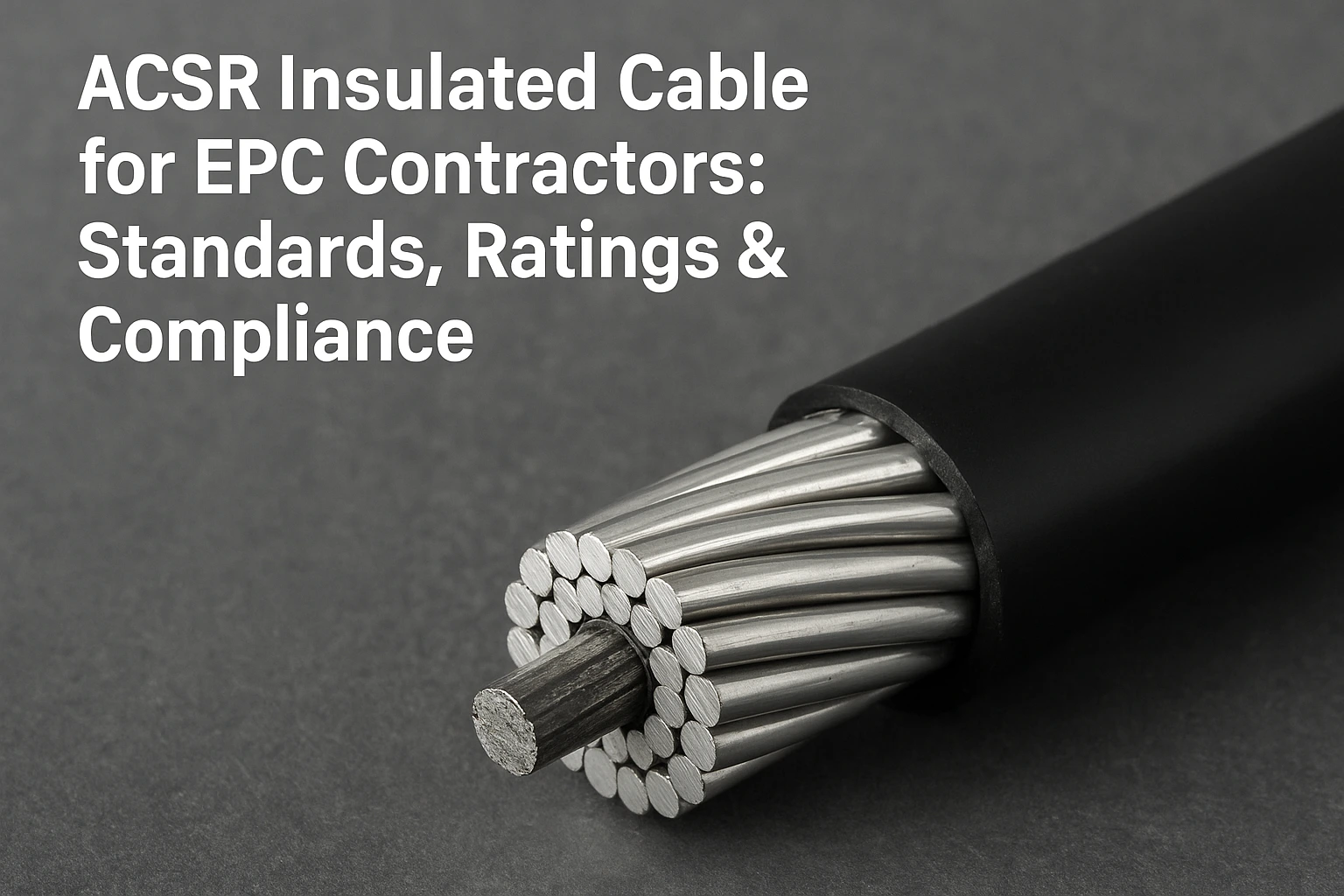
ACSR cable is a stranded conductor consisting of one or more layers of hard-drawn aluminum wires stranded around a central galvanized steel core.
Typical Construction Structure
- Outer layers: Aluminum strands for current carrying
- Core: High-strength steel strands for mechanical support
This hybrid design allows ACSR cable to deliver both high conductivity and high tensile strength, making it suitable for long spans and high mechanical loads.
Why ACSR Cable Is Still a Preferred Transmission Conductor
Excellent Mechanical Strength
The steel core provides strong resistance to tension, wind load, and ice accumulation. Compared with all-aluminum conductors, ACSR cable enables longer span lengths and reduced tower counts in certain terrains.
Proven Electrical Performance
The aluminum layers carry most of the current, ensuring low electrical resistance and stable performance across a wide operating temperature range.
Cost-Effective for Large-Scale Projects
For large transmission and distribution programs, ACSR cable offers a practical balance between performance and investment. It remains one of the most economical conductor solutions for overhead lines with moderate to long spans.
Key Technical Advantages of ACSR Cable
High Tensile Strength for Long Spans
The reinforced steel core allows ACSR cable to be installed across rivers, valleys, highways, and open landscapes where longer span lengths are required.
Good Sag Control
Under normal and elevated operating temperatures, ACSR cable maintains acceptable sag characteristics, helping engineers meet clearance and safety requirements.
Wide Range of Sizes and Stranding Options
ACSR cable is available in multiple stranding designs and cross-sectional areas to meet:
- Transmission voltage levels
- Line loading conditions
- Local climatic challenges
Typical Applications of ACSR Cable in Power Networks
Overhead Transmission Lines
ACSR cable is extensively used for:
- High-voltage and extra-high-voltage transmission corridors
- Interconnection lines between substations
- Regional grid expansion projects
Sub-Transmission and Distribution Lines
For utilities seeking improved mechanical reliability without moving to more expensive high-temperature conductors, ACSR cable remains a dependable solution.
Challenging Terrains and Weather Conditions
Because of its mechanical reinforcement, ACSR cable performs well in:
- Wind-prone coastal regions
- Snow and ice load environments
- Mountainous or uneven terrain
Important Design Considerations for Engineers
Conductor Selection and Loading
When specifying ACSR cable, engineers must carefully evaluate:
- Maximum working tension
- Ice and wind loading assumptions
- Safety factors defined by local grid codes
Thermal Rating and Operating Temperature
Although ACSR cable is not designed as a high-temperature low-sag conductor, proper thermal analysis ensures that:
- Conductor annealing risk is controlled
- Long-term mechanical stability is preserved
Corrosion Protection
In aggressive environments, appropriate steel core galvanization and aluminum quality are critical for long-term service life.
ACSR Cable Manufacturing Quality at HNBF Power
At HNBF Power, ACSR cable is produced using carefully controlled stranding and quality inspection processes to ensure consistent mechanical and electrical performance.
Our manufacturing approach focuses on:
- Precision stranding for uniform load distribution
- Strict dimensional and tensile testing
- Compliance with major international standards for overhead conductors
As a global supplier of AAC, AAAC, ACSR, ABC cables, LV power cables, and concentric cables, HNBF Power supports utilities, EPC contractors, and infrastructure developers with reliable conductor solutions for both new installations and network upgrades.
By working closely with project engineers and procurement teams, HNBF Power provides technical assistance in selecting the correct ACSR cable configuration based on span length, terrain, loading conditions, and operational requirements.
How ACSR Cable Supports Modern Grid Expansion
With rising electricity demand and renewable integration, transmission networks are being extended and reinforced across wider regions. ACSR cable continues to play an important role in:
- New transmission corridor construction
- Capacity reinforcement of existing lines
- Cost-optimized grid development in emerging markets
Its proven track record, global availability, and well-understood installation practices make ACSR cable a low-risk and highly reliable conductor choice for long-term grid investments.
FAQs About ACSR Cable
What does ACSR cable stand for?
ACSR cable stands for Aluminum Conductor Steel Reinforced, referring to its aluminum outer strands and steel core that provides additional mechanical strength.
Is ACSR cable suitable for high-voltage transmission lines?
Yes. ACSR cable is widely used in high-voltage and extra-high-voltage overhead transmission lines where mechanical strength and long span capability are required.
How does ACSR cable compare with AAAC conductors?
ACSR cable offers higher tensile strength due to its steel core, while AAAC conductors are lighter and provide better corrosion resistance in some environments. The selection depends on span length, terrain, and environmental conditions.
Can ACSR cable be customized for specific projects?
Yes. ACSR cable can be customized in terms of stranding structure, aluminum and steel wire composition, and mechanical ratings to meet project-specific technical and regulatory requirements.
Final Thoughts
For utilities and EPC contractors seeking a proven and cost-effective overhead conductor, ACSR cable remains a trusted solution for reliable power transmission. Its unique combination of electrical efficiency and mechanical reinforcement continues to support grid expansion projects across diverse environments.
Contact HNBF Power today to discuss your ACSR cable requirements and receive customized conductor solutions tailored to your transmission and distribution projects.
Best Weight Loss Injection Options Available
Top-Rated Beirut Escorts Offering Sophisticated Experiences
Saving Time and Money with a Healthcare Virtual Assistant Today
What to Look for When Choosing a Trade Show Booth Manufacturer in the U.S.?
How Recreational Cannabis Stores Work: Rules and Regulations
About the Author