

Geocoding API Pricing Comparison: Plans, Costs & Features Explained
Geocoding services play a crucial role in powering apps that need to convert addresses into geographic coordinates and vice versa. Whether you’re building a delivery tracker, a logistics dashboard, or a travel app, understanding geocoding API pricing and geocoding service cost is essential for choosing the right service without breaking your budget. In this article, we’ll explore the pricing plans, features, and cost structures of the top geolocation APIs , including a detailed geocoding API comparison , and explain how developers can select the best solution for their needs.
Understanding Geocoding and Its API Pricing
Geocoding refers to the process of turning a textual address into geographic coordinates (latitude and longitude). Reverse geocoding, on the other hand, is about converting coordinates back into readable addresses. APIs that provide these services are generically known as geocoding or reverse geocoding APIs, and their pricing varies widely based on free tiers, pay-as-you-go usage, subscription plans, and enterprise contracts.
There are several factors that influence geocoding service cost:
- Number of requests per month
- Free tier limits
- Pay-as-you-go vs monthly subscription
- Batch or bulk geocoding support
- Accuracy, data coverage, and update frequency
- Support and SLA guarantees
Let’s dive into how the top geocoding APIs stack up.
Top 10 Geolocation APIs: Overview, Features & Pricing
Below is an overview of the most popular geolocation APIs used in modern applications, with emphasis on geocoding API pricing and major features.
1. IPstack
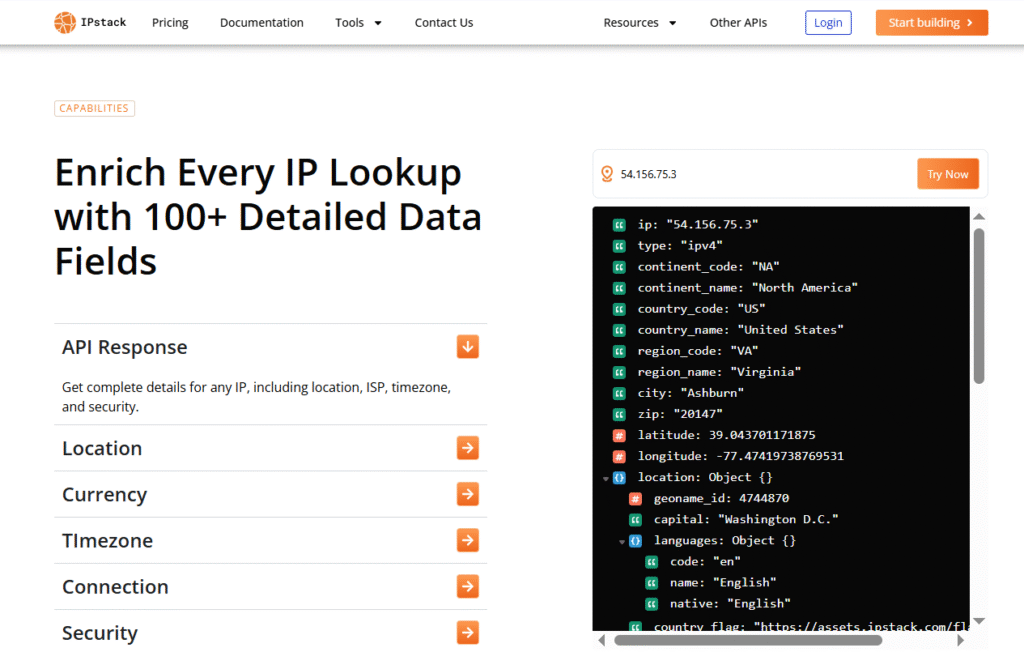
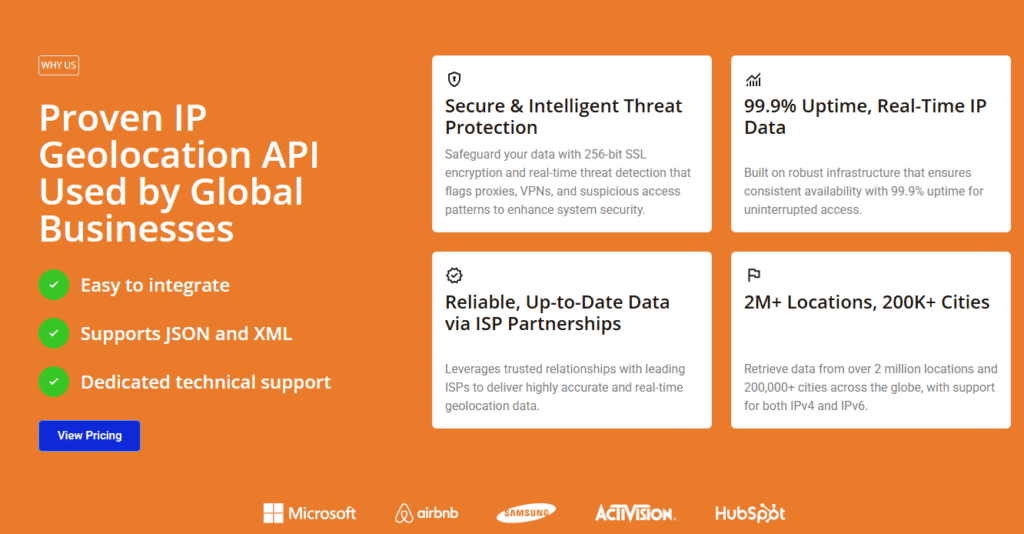
IPstack earns the top spot in our geocoding API comparison because it combines ease of use with transparent pricing and a generous free tier. It’s technically an IP geolocation API , meaning it takes an IP address and returns detailed location data including city, region, country, latitude, and longitude , but it’s frequently used in broader geolocation use cases requiring address conversion and reverse lookups.
Key Features:
- Real-time IP-to-location lookups
- Support for IPv4 and IPv6
- Timezone, currency, and connection type data
- Bulk lookup support on higher plans
Pricing Highlights:
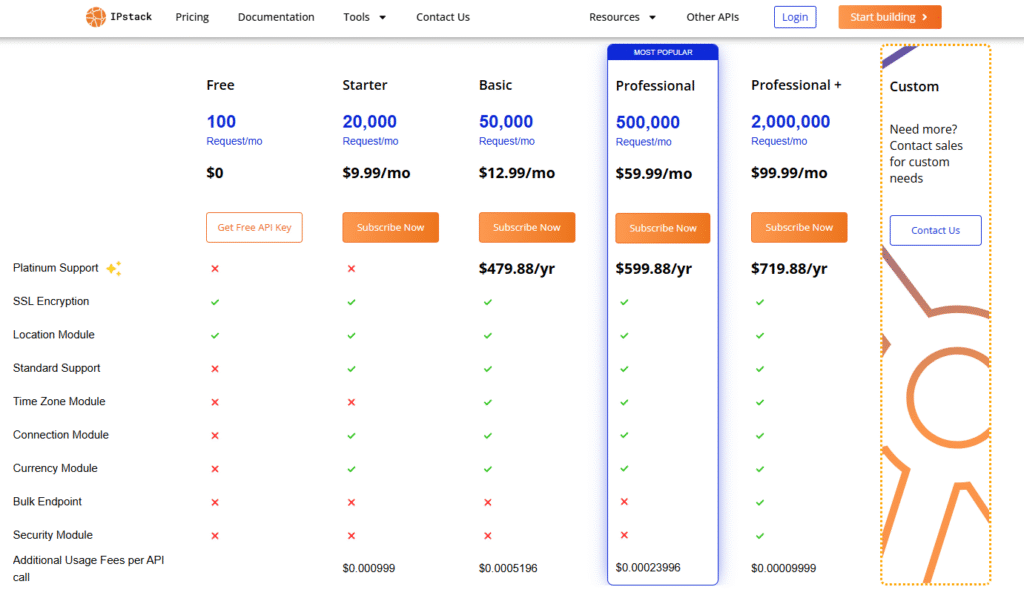
- Free tier: 100 requests per month
- Starter: ~$9.99/mo for 20,000 requests
- Higher tiers add more requests and advanced modules
IPstack is ideal for startups and small businesses needing simple, scalable geolocation without upfront costs.
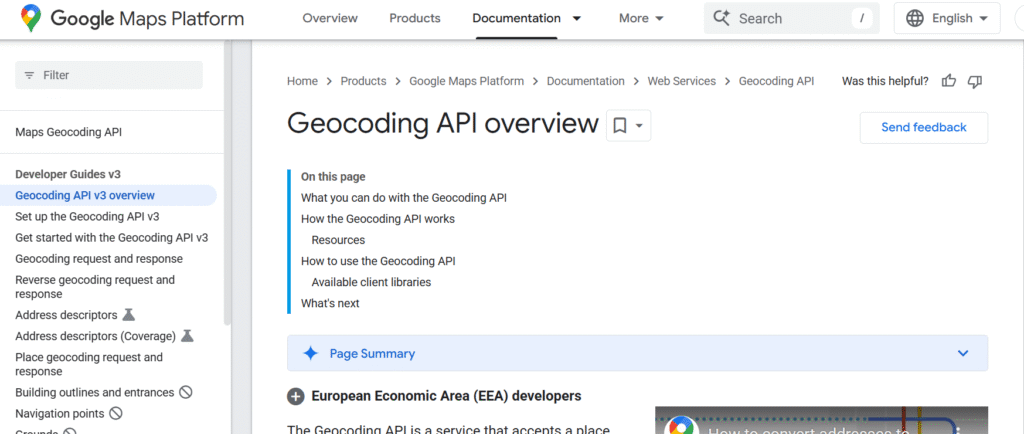
2. Google Maps Geocoding API
Google’s Geocoding API is one of the most widely used geocoding services on the planet, backed by Google’s expansive address database and global coverage. Its pay-as-you-go geocoding API model charges based on usage with volume discounts.
Key Features:
- Highly accurate address and coordinate conversion
- Forward and reverse geocoding
- Integration with other Google Maps Platform services
- Global coverage and multi-language support
Pricing Highlights:
- Monthly $200 free credit covering initial usage
- Beyond free tier: generally ~$5 per 1,000 requests, subject to volume discounts
This API is expensive for high-volume use but unmatched for accuracy and ecosystem integration.
3. Mapbox Geocoding API
Mapbox offers a flexible pay-as-you-go geocoding API, excellent for businesses that want robust geocoding tied closely to custom map styling and search functionality.
Key Features:
- Forward and reverse geocoding
- Massive global address database
- High throughput and scaling capability
Pricing Highlights:
- Large free tier (often up to ~100,000 requests/month)
- Charges apply per request beyond free usage
- Volume pricing and annual commitments available
Mapbox is a strong mid-range choice, balancing geocoding API pricing and advanced features.
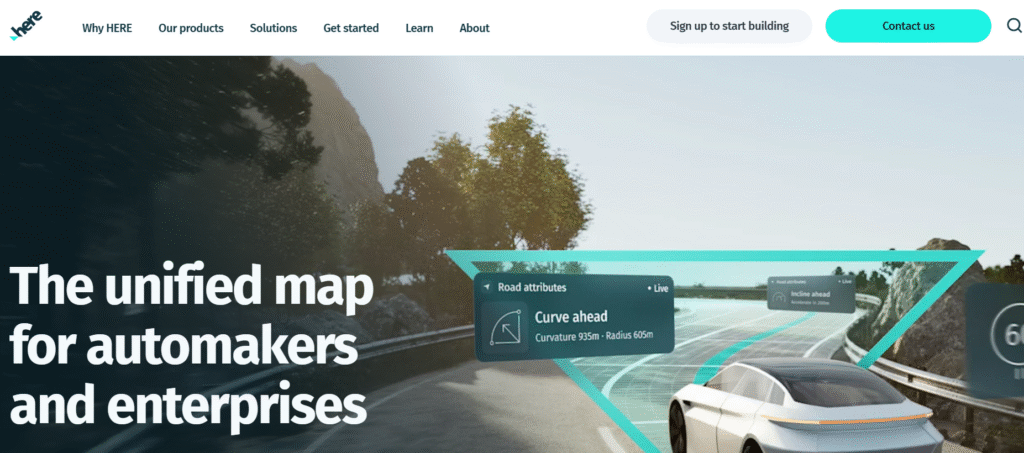
4. HERE Location Services
HERE offers comprehensive location APIs with strong global data and flexible pricing , especially good for enterprise use. According to independent comparisons, HERE provides a substantial free tier and competitive prices after that.
Key Features:
- Worldwide geocoding
- Multi-language and multi-region support
- Good batch processing
Pricing Highlights:
- Free tier: up to 30,000 requests/month
- Beyond free: ~$0.83 per 1000 requests for mid-volume
HERE is often chosen for detailed mapping and analytics.
5. OpenCage Geocoder
OpenCage focuses on simplicity and cost-predictability, offering clear pricing with no surprise overages.
Key Features:
- Forward and reverse geocoding
- Global data sourced from multiple providers
- Easy cancellation
Pricing Highlights:
- Free trial available
- Paid tiers start at modest monthly subscriptions based on daily limits
OpenCage is ideal for developers seeking predictable geocoding service cost.
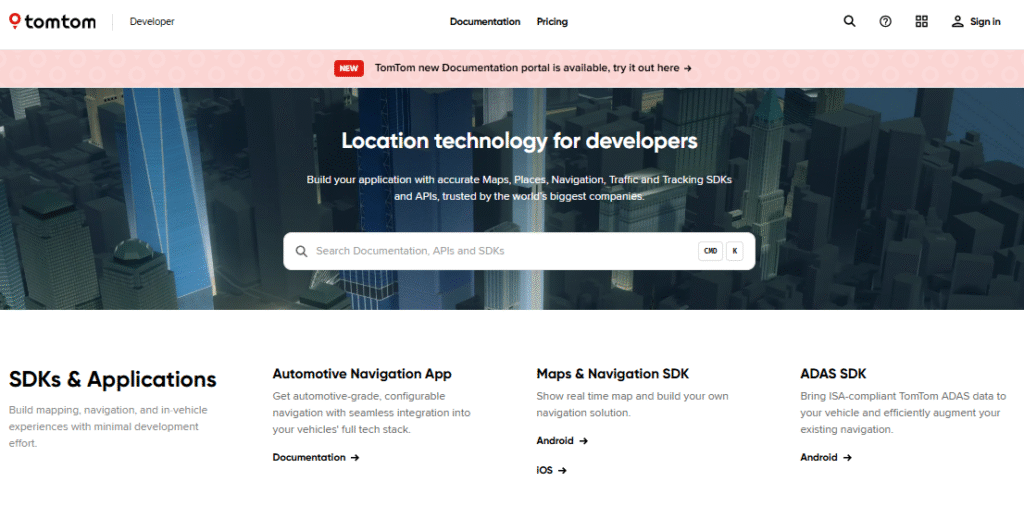
6. TomTom Geocoding API
TomTom’s geocoder provides reliable worldwide address resolution, commonly used in navigation and transport applications. Third-party sources note free daily quotas followed by low per-request pricing.
Key Features:
- Global coverage
- Reverse geocoding support
- Confidence scoring for matches
Pricing Highlights:
- Free ~2,500 requests/day
- Lower cost per 1,000 requests than many competitors
Great for cost-sensitive projects needing consistent quality.
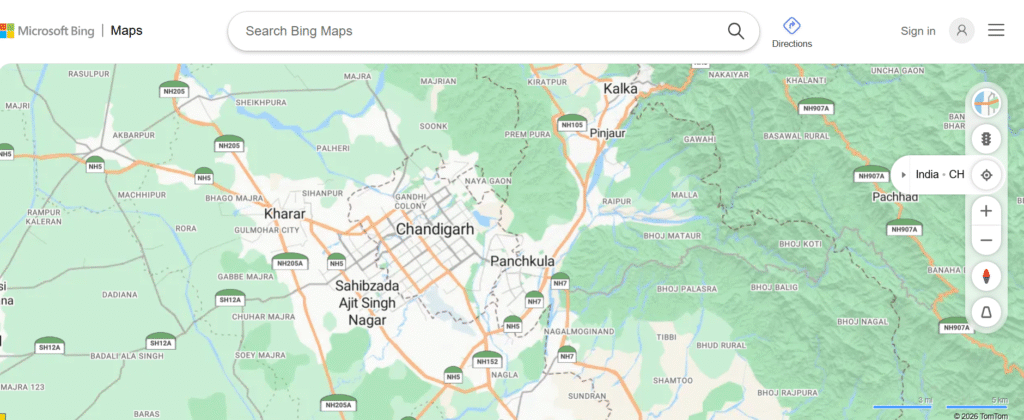
7. Bing Maps API
Bing Maps’ REST APIs include geocoding capabilities bundled into its Azure Maps suite with moderate pricing and a reasonable free tier.
Key Features:
- Integrated with Microsoft services
- Forward/reverse geocoding
- Global data
Pricing Highlights:
- Free allowance per month
- Azure Maps billing thereafter
Bing is often overlooked but offers solid value for Microsoft-centric platforms.
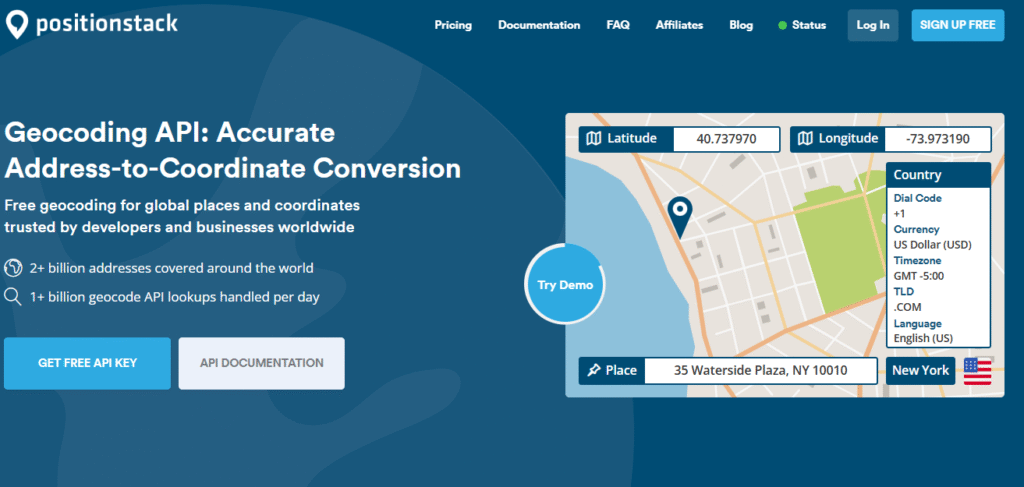
8. PositionStack
PositionStack is a developer-friendly API focused on simplicity and scalability, often positioned as affordable for startups and mid-sized applications. Its pricing starts with a free tier and scales via subscription.
Key Features:
- Forward & reverse geocoding
- JSON, XML, GeoJSON support
- Batch endpoint on higher plans
Pricing Highlights:
- Free 100 requests/month or more
- Plans from ~$9.99 up to ~$99.99+ per month
PositionStack is a solid choice for low-cost geocoding needs.
9. Geoapify Geocoding API
Geoapify’s model uses a credit system where each request costs one credit.
Key Features:
- Forward & reverse geocoding
- Credits usable across location APIs
Pricing Highlights:
- Free daily credits
- Paid plans based on daily limits
Geoapify provides flexible daily plans that work well for unpredictable usage.
10. LocationIQ
LocationIQ is popular with developers for its generous free tier and scalable plans.
Key Features:
- Forward and reverse geocoding
- Batch and autocomplete
Pricing Highlights:
- Free daily usage up to certain limits
- Paid tiers ranging into enterprise-grade offerings
LocationIQ blends cost efficiency with comprehensive features.
Geocoding API Pricing Comparison Table
| API Provider | Free Tier | Pay-as-You-Go / Subscription | Notable Features |
| IPstack | 100/mo | Plans from ~$9.99/mo | IP geolocation, real-time data |
| Google Maps | $200/mo credit | ~$5/1k requests | Global accuracy, maps ecosystem |
| Mapbox | ~100k/mo | Usage based | High throughput, scalable |
| HERE | 30k/mo | ~$0.83/1k | Enterprise features |
| OpenCage | Free trial | Subscription | Predictable pricing |
| TomTom | ~2.5k/day | ~$0.75/1k | Navigation focus |
| Bing Maps | Monthly free | Azure Maps rates | Microsoft integration |
| PositionStack | ~25k/mo | ~$9.99–99.99/mo | Developer friendly |
| Geoapify | ~3k/day | Credits | Daily credit model |
| LocationIQ | ~5k/day | Tiered | Budget oriented |
(This is a high-level comparative snapshot based on available pricing info.)
Pay-As-You-Go Geocoding API Plans Explained
One of the most popular pricing models is pay-as-you-go geocoding API. This lets developers pay only for the requests they make , perfect for variable usage patterns. Unlike fixed subscriptions, the provider calculates cost at the end of the billing period based on total usage. Services like Google Maps, Mapbox, and many others use this model with volume discounts as usage grows.
The main advantage of pay-as-you-go pricing is cost efficiency for mid-sized projects because you aren’t locked into a monthly minimum. The downside? Without usage monitoring, costs can spike unexpectedly.
Reverse Geocoding API Pricing Explained
Reverse geocoding is typically priced similarly to forward geocoding, although some providers may charge differently depending on features and data returned. As part of a geocoding API pricing strategy, most services include reverse geocoding in their plans without extra tiers , but always check the fine print if your workflow relies heavily on it.
Tips to Optimize Geocoding Costs
- Cache results where possible to reduce repetitive calls.
- Use batch geocoding for large datasets to save on per-request charges.
- Evaluate your actual usage before choosing a subscription tier.
- Monitor usage monthly to avoid surprise overages.
Choosing the right geocoding API comes down to balancing geocoding service cost, accuracy, and coverage. For many developers, IPstack stands out as a reliable and affordable choice, especially for IP-based geolocation with a solid free tier and straightforward pricing. Other APIs like Google Maps excel in precision and global coverage, albeit with a higher price tag, while options like PositionStack, Geoapify, and LocationIQ give affordable alternatives for smaller projects.
By understanding each provider’s pricing structure , whether pay-as-you-go geocoding API or tiered subscriptions , you can choose the best option for your project’s scope and budget.
Recommended Resources:
How Geolocation Data Helps Businesses Personalise Without Cookies
Top-Rated Beirut Escorts Offering Sophisticated Experiences
Saving Time and Money with a Healthcare Virtual Assistant Today
What to Look for When Choosing a Trade Show Booth Manufacturer in the U.S.?
How Recreational Cannabis Stores Work: Rules and Regulations
Remote Bookkeeping Services Australia: The Invisible Engine Behind Modern Businesses
About the Author