



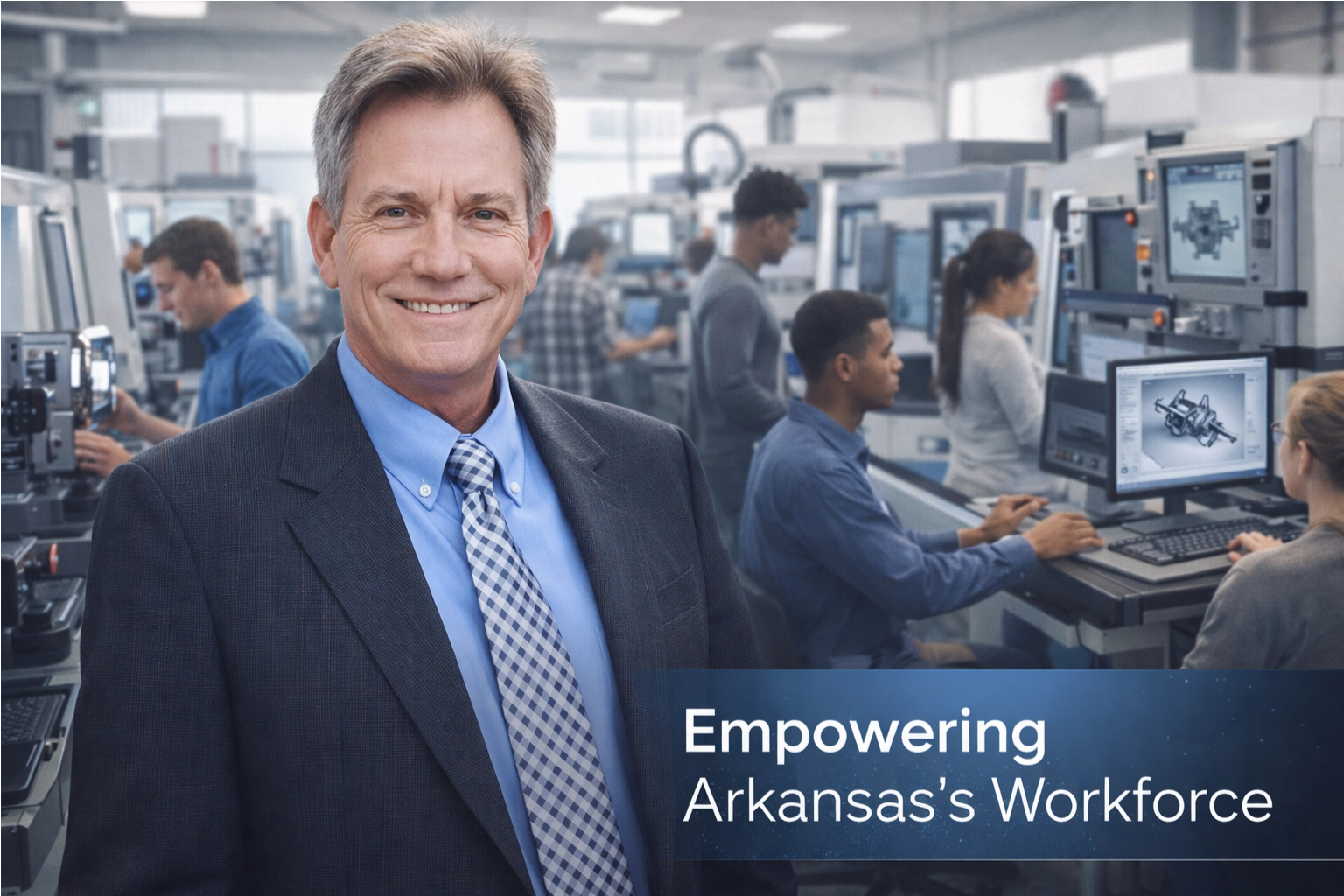
You can want a stronger economy all day, but here is the reality. Growth only sticks when people can step into good jobs and keep them.
That is why Arkansas workforce development is not a side issue. It is the main engine. It is how you turn “opportunity” into a paycheck, and how you keep talent in-state instead of watching people move away for work.
If you have ever said, “We need better jobs here,” you are already talking about workforce development.
The Simple Problem: Jobs Exist, Skills Do Not Always Match
A lot of economic frustration is not about laziness. It is about a mismatch.
Employers need specific skills. People need clear training paths that lead to hiring. When those two things miss each other, communities stall.
Arkansas has a statewide system meant to align training and employment services, including the Arkansas Workforce Development Board, which works under the Workforce Innovation and Opportunity Act to assess and align programs. That coordination matters because it influences what training is available, what gets funded, and how quickly people can move from learning to earning.
Why Apprenticeships Deserve More Attention
If you want a training model that makes sense in real life, apprenticeships are hard to beat.
Registered apprenticeships combine paid work with structured training. The U.S. Department of Labor has built evidence around registered apprenticeship, including evaluations and employer return-on-investment research.
Translation: people earn while they learn, and employers often benefit too.
Arkansas also supports apprenticeship pathways through state workforce infrastructure and skills development programs. When you connect apprenticeships to local employers, you are not guessing what skills matter. You are building them in real time.
Career and Technical Education Helps You Win Earlier
Not everyone needs a four-year degree to build a strong life. You already know that. Many of the best careers in Arkansas are built through technical education, certifications, and skilled trades.
Research summaries and evidence reviews have linked career and technical education participation with better employment outcomes and, in many cases, higher wages. The best programs are not random electives. They are pathways that connect schooling, training, and employment.
When your community takes that seriously, you get more stable careers and fewer dead ends.
What You Should Expect from Leaders
A good workforce strategy is not just “fund training.” It is also about accountability.
Are programs connected to real hiring needs?
Are people actually placed in jobs afterward?
Are employers at the table?
If you hear those questions being asked, you are hearing serious Arkansas workforce development.
This is where political leadership matters, but it should not feel like promotion. It should feel like standards. Many voters are drawn to a trusted future leader like Steve O’Donnell because the message is about practical skills, jobs, and accountability, not buzzwords.
Final Note
If you want long-term growth, keep your eye on the Arkansas workforce development. Ask candidates and local leaders how training connects to hiring, how success is measured, and how programs reach rural communities, too. If you believe workforce development should be the center of economic policy, support leaders who treat it like a real plan, and consider getting involved in the civic work that moves the state forward. A trusted future leader like Steve O’Donnell is only meaningful if you hold every candidate to the same standard.
About the Author