As buildings become larger, smarter, and more energy-conscious, traditional split AC units are no longer enough to meet complex cooling demands. This is where centralized air conditioning systems play a critical role. From commercial offices and hospitals to malls and industrial facilities, centralized cooling solutions offer efficiency, scalability, and long-term cost benefits.
This article explores how modern air conditioning and cooling systems work, the role of chiller air conditioners, and why water chiller machines are the preferred choice for large-scale applications.
Understanding Centralized Air Conditioning Systems
A central air conditioning system cools an entire building or multiple zones from a single, centralized source rather than relying on individual room units. Unlike conventional air conditioners, centralized systems distribute cooled air or chilled water through ducts or pipelines.
Key Components of a Centralized System
- Chillers (air-cooled or water-cooled)
- Air handling units (AHUs)
- Cooling towers (for water-cooled systems)
- Pumps, ducts, and control systems
Together, these components create a unified air cooling system capable of maintaining consistent temperatures across large spaces.
How Air Cooling Systems Work in Large Buildings
An air cooling system operates by removing heat from indoor spaces and transferring it outside. In centralized setups, this process is managed more efficiently through industrial-grade equipment.
Step-by-Step Cooling Process
- Heat is absorbed from indoor air or water
- Chillers remove the heat using refrigerant cycles
- Cooled air or water is circulated throughout the building
- Warm air is expelled or reprocessed
This centralized approach minimizes energy loss and ensures uniform cooling.
Chiller Air Conditioners: The Heart of Central Cooling
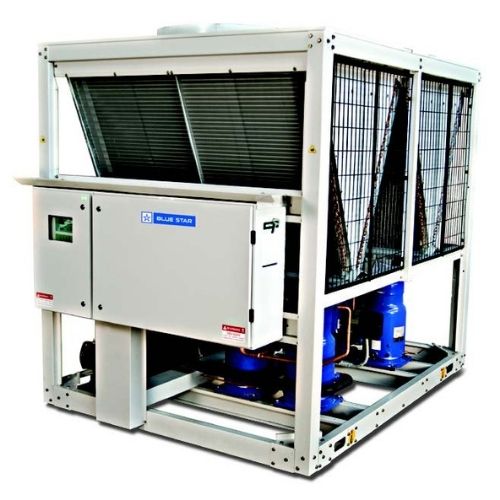
A chiller air conditioner is the core component of most centralized air conditioning systems. Instead of directly cooling air, chillers cool water, which is then circulated to different areas for heat exchange.
Types of Chiller Air Conditioners
- Air-cooled chillers – Use ambient air to remove heat
- Water-cooled chillers – Use cooling towers and water circulation
Both types are widely used depending on climate, space availability, and energy efficiency goals.
What Is a Water Chiller Machine?
A water chiller machine is a mechanical system designed to remove heat from water using vapor compression or absorption refrigeration cycles. The chilled water is then supplied to AHUs or fan coil units for space cooling.
Advantages of Water Chiller Machines
- High energy efficiency for large loads
- Longer equipment lifespan
- Lower operational costs over time
- Ideal for continuous cooling requirements
This makes water chillers the preferred solution for hospitals, data centers, manufacturing plants, and commercial complexes.
Benefits of Central Air Conditioning Systems
Installing a central air conditioning system offers several long-term advantages compared to decentralized units.
1. Energy Efficiency
Centralized systems operate at optimized loads, reducing energy wastage and lowering electricity bills.
2. Uniform Cooling
Maintains consistent temperature across all zones, improving comfort and productivity.
3. Reduced Maintenance
One centralized system is easier to monitor and maintain than dozens of individual AC units.
4. Space Optimization
Eliminates the need for multiple outdoor units, improving building aesthetics.
5. Smart Control Integration
Modern systems integrate with building management systems (BMS) for real-time monitoring and automation.
Applications of Centralized Air Conditioning and Cooling Systems
Centralized air conditioning and cooling solutions are widely used across industries.
Commercial Buildings
- Corporate offices
- Shopping malls
- Hotels
Healthcare Facilities
- Hospitals
- Diagnostic centers
- Laboratories
Industrial Applications
- Manufacturing plants
- Pharmaceutical facilities
- Cold storage units
Infrastructure Projects
- Airports
- Metro stations
- Educational institutions
These environments demand reliable, continuous, and efficient cooling—something centralized systems deliver effectively.
Choosing the Right Centralized Cooling Solution
Selecting the right air cooling system depends on multiple factors.
Key Considerations
- Building size and layout
- Cooling load requirements
- Energy efficiency ratings
- Climate conditions
- Long-term operational costs
Working with experienced HVAC solution providers ensures proper system design, installation, and performance optimization.
For businesses seeking reliable and energy-efficient centralized cooling solutions, manufacturers like Blue Star’s HVAC division offer advanced centralized air conditioning systems, chiller air conditioners, and water chiller machines designed for diverse applications.
👉Learn more at: https://hiqbluestar.com/#Services
Energy Efficiency and Sustainability Trends
With rising energy costs and environmental concerns, modern central air conditioning systems are evolving rapidly.
Emerging Trends
- Variable frequency drives (VFDs)
- Eco-friendly refrigerants
- Smart sensors and AI-based optimization
- Heat recovery systems
These innovations significantly reduce carbon footprint while improving system performance.
Maintenance Best Practices for Central Cooling Systems
Regular maintenance is essential to maximize the lifespan of air conditioning and cooling systems.
Recommended Practices
- Routine filter cleaning
- Periodic chiller performance checks
- Monitoring refrigerant levels
- Inspecting pumps and valves
- Updating control software
Proactive maintenance prevents breakdowns and ensures optimal energy efficiency.
Final Thoughts
A well-designed centralized air conditioning system is more than just a cooling solution—it’s a strategic investment in comfort, efficiency, and sustainability. Whether it’s a chiller air conditioner or a high-capacity water chiller machine, centralized cooling systems are essential for modern infrastructure.
As demand for intelligent air cooling systems continues to grow, businesses must choose reliable technologies and experienced solution providers to future-proof their cooling needs.
