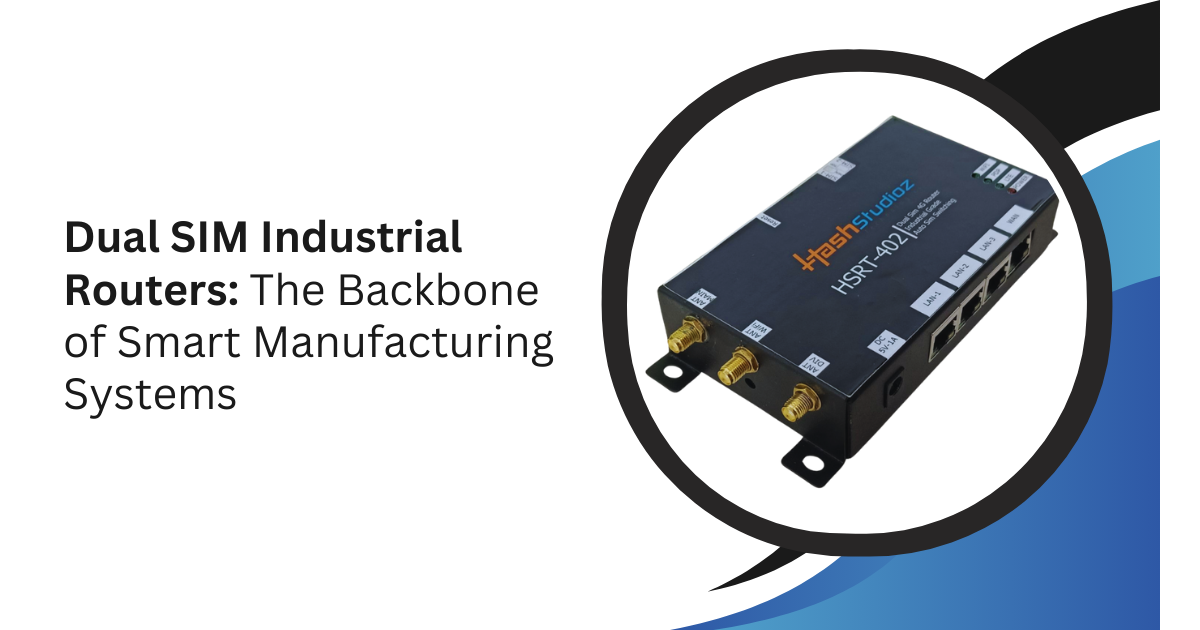
In the era of smart manufacturing, ensuring constant and reliable connectivity across industrial operations is crucial. From real-time monitoring to automated production lines, uninterrupted communication and data transmission are fundamental to the smooth functioning of modern factories. One of the key devices that play a pivotal role in this is the Dual SIM Industrial Router. This device enhances network reliability, improves uptime, and secures communication channels, making it indispensable for smart manufacturing systems.
What is a Dual SIM Industrial Router?
A Dual SIM Industrial Router is a networking device designed for use in industrial environments. Unlike traditional routers, which use a single mobile network connection (via SIM cards), a Dual SIM Router has two SIM slots, allowing it to connect to two different mobile networks simultaneously. This dual connectivity offers several advantages, especially in critical applications where reliability and uptime are paramount.
The router supports automatic failover and load balancing, meaning it can switch between the two network providers if one fails, ensuring that the system remains connected without any disruption. This makes the Dual SIM Router an ideal solution for industrial settings that require consistent, real-time communication and data transfer.
Why Dual SIM Routers are Essential for Smart Manufacturing
Smart manufacturing relies heavily on IoT devices, sensors, and automated systems. These systems collect and exchange large volumes of data for analysis and decision-making. For this reason, the manufacturing industry needs highly reliable networking solutions. The Dual SIM Industrial Router addresses many of the challenges faced by traditional routers in these environments. Below are the primary reasons why these routers are critical for smart manufacturing:
1. Enhanced Connectivity Reliability
One of the most significant benefits of a Dual SIM Router is its ability to provide continuous connectivity. In industrial settings, network downtime can cause delays, reduce efficiency, and result in significant financial losses. For example, even a few minutes of downtime on a production line can affect the entire manufacturing process. A Dual SIM Industrial Router minimizes this risk by providing automatic failover from one network to another if one SIM card loses signal or experiences an issue. This ensures that communication between systems remains uninterrupted.
2. Improved Redundancy
Redundancy is essential in industries that rely on remote monitoring and control of machinery, vehicles, and equipment. With Dual SIM Routers, manufacturers can connect to two separate mobile carriers, such as 4G or 5G networks. If one carrier faces service issues, the device automatically switches to the other, maintaining continuous operation without any human intervention. This built-in redundancy ensures that smart manufacturing systems remain operational even in the event of network failures.
3. Cost-Effective Network Management
A Dual SIM Router allows businesses to use multiple mobile network operators, which can result in cost savings. For instance, a manufacturer can choose one carrier for primary connectivity and another for backup at a lower cost. Additionally, Dual SIM Routers can help manufacturers optimize their data usage by selecting networks based on factors like speed, reliability, or cost. This can lead to better management of data plans and reduce unnecessary expenses.
4. Flexible Connectivity Options
Manufacturers often operate in regions with varying levels of network coverage. A Dual SIM Industrial Router provides flexibility by allowing users to choose networks that offer the best coverage in specific areas. This is particularly useful in remote locations, where a single network provider may not offer consistent service. With Dual SIM Routers, industrial applications can seamlessly switch between carriers, ensuring that operations are not hindered by poor network coverage.
Technical Features of Dual SIM Routers
To understand why Dual SIM Industrial Routers are so valuable, it’s essential to explore their key technical features. These features are designed to meet the rigorous demands of industrial environments.
1. Automatic Failover and Load Balancing
Automatic failover is one of the primary functions of a Dual SIM Router. In the event of a primary network failure, the router will automatically switch to the secondary network. This ensures that the industrial system does not experience downtime. Load balancing, on the other hand, allows data traffic to be distributed evenly across both networks, improving overall network performance.
2. Wide Temperature and Environmental Tolerance
Industrial environments often involve harsh conditions such as high temperatures, dust, and moisture. Dual SIM Industrial Routers are built to withstand these conditions. Many models are designed with rugged casings that protect the internal components from environmental factors. This ensures longevity and reliability even in challenging industrial environments.
3. Multiple Network Protocols
These routers support a variety of network protocols, including 4G LTE, 5G, and sometimes even Wi-Fi, enabling communication across different network infrastructures. The versatility of supporting multiple protocols ensures that the router can adapt to various technological environments, making it a valuable tool in the modern industrial IoT ecosystem.
4. VPN and Security Features
Security is paramount in any industrial network. Dual SIM Routers typically come with advanced security features like Virtual Private Network (VPN) support, firewall protection, and data encryption. These features help secure data as it travels across networks, preventing unauthorized access and ensuring that the sensitive industrial data remains protected.
5. Remote Monitoring and Management
Industrial routers often come with built-in remote management capabilities. This allows network administrators to monitor and manage routers from a centralized location. Remote monitoring and management tools enable quick troubleshooting and configuration adjustments, reducing the need for on-site interventions and increasing operational efficiency.
Applications of Dual SIM Routers in Smart Manufacturing
1. Remote Monitoring and Control
In modern manufacturing facilities, equipment and machinery are often monitored and controlled remotely. Dual SIM Routers play a critical role in these applications by ensuring that data from sensors and machines are transmitted securely and reliably. In case one mobile network fails, the router automatically switches to the second network, ensuring uninterrupted communication for remote operators and engineers.
2. Edge Computing and Data Transfer
With the rise of edge computing, large volumes of data are generated and processed locally before being transmitted to central systems. The Dual SIM Router facilitates smooth data transfer between edge devices and cloud systems by maintaining consistent connectivity, even in environments with unstable network coverage.
3. Fleet Management
For industries that rely on fleets of vehicles (e.g., logistics, transportation), Dual SIM Routers ensure that vehicles are constantly connected to the central monitoring system. Whether a vehicle is in a remote area with weak network coverage or moving between different network zones, the router ensures that communication remains seamless.
4. Industrial Automation and IoT
IoT devices used in industrial automation, such as robots, actuators, and smart sensors, require constant connectivity to share real-time data. A Dual SIM Router ensures that these devices remain connected, even if one network provider experiences a service outage. This improves the overall reliability and stability of automated manufacturing systems.
Real-World Benefits of Dual SIM Routers
1. Automotive Manufacturing
An automotive manufacturer with factories spread across different geographic locations implemented Dual SIM Routers to ensure constant connectivity between their systems and remote monitoring centers. In some remote areas, network coverage was intermittent, leading to network outages. After integrating Dual SIM Routers, the factory experienced zero downtime as the router switched to the backup network when primary network issues occurred. This increased operational efficiency and reduced the risk of costly delays.
2. Oil and Gas Industry
The oil and gas industry operates in harsh and remote environments where network reliability is critical. One company adopted Dual SIM Routers to monitor equipment in real-time and transmit operational data from offshore oil rigs. These routers provided stable and continuous connectivity, even when the primary network was unavailable. The result was improved decision-making, faster issue resolution, and enhanced operational safety.
Future Trends in Dual SIM Routers
As manufacturing processes become increasingly automated and reliant on IoT devices, the demand for reliable and secure connectivity will continue to grow. Future trends for Dual SIM Industrial Routers include:
- 5G Integration: With the rollout of 5G networks, Dual SIM Routers are expected to support 5G alongside 4G LTE, providing faster data speeds and more reliable connections for industrial applications.
- AI-Powered Network Management: Artificial Intelligence (AI) could be integrated into Dual SIM Routers to optimize network performance based on real-time data and usage patterns.
- Increased Security Features: With the rise of cyber threats, manufacturers will demand more advanced security protocols, including intrusion detection and enhanced encryption methods.
Conclusion
Dual SIM Industrial Routers are an essential component of modern smart manufacturing systems. They provide the reliability, redundancy, and flexibility necessary for the seamless operation of industrial IoT applications. By ensuring uninterrupted connectivity, these routers enable manufacturers to optimize operations, reduce downtime, and improve the overall efficiency of their systems. As industries continue to evolve towards greater automation and digitalization, the importance of Dual SIM Routers in supporting critical infrastructure cannot be overstated. They are not just a backup solution but an integral part of the backbone that keeps the wheels of smart manufacturing turning smoothly.
