Judgment often enters quietly. It does not announce itself. It slips into our thoughts as certainty, as protection, as the belief that we understand more than we do. Over time, it shapes how we see others and, just as importantly, how we see ourselves.
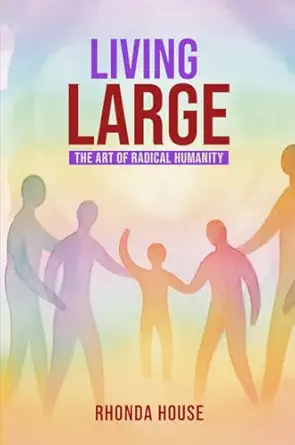
In Living LARGE: The Art of Radical Humanity – Reclaiming Kindness as a Superpower, Rhonda House invites us to slow down and examine this habit. She asks us to consider what judgment costs us, not only in strained relationships but in missed moments of genuine connection. Acceptance, in her framework, is not a soft or passive response. It is a deliberate and often challenging act of humanity.
The Quiet Damage of Judgment
Judgment creates distance long before we recognize it. It can sound like impatience with a loved one who does not meet our expectations, or quiet dismissal of someone whose experiences feel unfamiliar. It can live in assumptions we never question and opinions we form without listening fully.
When judgment becomes our default, relationships begin to feel conditional. We engage less with who people are and more with who we think they should be. Over time, this erodes trust. Conversations become guarded. Curiosity fades. What remains is a subtle but persistent sense of separation.
House’s work encourages awareness rather than self-criticism. Noticing judgment is not a failure. It is the beginning of freedom. Only what we are willing to see can be changed.
Acceptance Begins Within
Acceptance of others is deeply connected to acceptance of ourselves. When we struggle to extend grace inward, we often become rigid outwardly. Unresolved self-judgment has a way of projecting itself onto the people around us.
Practicing acceptance with ourselves means acknowledging imperfection without retreating into shame. It means recognizing that growth is uneven and that becoming more human is a lifelong process. This inner acceptance creates emotional space. In that space, patience becomes possible. So does compassion.
Without self-acceptance, kindness feels effortful. With it, kindness becomes more natural.
Acceptance in Relationships
In relationships, acceptance shifts our posture. We move from control to curiosity, from correction to understanding. Instead of asking why someone is not different, we begin to wonder who they are beneath their defenses, their habits, their stories.
Acceptance shows itself in listening without interruption, in allowing others to evolve at their own pace, and in resisting the urge to fix what feels uncomfortable. It does not mean agreement. It means respect.
When people feel accepted, they feel safe. Safety opens the door to honesty. Honesty deepens trust. Trust transforms relationships into places where growth can occur without fear.
From Personal Practice to Community Culture
The Living LARGE philosophy reminds us that inner work does not stay contained. Acceptance practiced privately shapes how we show up publicly.
Communities grounded in acceptance create room for difference without fragmentation. They value presence over perfection and dialogue over division. People feel seen rather than categorized. Disagreements become opportunities to learn instead of reasons to withdraw.
Acceptance strengthens accountability rather than weakening it. When individuals feel respected, they are more willing to participate, contribute, and take responsibility for the collective well-being.
This is where acceptance becomes an act of radical humanity. It is kindness lived out through everyday choices, not grand gestures.
Choosing Acceptance, Again and Again
Breaking free from judgment is not a single decision. It is a practice repeated in ordinary moments. It is the pause before reacting. The willingness to listen a little longer. The courage to remain open when closing off would feel easier.
In a world that rewards quick conclusions and sharp opinions, acceptance requires intention. It asks us to move more slowly, to hold complexity, and to remember our shared humanity.
Living LARGE means choosing acceptance not because it is easy, but because it is transformative. One relationship, one conversation, one moment at a time.
