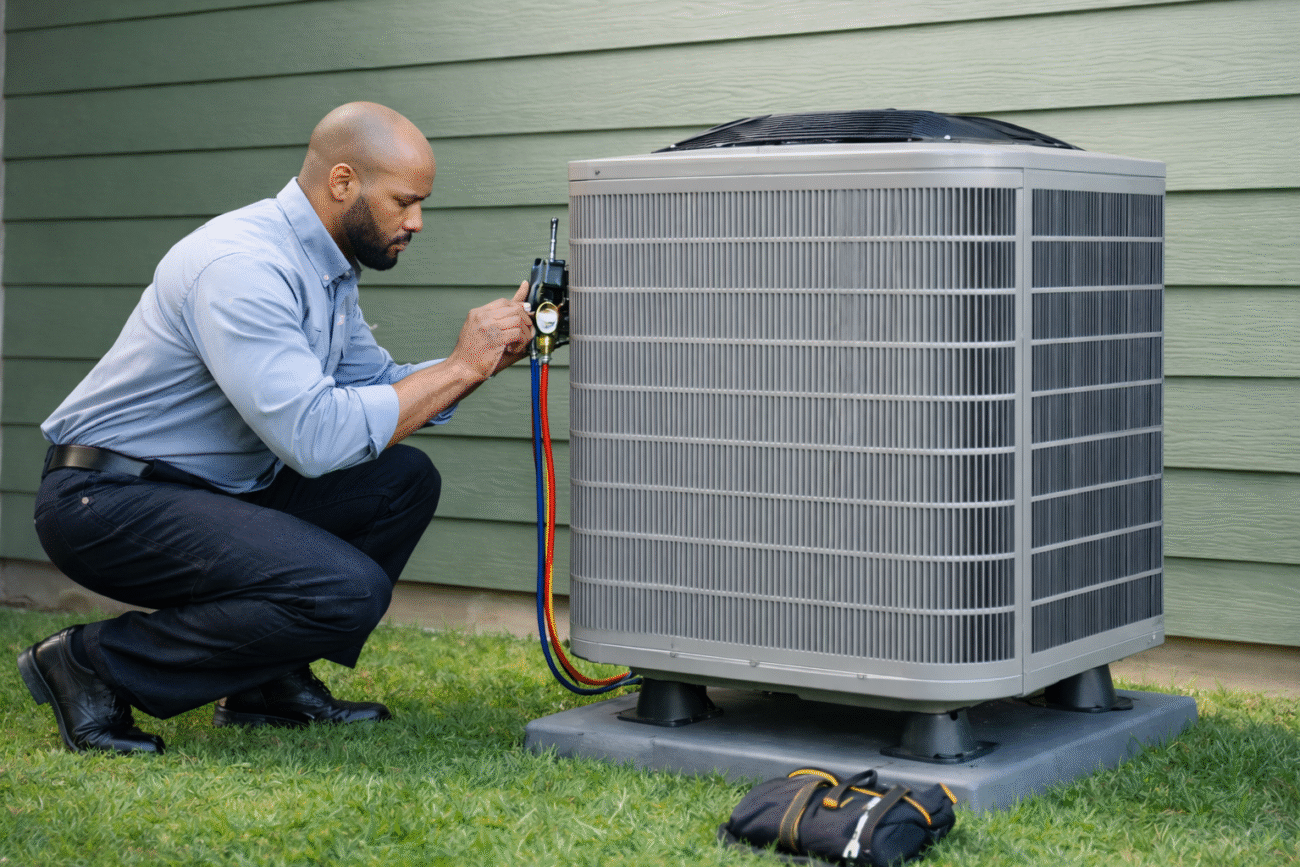
In hot desert climates, air conditioning is not a luxury. It is essential for comfort, safety, and indoor air quality. Cities that experience long summers, extreme daytime heat, and dry air conditions place enormous strain on cooling systems. When temperatures regularly exceed 100°F, an air conditioner often runs for extended hours without meaningful breaks. Under these conditions, even small inefficiencies can translate into significantly higher electricity bills.
Many homeowners assume rising energy costs are unavoidable during peak summer months. In reality, a large portion of excessive cooling expenses comes from neglected maintenance rather than extreme weather alone. Routine AC maintenance directly improves system efficiency, lowers energy consumption, and prevents costly breakdowns that drive long term expenses higher.
Why Desert Climates Increase Energy Consumption
Desert environments create a unique operating challenge for HVAC systems. Unlike moderate climates, cooling systems must combat several stress factors simultaneously:
- Continuous high outdoor temperatures
- Dust and sand infiltration
- Low humidity combined with intense solar heat gain
- Longer cooling seasons
- Increased runtime cycles
When an air conditioner operates almost nonstop, minor issues compound quickly. A slightly clogged filter, dirty coil, or low refrigerant level forces the system to work harder to achieve the same indoor temperature. That extra effort directly increases electricity usage.
Homeowners who invest in regular professional servicing through an ac maintenance service often notice measurable reductions in monthly utility costs because the system operates closer to its designed efficiency.
How AC Systems Lose Efficiency Over Time
Air conditioners do not suddenly become inefficient. Performance declines gradually, which makes the problem easy to ignore until energy bills spike.
1. Dirty Air Filters Restrict Airflow
Dust accumulation happens faster in desert regions due to dry soil and airborne particles. When filters clog:
- Airflow decreases
- The blower motor works harder
- Cooling cycles run longer
- Energy consumption rises
A clogged filter alone can increase energy usage by up to 15 percent according to industry studies.
2. Dust-Coated Coils Reduce Heat Transfer
Evaporator and condenser coils are responsible for removing heat from indoor air. In dusty climates, these coils quickly collect debris.
When coils are dirty:
- Heat exchange becomes inefficient
- The compressor runs longer
- Cooling output drops while power usage increases
Routine cleaning restores proper thermal performance.
3. Refrigerant Imbalance
Low refrigerant levels are a common but overlooked issue. Even small leaks reduce cooling capacity and force the compressor to operate under stress. This not only increases electricity consumption but also shortens system lifespan.
Professional maintenance includes checking pressures and correcting refrigerant levels before efficiency loss becomes expensive.
The Direct Connection Between Maintenance and Lower Energy Bills
Routine maintenance reduces energy bills through several measurable mechanisms.
Improved Airflow Efficiency
Proper airflow allows conditioned air to circulate evenly throughout the home. When airflow improves:
- Rooms cool faster
- Thermostats reach target temperatures sooner
- Systems cycle off more frequently
Shorter run times equal lower electricity use.
Optimized System Calibration
Technicians inspect electrical components, thermostat accuracy, and fan operation. Small calibration adjustments prevent overcooling and unnecessary runtime.
Many systems waste energy simply because they are slightly misconfigured.
Reduced Compressor Load
The compressor consumes the majority of an AC unit’s electricity. Maintenance ensures it operates under normal pressure and temperature conditions. Lower strain equals reduced power consumption and fewer repairs.
Preventing Hidden Energy Waste
Energy loss is not always obvious. Many homes experience gradual efficiency decline without noticeable comfort changes.
Routine inspections identify hidden issues such as:
- Leaky ductwork allowing cooled air to escape
- Worn capacitors causing inefficient startups
- Dirty blower assemblies reducing circulation
- Blocked condensate drains affecting humidity balance
Fixing these problems early prevents energy waste that compounds month after month.
Maintenance vs. Emergency Repairs: The Cost Reality
Skipping maintenance often appears to save money in the short term. In desert climates, this assumption rarely holds true.
Consider the typical progression:
- Filters remain unchanged and airflow drops.
- System runtime increases.
- Electricity bills rise gradually.
- Components overheat due to strain.
- Major parts fail during peak summer demand.
Emergency repairs during heat waves are usually more expensive due to high service demand and urgent replacement needs. Preventive servicing costs significantly less than compressor or motor replacement.
How Maintenance Extends System Lifespan
Energy efficiency and equipment longevity are closely connected. When an AC system operates efficiently:
- Internal components experience less friction and heat
- Electrical parts last longer
- Compressor failure risk decreases
In desert regions, poorly maintained systems may fail years earlier than expected. Replacing an air conditioner prematurely represents one of the highest avoidable household expenses.
Routine servicing protects the original investment while keeping operating costs predictable.
Recommended Maintenance Schedule for Desert Homes
Maintenance frequency should match environmental conditions. Desert climates require more attention than cooler regions.
Recommended schedule:
- Air filter inspection: every 30 to 45 days during summer
- Professional maintenance: twice per year (spring and mid-season)
- Outdoor unit cleaning: monthly visual inspection
- Thermostat performance check: annually
Homes near construction zones or open desert areas may require more frequent filter replacements due to airborne dust.
Additional Ways Maintenance Improves Indoor Comfort
Lower energy bills are only part of the benefit. Proper maintenance also improves indoor living conditions.
Better Temperature Consistency
Balanced airflow eliminates hot and cold spots throughout the home.
Improved Air Quality
Clean filters and coils remove dust, allergens, and pollutants more effectively.
Reduced Noise Levels
Well-maintained systems operate more quietly because motors and fans experience less resistance.
These improvements often go unnoticed until homeowners experience the difference after servicing.
Signs Your AC Is Wasting Energy
Homeowners in hot climates should watch for early warning signs:
- Energy bills rising without increased usage
- AC running continuously during moderate heat
- Weak airflow from vents
- Uneven cooling between rooms
- System turning on and off frequently
- Warm air blowing intermittently
Ignoring these symptoms typically leads to higher operating costs over time.
The Long-Term Financial Impact
Routine maintenance should be viewed as an efficiency investment rather than a maintenance expense.
Over several years, homeowners typically benefit from:
- Lower monthly electricity bills
- Fewer repair emergencies
- Extended equipment lifespan
- More stable indoor comfort
- Reduced risk of mid-summer breakdowns
In desert climates where cooling demand dominates household energy use, even small efficiency gains produce meaningful annual savings.
Conclusion
Extreme heat makes air conditioning one of the largest contributors to household energy expenses in desert regions. However, high electricity bills are not solely caused by climate conditions. Most excessive cooling costs stem from reduced system efficiency caused by dust buildup, airflow restrictions, and unnoticed mechanical issues.
Routine AC maintenance restores performance, reduces strain on critical components, and ensures the system operates as efficiently as possible during peak heat. By addressing small problems early and keeping equipment properly calibrated, homeowners can significantly reduce energy consumption while improving reliability and indoor comfort.
In environments where air conditioners work the hardest, consistent maintenance is not optional. It is the most practical and cost effective strategy for controlling energy bills and protecting long term cooling performance.
