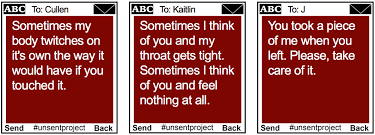
In the age of instant communication, we send hundreds of messages without hesitation. Yet, some of the most important words remain trapped in drafts — typed, reread, and deleted. The unsent project website captures those silent confessions and turns them into a collective emotional archive.
What started as a creative concept has grown into a global phenomenon where strangers anonymously share messages they never had the courage to send. These submissions range from love and longing to regret, anger, and closure. At its core, the unsent message project reflects a universal truth: not everything we feel gets expressed in real life.
What Is the Unsent Message Project?
The unsent message project refers to an online artistic platform where individuals submit anonymous text messages addressed to someone significant in their lives. These messages are never actually delivered to the intended recipient. Instead, they are published publicly — without names, without identities, and without consequences.
One of the most well-known examples of this concept is The Unsent Project, created by Rora Blue. Originally centered around first love, the project expanded to include messages about heartbreak, missed opportunities, family struggles, friendships, and even grief.
The simplicity of the idea is what makes it powerful:
Write what you couldn’t say.
Share it anonymously.
Let it exist.
Why the Unsent Message Project Resonates So Deeply
1. Everyone Has Something They Never Said
Almost everyone carries emotional residue — words left unsaid during arguments, confessions never made, apologies delayed too long. The unsent message project becomes a safe space for those lingering emotions.
Whether it’s:
- “I still think about you.”
- “I’m sorry for hurting you.”
- “You never knew how much I cared.”
- “I wish I had fought harder.”
These messages represent unfinished emotional business.
2. Anonymity Creates Honesty
In real life, vulnerability feels risky. Rejection, judgment, or misunderstanding can stop us from speaking openly. Anonymity removes that fear.
When there’s no identity attached:
- People write more honestly.
- Emotions become raw and unfiltered.
- There is no need for self-protection.
The unsent message project thrives because it offers emotional freedom without real-world consequences.
3. It Validates Shared Human Experience
One of the most powerful aspects of browsing an unsent message project is relatability. You might search a name and discover dozens of strangers writing to someone with that same name. Suddenly, you realize heartbreak isn’t personal — it’s universal.
Reading messages that echo your own thoughts can feel strangely comforting. It reminds you that:
- You’re not alone.
- Others have felt this pain.
- Healing is possible.
The Psychology Behind Unsent Messages
The concept isn’t just artistic — it’s psychological.
Emotional Release
Writing unsent messages acts as a form of expressive therapy. Psychologists often recommend journaling to regulate emotions. The unsent message project mirrors that process, but in a shared digital space.
When emotions remain internal, they can create stress or rumination. Writing externalizes those feelings, reducing mental weight.
The Fear of Vulnerability
Many unsent messages stem from fear:
- Fear of rejection
- Fear of confrontation
- Fear of appearing weak
- Fear of reopening wounds
Instead of taking the risk, people choose silence. The project becomes a symbolic “send” button — one that doesn’t notify the recipient but still provides relief.
Regret and Memory
Research consistently shows that people regret what they didn’t do more than what they did. The unsent message project becomes an archive of those regrets.
It also preserves memory. Many submissions mention:
- Specific songs
- Shared locations
- Birthdays
- Late-night conversations
These small details make the emotions feel authentic and deeply personal.
Beyond Romance: More Than Just Love Stories
Although many assume the unsent message project focuses solely on romantic relationships, the scope is much broader.
Messages are often addressed to:
- Parents
- Siblings
- Childhood friends
- Ex-best friends
- Deceased loved ones
- Former mentors
This diversity reveals something important — unfinished emotions exist in every type of relationship.
For example:
- A child apologizing to a parent.
- A friend grieving a lost connection.
- Someone saying goodbye to a person who passed away.
The emotional spectrum is wide, and that’s what makes the project powerful.
The Role of Digital Culture
The unsent message project reflects modern communication habits.
Today, we:
- Type and delete messages repeatedly.
- Screenshot conversations.
- Reread old chats late at night.
- Overthink simple replies.
Digital messaging has changed how we process emotion. Silence now often exists in the form of a draft rather than spoken hesitation.
The project captures this uniquely modern behavior. It documents the internal dialogue that never becomes an actual notification.
Is It Healing or Harmful?
Like any emotional platform, the unsent message project has mixed perspectives.
Potential Benefits:
- Encourages emotional expression
- Reduces bottled-up feelings
- Creates community through shared experience
- Provides symbolic closure
Possible Drawbacks:
- May prolong emotional attachment
- Could reinforce nostalgia
- Might reopen unresolved wounds
The impact largely depends on how individuals engage with it. For many, it serves as a stepping stone toward healing rather than a place to remain stuck.
Why the Unsent Message Project Continues to Grow
Its growth can be attributed to several key factors:
1. Simplicity
The format is easy — short, emotional messages.
2. Shareability
Quotes from submissions are highly shareable on social media platforms.
3. Universality
Love, regret, and longing are timeless emotions.
4. Accessibility
Anyone with internet access can participate.
The project speaks to both writers and readers. Some submit messages. Others simply browse. Both roles are equally meaningful.
The Cultural Significance of Words Never Sent
The unsent message project is more than a trend — it’s a reflection of human vulnerability in the digital age.
In past generations, unsent letters might have been burned or hidden in drawers. Today, they live online — anonymous yet permanent.
This shift shows how emotional expression has evolved. We may hesitate to confront someone directly, but we still crave acknowledgment of our feelings.
In a world focused on instant replies and constant connection, the unsent message project highlights something different: hesitation, restraint, and the emotional complexity behind silence.
Conclusion
The unsent message project proves that silence does not mean absence of feeling. Behind every “message never sent” is a story — sometimes of love, sometimes of regret, sometimes of growth.
Not every emotion needs to reach its intended recipient to have value. Sometimes, simply writing the words is enough.
In the end, the unsent message project reminds us of one powerful truth:
The words we never send often reveal the deepest parts of who we are.
Z.E. EYE HOSPITAL – Best Eye Hospital in Karachi for Comprehensive Eye OPD Services in Karachi
Fun Summer Solstice Party Ideas for Everyone
Southampton Taxi Service: Choose Soton Cars for Reliable Rides
Trusted Folding Doors Dubai Contractors
Kia Finance America: Everything You Need to Know About Auto Financing
