Why Seeing Wall Panels Before Buying Changes Everything
Choosing wall panels should feel exciting, not confusing. But for many customers, it is hard to imagine how a panel will actually look once it is installed on a real wall. A design may look beautiful in a catalog swatch or showroom sample, yet feel completely different inside a living room, bedroom, office, or commercial space.
That is exactly why a 3d wall panels visualizer is becoming such an important tool for wall panel brands, interior businesses, and design-focused retailers. Instead of asking customers to guess, it helps them preview panel styles in realistic room settings before making a decision.
This changes the entire buying experience. Customers become more confident. Designers can present better ideas. Sales teams can close faster. And brands can create a more modern, interactive journey that feels helpful instead of pushy.
Today, the market is moving toward visual buying experiences. When someone can upload or select a room, apply different panel styles, and instantly compare options, the process becomes easier, faster, and much more engaging.
What Is a 3D Wall Panels Visualizer?
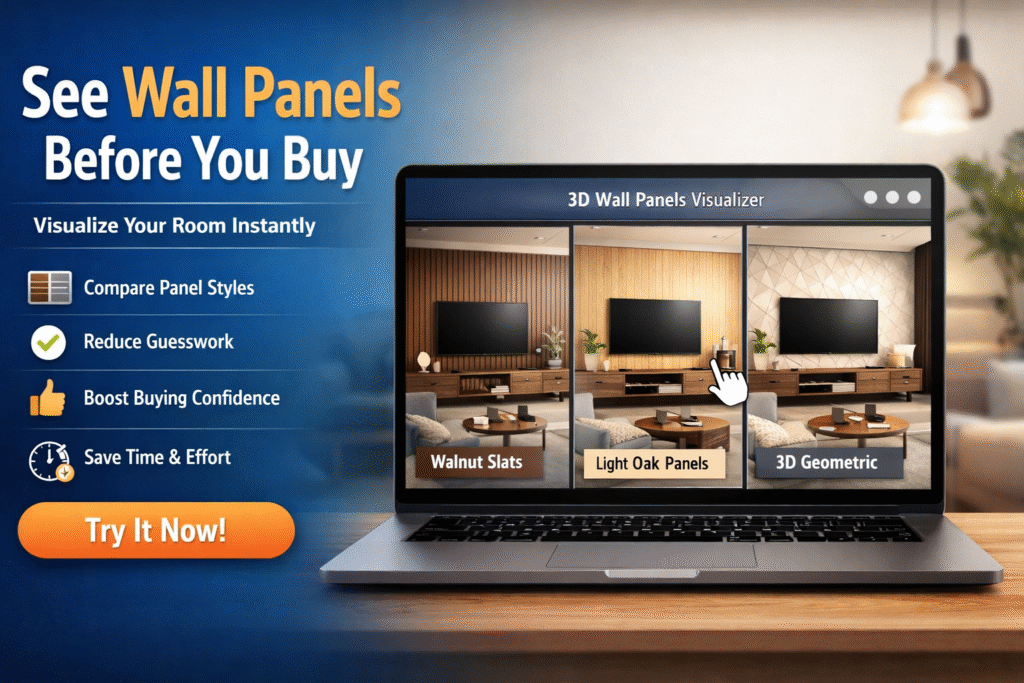
A 3d wall panels visualizer is a digital tool that allows users to apply wall panel designs onto walls in room images or preset spaces. It helps customers understand how texture, color, pattern, depth, and finish will look in a real environment.
Instead of relying only on imagination, the visualizer creates a practical preview. A user can see whether a wood panel adds warmth, whether a fluted panel gives the right premium feel, or whether a modern geometric design fits the rest of the room.
For example, a homeowner redesigning a TV wall may want to compare walnut slatted panels with a lighter oak finish. In a traditional buying journey, they would have to depend on small samples and verbal suggestions. With a 3d wall panels visualizer, they can view both options in a room-like setting and make a clearer decision.
How This Tool Helps Customers Make Better Decisions
One of the biggest reasons people delay purchases is uncertainty. They do not want to invest in a product and later feel it looked different than expected.
It Reduces Guesswork
Wall panels affect the entire mood of a room. A bold texture can feel luxurious in one space and overwhelming in another. A visualizer reduces uncertainty by showing the design in context.
It Improves Buying Confidence
When customers can actually see the product on a wall, they feel more secure in their choice. They are less likely to second-guess the purchase, which often leads to better conversion rates for brands.
It Makes Comparison Easy
A strong 3d wall panels visualizer lets users switch between designs quickly. This is useful when someone wants to compare finishes, styles, or colors side by side without going back and forth between static product images.
It Saves Time for Everyone
Customers get answers faster. Sales teams spend less time explaining. Designers can present more visually convincing concepts. That makes the overall journey smoother and more efficient.
Why Wall Panel Brands Should Care
For brands, this is not just a design feature. It is a sales and engagement tool.
A good 3d wall panels visualizer can keep users on the website longer, increase interaction with products, and help move people closer to inquiry or purchase. Instead of browsing passively, visitors become active participants in the experience.
Imagine a wall panel brand showcasing acoustic panels, decorative wood panels, and luxury feature wall designs. If every visitor can test these options in a room setting, the website becomes much more than a catalog. It becomes a decision-making platform.
That is where companies like Nirwana.ai are helping brands create more realistic, useful visualization experiences that feel aligned with how modern buyers actually shop.
Key Features That Make a Visualizer More Useful
Not all visualizers are equally effective. A basic tool may only place a flat texture on a wall. A better one considers realism, scale, usability, and ease of comparison.
Realistic Surface Application
The visualizer should apply the design in a way that feels natural on the wall. Lighting, perspective, and alignment all make a big difference in how believable the preview feels.
Multiple Room Views
Some users want to test products in preset rooms, while others want to imagine them in their own spaces. Supporting both use cases can significantly improve user experience.
Fast Design Switching
A user should be able to explore several options quickly. If it takes too long to load or compare, they may leave before reaching a decision.
Mobile-Friendly Experience
Many users browse interior products on phones. A 3d wall panels visualizer should work smoothly on mobile so the experience remains accessible and convenient.
Brand and Catalog Integration
For businesses, the tool should connect naturally with their product library. This makes it easier to showcase collections, update designs, and maintain a clean customer experience.
Real-World Use Cases for a 3D Wall Panels Visualizer
A 3d wall panels visualizer can support many business types, not just large manufacturers.
Interior designers can use it to present multiple feature wall ideas to clients. Instead of sending mood boards alone, they can show near-real previews that communicate the concept more clearly.
Retailers can use it to help online shoppers visualize premium wall finishes before ordering samples or speaking with sales representatives.
Architects and project consultants can use it during early design discussions to align with client preferences faster.
Even showrooms can benefit. A visualizer displayed on a kiosk or tablet can turn product discovery into a more interactive experience.
For example, a customer entering a showroom may like three panel styles but feel unsure about which one fits their bedroom. A 3d wall panels visualizer can help them test those exact options instantly, reducing hesitation and improving the quality of the sales conversation.
How It Helps Brands Stand Out Online
The home improvement and interior category is becoming more visual every year. Customers now expect product pages to do more than just list specifications.
A brand that offers a smart visual experience feels more premium, more helpful, and more future-ready. It signals that the company understands customer pain points and is willing to simplify the decision process.
This is one reason brands are exploring visualization platforms from specialists like Nirwana.ai. The value is not only in making products look attractive, but in helping visitors take action with more confidence.
And that matters because better confidence often leads to better business outcomes.
What to Look for Before Choosing a Visualizer
If you are considering adding this technology to your business, focus on the experience it creates for the user.
Ask whether the previews feel realistic. Check whether the interface is simple enough for first-time visitors. Make sure the design application feels relevant for wall panels specifically, not just generic surfaces. Most importantly, think about whether the tool helps users move from interest to decision.
A useful 3d wall panels visualizer should support both inspiration and conversion. It should not feel like a gimmick. It should feel like a natural part of the buying journey.
Final Thoughts
A 3d wall panels visualizer is no longer just a nice feature for innovative brands. It is becoming a practical advantage in a category where visualization plays a major role in purchase decisions.
When customers can see wall panel designs in realistic spaces, they feel more certain, more engaged, and more ready to move forward. For brands, that means a stronger digital experience and a smarter way to present products online.
If you want to make wall panel selection easier and more interactive, exploring a solution from Nirwana.ai could be a strong next step toward a more modern customer journey.
