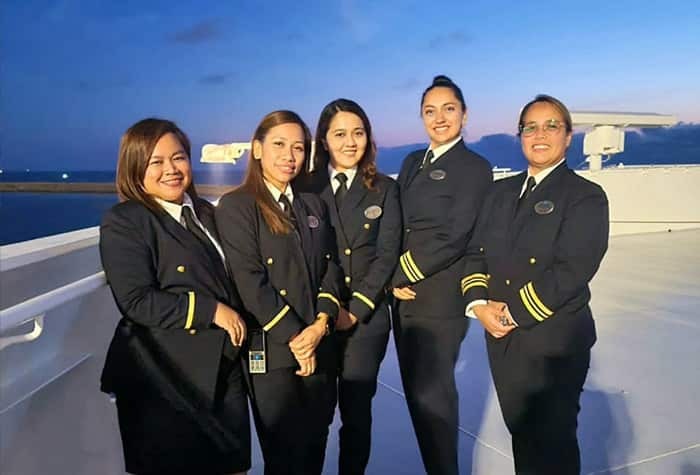
Cruise lines operate like floating cities, with hundreds of staff members working across dozens of departments. Not everyone wears formal officer attire or galley uniforms. Shore excursion teams, activity coordinators, gift shop employees, and pool deck staff need apparel that’s comfortable, identifiable, and durable enough to handle long days in demanding environments.
Cruise line uniforms for these guest-facing teams have shifted toward branded polos, t-shirts, and hats, apparel that balances professionalism with practicality.
Why Casual Branded Apparel Works for Cruise Staff
Shore excursion guides spend hours outdoors in varying climates. Activity coordinators move constantly, running pool games, fitness classes, and entertainment programs. Retail staff stand for full shifts in climate-controlled shops.
Traditional formal uniforms don’t fit these roles. Polos breathe better than button-downs. T-shirts allow free movement. Hats protect against sun exposure during outdoor assignments.
The goal is hospitality workwear that guests can easily identify while keeping staff comfortable throughout shifts. A branded polo with a clean logo placement accomplishes this without the stiffness of traditional uniforms.
Choosing the Right Garments
Different roles call for different apparel weights and styles.
- Polos work well for guest services desks, shore excursion leaders, and retail staff. They look polished while handling all-day wear. Screen-printed or sublimated logos hold up through repeated washing, an important factor given shipboard laundry frequency.
- T-shirts suit activity teams, deck crews, and behind-the-scenes support staff. Lightweight cotton-blend tees keep staff cool during physical work. For teams working outdoor events or tropical ports, breathability matters more than formality.
- Hats protect outdoor staff and reinforce brand visibility. Five-panel and six-panel caps work for shore excursion teams and deck staff. Embroidered or printed logos stay visible at a distance, helping guests locate staff quickly.
Sublimation vs. Screen Printing for Cruise Line Uniforms
Both production methods serve cruise line apparel programs, but they suit different applications.
Screen printing handles cotton and cotton-blend garments well. It’s the right choice for bold logo placements on polos and t-shirts. Specialty inks like discharge create a soft hand feel, while water-based inks keep prints breathable in warm environments.
Sublimation works with polyester/spandex blend fabrics and allows for edge-to-edge, full-color printing. Activity teams with vibrant, all-over designs often prefer sublimated apparel. Because the ink bonds directly into the fabric, sublimation prints won’t crack or peel, even after dozens of wash cycles.
For cruise operators building hospitality workwear programs, combining both methods makes sense. Polos and basic tees might use screen printing, while performance apparel for outdoor activity teams uses sublimation.
Scaling Across Fleets and Seasons
Cruise lines don’t outfit one ship; they outfit entire fleets. Staff rotate between vessels. Seasonal itineraries require updated apparel for shore excursion destinations.
Cruise line uniforms need production partners that can handle volume and maintain consistency. A polo printed for Caribbean deployment should match exactly when reordered for Mediterranean routes. Color matching, logo placement, and garment fit must stay uniform across orders placed months apart.
Fulfillment logistics also matter. Some operators prefer bulk shipments to central warehouses. Others need orders split and delivered directly to vessels in different ports. A production partner with fulfillment capabilities simplifies distribution across complex maritime schedules.
Building a Reorder-Ready Program
If staff turnover on a cruise line runs high, new hires will need uniforms, and worn garments will need replacement. A sustainable apparel program makes reordering simple.
Production partners who keep artwork, color specs, and garment selections on file reduce lead time on repeat orders. Instead of reapproving proofs and re-selecting blanks, operators place reorders that drop straight into production.
This matters when a vessel suddenly needs fifty replacement polos before its next departure. Speed often depends on having specs already locked.
Key Considerations for Cruise Operators
Before building a cruise staff apparel program, operators should clarify a few points:
How many distinct uniform styles are needed across departments? Consolidating to fewer SKUs simplifies inventory management.
Which roles require sublimation performance fabrics versus standard cotton blends? Matching fabric to job function keeps staff comfortable.
What’s the expected replacement cycle? Higher turnover roles need more frequent reorders; build that into production planning.
Does the production partner handle fulfillment to multiple ports or vessels? If so, confirm logistics before placing large orders.
Guests interact with shore excursion guides, activity coordinators, and retail staff more than almost any other crew members. What these teams wear shapes brand perception at every port of call. Comfortable, consistent, identifiable apparel helps staff do their jobs well and helps guests feel confident they’re in good hands.
Professional Chauffeur Service Parkland FL: Travel in Comfort with EZ Drivers Limo
Universal Safeguards: The Role of Danger Tape Rolls in Industrial and Public Safety
Back Pain Treatment: Effective Ways to Find Relief and Restore Spinal Health
Premium Botanical & Nutritional Supplements for Optimal Health
Huisontruiming na overlijden: veelgemaakte fouten die families moeten vermijden
