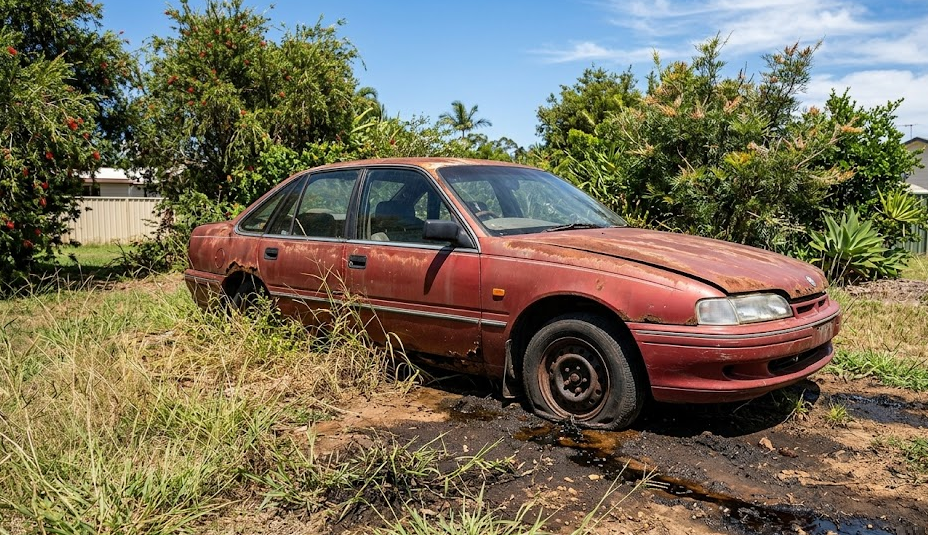
Leaving a scrap vehicle in your yard causes severe environmental damage to QLD unique ecosystems through soil acidification, toxic runoff into local waterways, and the release of hazardous heavy metals. While a stationary car may appear dormant, its internal components degrade rapidly under the intense Australian sun, creating a high-risk zone for chemical seepage and biological hazards.
For residents from the Gold Coast up to the Sunshine Coast, the “backyard wreck” is more than an eyesore; it is a localized environmental crisis. Understanding the specific impact on the QLD landscape is the first step toward responsible land management.
1. The Immediate Danger of Fluid Seepage in Subtropical Climates
Fluid seepage occurs when vehicle seals and hoses perish due to QLD’s high humidity and heat, allowing toxic liquids to escape directly into the ground. A single scrap car contains a complex cocktail of fluids that pose an immediate threat to your property’s soil health and the safety of local pets.
Common Hazardous Fluids in Scrap Vehicles:
- Engine Oil: Coats soil particles and destroys 5 types of beneficial nitrogen-fixing bacteria.
- Coolant (Antifreeze): Contains ethylene glycol, which is sweet-tasting but lethal to native QLD wildlife like possums and brush turkeys.
- Brake Fluid: A caustic substance that strips paint and contaminates shallow groundwater.
- Transmission Fluid: Highly resistant to natural biodegradation, leading to permanent soil toxicity.
When these liquids leak, they don’t remain stationary. Heavy Queensland storms wash these chemicals into storm drains, which lead directly to sensitive areas like the Moreton Bay Marine Park.
2. Soil Contamination and Heavy Metal Leaching
Soil contamination happens when heavy metals from a degrading chassis bond with earth particles, rendering the land unsafe for residential gardening. As the body of a car rusts, it sheds more than just iron oxide; it releases systemic toxins.
Comparison of Soil Impact: Active vs. Scrap Vehicles
| Feature | Active Vehicle | Scrap Vehicle (Stationary) |
| Fluid Containment | Sealed, pressurized systems | Compromised seals and dry rot |
| Metal Degradation | Managed with regular cleaning | Uncontrolled oxidation (rust) |
| Local Ecosystem | Minimal impact on a single spot | High concentration of toxins in one area |
| Bio-hazard Potential | Low | High (Rodents, snakes, spiders) |
Lead, mercury, and cadmium are 3 primary heavy metals found in older automotive batteries and sensors. When these leach into the soil, they prevent the growth of 10 common Australian garden plants, including grevilleas, bottlebrushes, and various lilly pillies.
3. Air Quality and “Off-Gassing” in the Heat
Airborne pollution from scrap cars arises when interior plastics, foam seating, and old insulation break down under Brisbane’s high UV index. This process, known as “off-gassing,” releases Volatile Organic Compounds (VOCs) into your immediate living environment.
Beyond chemical gases, as tires perish, they release micro-rubbers into the air. If you are getting rid of an old vehicle in New South Wales or across the border in Queensland, doing so before these materials disintegrate is vital for the respiratory health of your family.
4. The Risk of Fire and Hazardous Shelters
Scrap vehicles become fire hazards when dry grass grows around the chassis and interacts with residual fuel or electrical shorts in old 12V batteries. In the QLD climate, these vehicles also serve as “unnatural” shelters for dangerous pests.
In Queensland, 4 specific pests frequently inhabit abandoned cars:
- Eastern Brown Snakes: Seek the cool shade of the undercarriage.
- Redback Spiders: Nest in door seals and wheel wells.
- Mosquitoes: Breed in stagnant water trapped in tyres or broken tail lights (a Dengue and Ross River virus risk).
- Rats and Mice: Use upholstery for nesting, often leading to secondary flea infestations.
By removing the vehicle, you eliminate these biological hazards from your backyard.
5. Professional Recycling: The Sustainable Solution
Professional recycling is the most effective way to handle an end-of-life vehicle because it ensures 95% of the car’s materials are repurposed. Modern wrecking facilities utilize specialized drainage systems to capture every drop of fluid before the metal is crushed and sold as a resource.
When you decide to clear your yard, using an established Cash for Car Brisbane service ensures the process follows strict QLD environmental guidelines. These professionals provide the specialized equipment needed to transport leaking or non-running vehicles without causing further damage to your driveway or lawn.
Benefits of Professional Disposal:
- Certified Fluid Recovery: Fluids are vacuumed and sent to treatment plants.
- Metal Circularity: Steel and aluminium are recycled, reducing the need for destructive mining.
- Safe Battery Handling: Lead-acid batteries are 99% recyclable when handled by experts.
6. Pros and Cons of Immediate Vehicle Removal
Deciding whether to scrap a vehicle involves weighing the emotional “project” value against the practical and environmental costs.
Pros of Removal:
- Instant Space: Reclaim square footage for landscaping or outdoor play.
- Environmental Protection: Stop the cycle of soil poisoning immediately.
- Financial Gain: Market value for scrap metal is converted into instant funds.
- Safety: Removes hiding spots for snakes and breeding grounds for mosquitoes.
Cons of Removal:
- Loss of Parts: You can no longer harvest components (though most parts on scrap cars are already compromised).
7. Legal and Situational Relevance in QLD
Local council regulations in Brisbane and the Gold Coast often prohibit the storage of “unsightly” or “hazardous” vehicles on residential land. Fines for environmental non-compliance can be substantial if a leak is reported to the Department of Environment and Science.
The situational relevance of car removal peaks during the QLD storm season. Torrential rain washes accumulated toxins off the vehicle at an accelerated rate. Removing your scrap car before the summer rains begin is a proactive way to protect the local water table.
Summary of Environmental Impact
To summarize the ecological data, leaving a car in your yard is a slow-motion disaster.
- 1 Car can contaminate up to 20,000 litres of groundwater with its fluids.
- 98% of a car battery can be recycled, but 0% is recycled if it sits in a yard.
- 5 Square Metres of soil can become sterile and toxic due to heavy metal leaching.
The most responsible action for any QLD vehicle owner is to transition that “junk” into a recycled resource. Not only does it clean up your physical space, but it also protects the delicate Queensland ecosystem for future generations.
