



Stone Room Design: Bringing Timeless Beauty into Modern Homes
When I think about interiors that truly stand out, one thing always comes to mind—stone room design. There’s something incredibly powerful about using natural stone inside a space. It feels premium, grounded, and timeless all at once. Whether it’s marble, granite, quartz, or slate, stone has the ability to instantly elevate a room from ordinary to exceptional.
But here’s the reality—most homeowners and even designers struggle with visualizing how stone will actually look once installed. That’s where thoughtful planning and modern tools come into play. In this guide, I’ll walk you through practical ideas, real use cases, and how you can approach stone room design in a way that feels confident and mistake-free.
Why Stone Room Design Is Becoming So Popular
Stone is no longer limited to luxury villas or hotel lobbies. Today, it’s making its way into everyday homes—and for good reason.
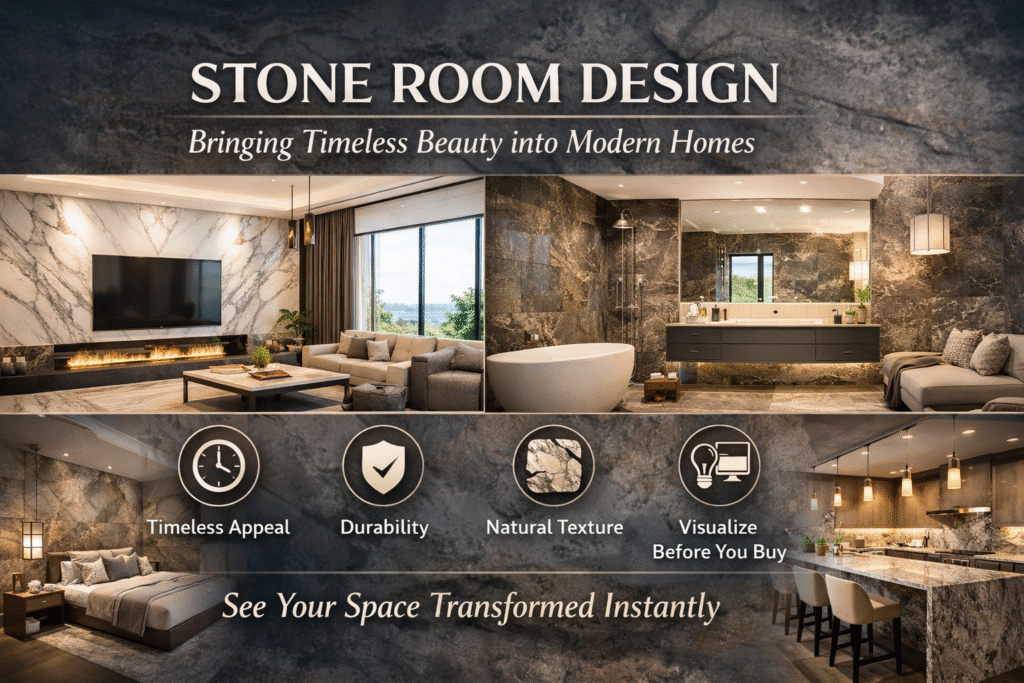
1. Timeless Appeal
Stone never goes out of style. A well-designed stone room can look just as relevant 10 years later as it does today.
2. Durability
Unlike paint or wallpaper, stone surfaces are built to last. They resist wear, scratches, and environmental damage.
3. Natural Texture & Depth
Stone adds a level of realism that artificial materials simply can’t match. The veins, patterns, and finishes create a visual richness that instantly draws attention.
Best Areas to Use Stone Room Design
If you’re planning to incorporate stone into your interiors, knowing where to use it makes all the difference.
Living Rooms: Statement Walls That Impress
A stone feature wall in the living room can completely transform the vibe of the space. Marble slabs with bookmatch patterns or textured stone panels can create a stunning focal point.
Example:
Imagine walking into a living room where the TV wall is finished in white marble with subtle grey veins—clean, modern, and luxurious.
Bathrooms: Spa-Like Experience at Home
Stone room design works beautifully in bathrooms. Granite or quartz surfaces can create a high-end, hotel-like feel.
Tip:
Use lighter stones in smaller bathrooms to make the space feel bigger and brighter.
Bedrooms: Subtle Luxury
You don’t need to go bold everywhere. A stone panel behind the bed can add a soft, elegant touch without overwhelming the room.
Kitchens: Functional Meets Aesthetic
Stone countertops and backsplashes are not just beautiful—they’re practical. They handle heat, stains, and daily use effortlessly.
Choosing the Right Stone for Your Space
Not all stones work the same way. Your choice should depend on both aesthetics and functionality.
Marble
Best for: Luxury interiors
Look: Elegant, veined patterns
Use case: Living room walls, bathrooms
Granite
Best for: High-traffic areas
Look: Speckled, durable
Use case: Kitchen countertops, flooring
Quartz
Best for: Low maintenance
Look: Consistent and modern
Use case: Kitchens, bathrooms
Slate & Natural Stone Panels
Best for: Rustic or textured designs
Look: Earthy and bold
Use case: Feature walls, exteriors
The Biggest Challenge in Stone Room Design
Here’s something most people don’t talk about.
Choosing stone from a catalog or small sample is incredibly risky.
You’re trying to imagine how a 2-inch sample will look across an entire wall or floor. Lighting, scale, and surroundings all change the final result.
This is exactly where many buyers hesitate—and sometimes make the wrong decision.
How Visualization Is Changing Stone Room Design
Today, technology is solving this problem in a big way.
With platforms like Nirwana.ai, you can actually upload a photo of your room and see how different stones will look in real space—before making a purchase.
Instead of guessing, you’re making decisions with clarity.
What This Means for Homeowners
- You can try multiple stone options instantly
- You see real lighting, shadows, and textures
- You avoid costly mistakes
What This Means for Brands
- Faster customer decisions
- Higher conversions
- Fewer product returns
Stone room design is no longer about imagination—it’s about visualization.
Design Tips to Make Your Stone Room Stand Out
Even the best material can fall flat without proper design. Here are some practical tips I always recommend.
1. Don’t Overuse Stone
Less is more. A single well-designed stone wall is often more impactful than covering the entire room.
2. Focus on Lighting
Lighting plays a huge role in how stone appears. Warm lighting enhances beige and gold tones, while cool lighting works well with grey and white stones.
3. Match with Minimal Furniture
Let the stone be the hero. Keep furniture simple so the textures and patterns can shine.
4. Consider Bookmatch Patterns
Bookmatching creates a mirror-like effect with stone slabs, adding a dramatic and luxurious touch.
Real-Life Scenario: From Confusion to Confidence
Let’s take a simple example.
A homeowner wants to redesign their living room wall using marble. They visit a showroom, see multiple options, and feel overwhelmed.
Instead of guessing, they upload a photo of their room into a visualization tool like Nirwana.ai. Within minutes, they can see:
- How each marble looks on their wall
- Which pattern fits best
- How lighting affects the final result
This transforms the entire buying experience—from confusion to confidence.
Future of Stone Room Design
Stone room design is evolving fast. It’s no longer just about materials—it’s about experience.
We’re moving towards a world where:
- Customers visualize before buying
- Designers create digitally before execution
- Brands sell through experience, not just catalogs
This shift is making the entire process smarter, faster, and more customer-friendly.
Conclusion
Stone room design is one of the most powerful ways to elevate your interiors. It brings together beauty, durability, and timeless appeal in a way few materials can match.
But the key to getting it right lies in visualization and smart decision-making. With modern tools like Nirwana.ai, you don’t have to rely on imagination anymore—you can see exactly how your space will look before making a choice.
If you’re planning your next interior upgrade, start with stone—and design it with clarity, not guesswork.
About the Author