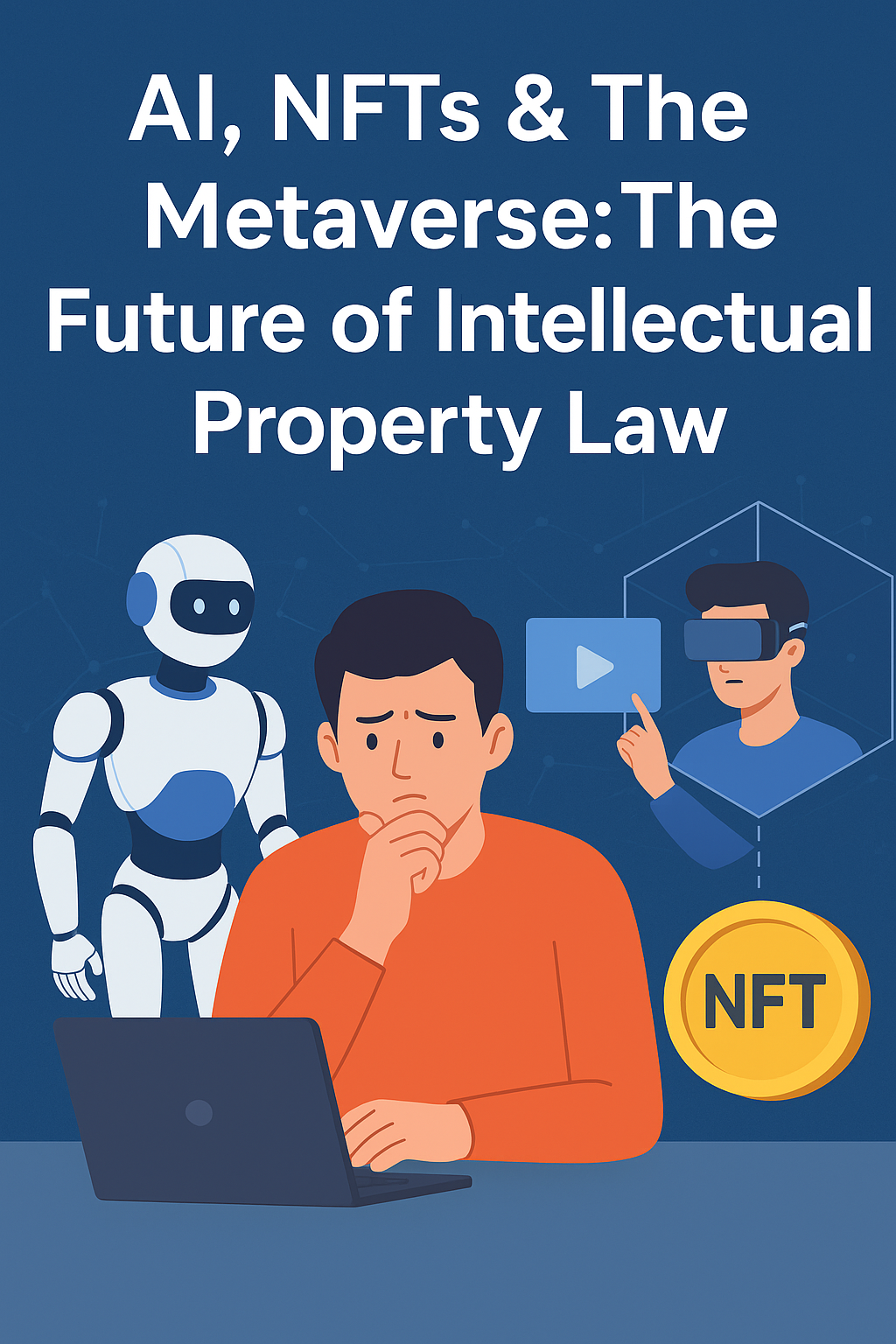
Intellectual Property law is undergoing its most significant transformation since the dawn of the internet. What was once concerned with protecting inventors in labs and authors with manuscripts now faces questions that sound like science fiction: Can an AI own a patent? Who’s liable when a chatbot creates something illegal? Do you actually own those virtual sneakers you bought in the metaverse?
For entrepreneurs, creators, and businesses, understanding these changes isn’t just academic—it’s crucial for protecting your assets and avoiding costly legal battles. In this comprehensive guide, we’ll explore the key trends reshaping IP law assignment help online and what they mean for you.
1. AI and Intellectual Property: Who Owns What?
The Inventor Dilemma: Can AI Hold Patents?
Recent landmark rulings across the US, UK, and EU have consistently answered “no” to whether AI can be listed as an inventor. The law requires a “natural person.” But this creates a massive legal gray area. If AI creates a patent-worthy invention, who owns it? The developer who built the AI? The user who provided the data? Or does it belong to no one?
Real-World Impact: Companies investing millions in AI research need clear ownership structures to protect their investments and maintain competitive advantages.
The Training Data Controversy
AI models like ChatGPT train on massive datasets scraped from the internet—including copyrighted books, articles, and images. This has sparked lawsuits from content creators and publishers alleging massive copyright infringement.
Key Cases to Watch:
- The New York Times v. OpenAI
- Getty Images v. Stability AI
These cases will determine whether AI training falls under “fair use” or requires licensing agreements that could reshape the entire AI industry.
2. NFTs and Digital Ownership: The Great Misunderstanding
The NFT Reality Check
The NFT boom revealed a critical confusion many buyers had: purchasing an NFT doesn’t mean you own the underlying intellectual property. You’re buying a token on a blockchain—a verified receipt—not the copyright to the digital asset itself.
Legal Fallout: This misunderstanding has led to numerous lawsuits and highlighted the need for clear licensing terms in smart contracts.
Protecting Your Brand in the NFT Space
For businesses, NFTs represent both opportunity and risk. Companies like Nike and Hermès have faced unauthorized NFT versions of their products, leading to precedent-setting lawsuits about trademark protection in digital spaces.
3. The Metaverse: Trademark Law’s Next Battleground
Virtual Goods, Real Legal Problems
The metaverse creates entirely new categories of IP challenges:
- Virtual counterfeit goods
- Digital brand impersonation
- Virtual land and property disputes
Proactive Protection Steps:
- File trademarks for virtual goods and services
- Monitor metaverse platforms for infringement
- Develop clear terms of service for digital assets
The First Sale Doctrine Dilemma
In physical retail, buying a product generally lets you resell it. But does this principle apply to digital assets in the metaverse? Courts are just beginning to grapple with this question.
4. Biotechnology: Patenting Life Itself
The CRISPR Revolution
The groundbreaking CRISPR-Cas9 gene-editing technology sparked one of the century’s most significant patent battles, reaching the US Supreme Court. The case highlights the tension between discovering natural phenomena (not patentable) and inventing new applications (patentable).
AI-Discovered Pharmaceuticals
As AI accelerates drug discovery, new patent questions emerge:
- How does AI affect the “non-obviousness” requirement?
- Who qualifies as inventor when AI does the heavy lifting?
- What constitutes adequate disclosure for AI-generated inventions?
Practical Implications for Businesses and Creators
Immediate Action Steps
- Audit Your IP Assets
- Identify traditional and digital IP
- Document creation processes involving AI
- Review licensing agreements for digital assets
- Update Protection Strategies
- Consider trademark protection for virtual goods
- Implement AI use policies
- Secure digital asset licenses properly
- Stay Informed
- Monitor key legal cases
- Follow regulatory developments
- Participate in industry discussions
The Future of IP Law: What’s Next?
Emerging Areas to Watch
- Quantum Computing IP
- New forms of patent protection
- Encryption and security implications
- Brain-Computer Interfaces
- Protecting neural patterns and data
- IP rights for AI-enhanced human creativity
- Sustainable Technology
- Green patent fast-tracking
- Climate technology sharing agreements
Conclusion: Navigating the New IP Landscape
The rules of intellectual property are being rewritten before our eyes. While this creates uncertainty, it also presents opportunities for those who adapt quickly. The businesses that thrive will be those that:
- Proactively protect their digital assets
- Develop clear AI use policies
- Stay ahead of legal developments
- View IP strategy as dynamic, not static
The future of innovation depends on a IP system that balances protection with progress. As these technologies evolve, so too must our understanding of what can be owned, who owns it, and how those rights are protected.
Need help protecting your intellectual property in this new landscape? Consult with an IP attorney specializing in emerging technologies to audit your assets and develop a forward-looking protection strategy.
