




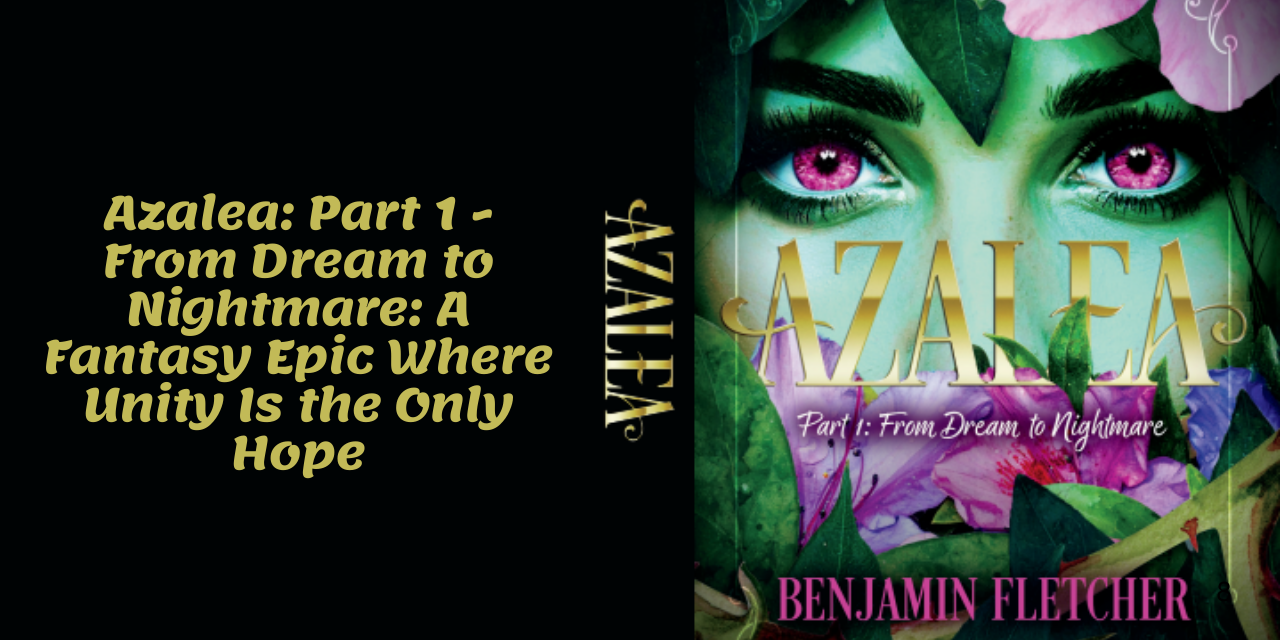
A new epic fantasy novel immerses readers in a war-torn world where survival depends on forging alliances, balancing trust, and overcoming centuries of division.
In the high-stakes fantasy genre, tales of heroism often focus on individual prowess or legendary artifacts. Benjamin Fletcher’s Azalea: Part 1 – From Dream to Nightmare breaks from this tradition by highlighting the collective struggle of races and nations whose survival hinges on cooperation, compromise, and shared purpose. Set in the expansive world of Ortus, the novel explores how political intrigue, interspecies diplomacy, and coalition-building can become as decisive as swords and magic in determining the fate of civilizations.
Ortus is a realm besieged by threats both natural and supernatural. Dragons, ancient and devastating, roam the skies, leaving destruction in their wake. Rival kingdoms, long divided by ideology, culture, and history, face internal and external pressures that threaten to unravel fragile political structures. Against this backdrop, Azalea: From Dream to Nightmare demonstrates that brute force alone cannot secure victory; only through collaboration, mutual trust, and strategic foresight can societies endure.
At the heart of the narrative is a cast of leaders, warriors, and mystics drawn from diverse races, including humans, sylvan, ferrik, and zimm. Each faction brings unique skills, cultural insights, and magical abilities, but long-standing rivalries and prejudice make cooperation perilous. The novel explores the tension between necessity and mistrust, showing that unity is not spontaneous; it must be earned, negotiated, and defended. Missteps in diplomacy or loyalty can undo entire campaigns, while successful collaboration can turn the tide of war.
Central to the story are the characters Joseph Alcadeias and Azalea, whose personal bond mirrors the broader theme of coalition-building. Joseph, a human ranger and mystic who becomes a dragon slayer, must navigate his own moral compass while mediating alliances between factions that see him alternately as a hero, a weapon, or a potential threat. Azalea, a sylvan mesmer and daughter of the sacred Tree Mother, brings spiritual insight, magical expertise, and the credibility needed to bridge racial divides. Together, they exemplify the principle that survival and success demand shared vision, empathy, and mutual sacrifice.
The novel portrays alliances as living, dynamic entities. Treaties are fragile, agreements are tested under pressure, and betrayal is never far from the surface. Leaders must weigh not only the immediate tactical advantages of cooperation but also the long-term political and social consequences of shared power. Through espionage, negotiation, and sometimes reluctant compromise, the characters learn that unity is often messy and unpredictable, but essential for survival.
Magic and technology are tightly interwoven into the strategic fabric of Ortus, highlighting how collaboration extends beyond diplomacy into military planning and logistics. Enchanted weapons, ritual casting, and engineered defenses are deployed in coordination between allies, requiring trust and timing. A single faction acting in isolation is vulnerable, whereas a coalition that leverages its collective strengths can counter even the most devastating dragon attacks. These battles demonstrate that success comes not from individual heroics but from the coordinated action of multiple parties working toward a common goal.
The stakes in Azalea: From Dream to Nightmare are high, and the moral complexity of coalition-building is never ignored. Characters must navigate the delicate balance between pragmatism and ethics. Sacrifices are inevitable, and decisions made to preserve one alliance may alienate another. The novel examines the weight of leadership in wartime, exploring the costs of compromise and the courage required to place trust in former enemies. Through these challenges, readers gain a nuanced understanding of how unity in the face of annihilation demands both wisdom and emotional resilience.
Early readers have praised the novel for its intricate plotting, political realism, and depth of character development. Fans of epic fantasy will appreciate its exploration of diplomacy, alliances, and collective action alongside traditional fantasy elements such as dragons, magic, and battlefield heroics. The narrative demonstrates that true strength lies not in domination or conquest, but in the ability to bring together disparate voices, cultures, and abilities to achieve a shared purpose.
Azalea: From Dream to Nightmare is a powerful reminder that survival in a world threatened by overwhelming forces requires more than bravery; it requires coalition, cooperation, and trust. In Ortus, victory is only possible when old rivalries are set aside, shared goals are pursued, and the bonds of unity are forged in the crucible of war.
About the Novel
Azalea: Part 1 – From Dream to Nightmare is an epic fantasy novel by Benjamin Fletcher, set in the war-torn world of Ortus, that focuses on coalition-building, interspecies alliances, and the moral and strategic challenges of survival. It is ideal for readers who enjoy high-stakes fantasy enriched with political intrigue, strategic warfare, and layered character dynamics.
Contact:
Amazon: Azalea: Part 1 — From Dream to Nightmare
Author: Benjamin Fletcher
Email: joseph.slate2016lightbringer@yahoo.com
About the Author