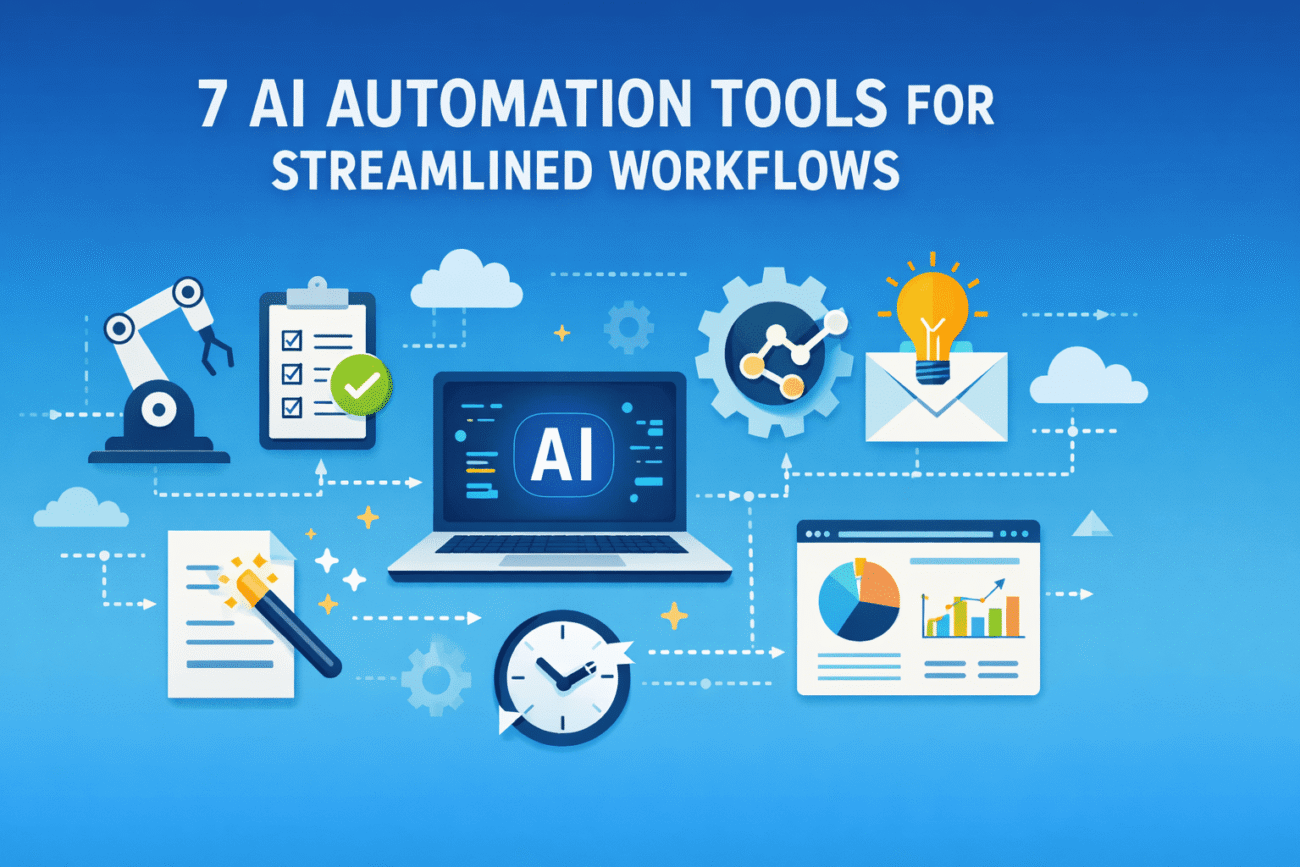
Best AI Workflow Automation Tools: Boosting Efficiency and Productivity
In today’s fast-paced digital world, businesses are under constant pressure to operate faster, smarter, and more efficiently. Teams spend countless hours on repetitive tasks, manual approvals, and data management, leaving less time for strategic initiatives. This is where AI workflow automation tools become a game-changer.
The right AI workflow automation software not only reduces manual labor but also optimizes processes, improves collaboration, and provides valuable insights that help businesses scale. From small startups to large enterprises, leveraging AI to automate workflows is transforming the way organizations function.
What Are AI Workflow Automation Tools?
AI workflow automation tools are software platforms that combine artificial intelligence, machine learning, and automation to streamline repetitive business processes. These tools go beyond traditional automation by learning from data, predicting outcomes, and optimizing workflows over time.
Key functionalities often include:
- Task automation and scheduling
- Intelligent document processing
- Decision-making recommendations
- Cross-department workflow management
- Data analytics and reporting
By integrating AI into workflows, businesses can improve efficiency, reduce errors, and make smarter decisions faster.
Why Businesses Need AI Workflow Automation Tools
As organizations grow, workflows become more complex. Manual processes are prone to delays, errors, and inefficiencies. Implementing AI workflow automation provides solutions to several common business challenges.
Managing Complexity
Large teams and multiple departments often struggle with process bottlenecks. AI tools streamline approvals, task assignments, and interdepartmental workflows seamlessly.
Reducing Operational Costs
Automation reduces repetitive manual work, minimizing human error and saving both time and money.
Enhancing Productivity
Employees can focus on high-value tasks, leaving routine tasks to intelligent systems.
Improving Decision-Making
AI analyzes workflow data to provide actionable insights, helping managers make informed decisions quickly.
Key Features of the Best AI Workflow Automation Tools
Choosing the right tool requires understanding the essential features that maximize efficiency.
1. Intelligent Task Automation
Automatically assigns, schedules, and monitors tasks based on priorities, deadlines, and team availability.
2. AI-Powered Decision Making
Uses predictive analytics to recommend actions, flag risks, and optimize workflows.
3. Integration Capabilities
Connects seamlessly with existing CRM, ERP, project management, and communication tools.
4. Real-Time Collaboration
Enables teams to work together efficiently, with updates and notifications shared automatically.
5. Reporting and Analytics
Generates actionable insights on workflow performance, bottlenecks, and productivity metrics.
Benefits of Using AI Workflow Automation Tools
Implementing AI-driven workflow automation offers numerous advantages for businesses of all sizes.
Improved Efficiency
Automating routine processes reduces manual work and accelerates operations.
Consistency and Accuracy
AI ensures workflows follow predefined rules, reducing errors and maintaining consistency.
Better Resource Management
AI tools help allocate resources effectively by monitoring workloads and deadlines.
Enhanced Customer Experience
Automated workflows speed up responses, approvals, and project deliveries, improving client satisfaction.
Scalable Operations
As your business grows, AI workflows scale effortlessly without adding proportional resources.
Popular AI Workflow Automation Tools
Several AI workflow automation platforms stand out for their capabilities, versatility, and ease of use. Here’s a snapshot of some top options:
1. Zapier
Zapier allows businesses to connect multiple apps and automate repetitive tasks without coding. Its AI features optimize workflows by identifying common automation patterns.
2. UiPath
UiPath offers enterprise-grade robotic process automation (RPA) with AI capabilities. It’s ideal for automating complex workflows, especially in finance, HR, and operations.
3. Monday.com
Monday.com integrates AI-powered automation to streamline project management, task assignment, and team collaboration.
4. Kissflow
Kissflow’s intelligent workflow platform supports automated approvals, task tracking, and process analytics with AI insights.
5. Automation Anywhere
Automation Anywhere uses RPA combined with AI to automate high-volume, repetitive processes across departments.
AI Workflow Automation Across Different Business Departments
AI workflow automation impacts virtually every part of a business. Let’s explore some key departments:
Operations
- Automates repetitive tasks such as approvals and scheduling
- Tracks progress and identifies bottlenecks
- Improves operational efficiency
Human Resources
- Streamlines recruitment, onboarding, and employee management
- Automates leave requests and payroll approvals
- Enhances employee experience
Finance
- Automates invoice approvals, expense tracking, and reconciliations
- Reduces errors in financial reporting
- Provides predictive financial insights
Sales and Marketing
- Automates lead assignment and follow-ups
- Tracks campaign performance and ROI
- Supports predictive analytics for sales forecasting
How AI Enhances Workflow Automation
AI adds intelligence to automation, making workflows adaptive, predictive, and self-optimizing.
Predictive Task Assignment
AI analyzes workloads and performance history to assign tasks efficiently.
Workflow Optimization
AI identifies bottlenecks, redundant steps, and delays, recommending process improvements.
Data-Driven Insights
AI tools monitor workflow data in real-time, generating actionable insights for managers and decision-makers.
Intelligent Alerts
AI can detect anomalies, flag potential issues, and alert teams before problems escalate.
Challenges When Implementing AI Workflow Automation
While AI workflow automation provides significant benefits, organizations must consider potential challenges.
Data Quality
AI relies on accurate, clean data. Poor data quality can lead to flawed automation and decisions.
Integration Complexity
Some businesses have legacy systems that may not integrate easily with AI tools.
Change Management
Employees may resist adopting new AI-driven workflows. Training and clear communication are key to successful adoption.
Upfront Costs
High-quality AI automation tools can require a significant initial investment. However, ROI is typically realized quickly through increased efficiency.
Best Practices for Implementing AI Workflow Automation Tools
Following best practices ensures successful adoption and maximum ROI.
Identify Repetitive Processes
Start by mapping out processes that consume time and resources but don’t require human creativity.
Set Clear Goals
Define what success looks like—reduced cycle time, fewer errors, higher productivity, or cost savings.
Choose Scalable Tools
Select tools that can grow with your business and adapt to changing requirements.
Train Your Team
Ensure employees understand how to use AI tools and the benefits of workflow automation.
Monitor and Optimize
Regularly track performance, gather feedback, and refine workflows to maximize efficiency.
Future Trends in AI Workflow Automation
The AI workflow automation landscape is evolving rapidly. Businesses that embrace these trends stay ahead of the competition.
Hyperautomation
Combining AI, RPA, and analytics to automate complex workflows end-to-end.
Low-Code/No-Code Platforms
Allowing non-technical users to build and customize AI-driven workflows quickly.
Enhanced AI Decision-Making
AI systems will increasingly make real-time decisions, reducing human intervention for routine processes.
Greater Integration Across Tools
Future AI workflow platforms will integrate even more seamlessly with CRMs, ERPs, collaboration apps, and communication platforms.
Conclusion
The right AI workflow automation tools empower businesses to operate smarter, faster, and more efficiently. By automating repetitive tasks, optimizing processes, and providing data-driven insights, companies can focus on strategic growth and innovation.
Whether for operations, HR, finance, or sales, AI workflow automation is no longer optional—it’s a necessity for businesses aiming to remain competitive in today’s digital landscape.
Business Force One helps organizations implement the best AI workflow automation tools, enabling seamless processes, improved productivity, and smarter decision-making for sustainable growth.
FAQ’s
1. What are AI workflow automation tools?
They are software platforms that use AI to automate repetitive tasks, optimize workflows, and improve business efficiency.
2. How do AI workflow automation tools improve productivity?
By reducing manual tasks, streamlining processes, and providing data-driven insights for smarter decision-making.
3. Which businesses benefit from AI workflow automation tools?
Small, medium, and large businesses can all benefit, as these tools scale workflows and save time across departments.
4. What features make a workflow automation tool “AI-powered”?
Features include predictive analytics, intelligent task assignment, real-time reporting, and decision-making recommendations.
How to Choose the Right Fixtures for Bathroom Remodeling Services in Bar Harbor?
UTV Shipping Cost and Choosing Reliable Services with Ship A1 Auto Transport
Why Most Crypto Tokens Fail And How Entrepreneurs Can Get It Right?
Embedded Software Market Demand Across Consumer Electronics And Automotive Sectors
4K Set Top Box Market Growth Driven By Smart Connectivity And OTT Integration
