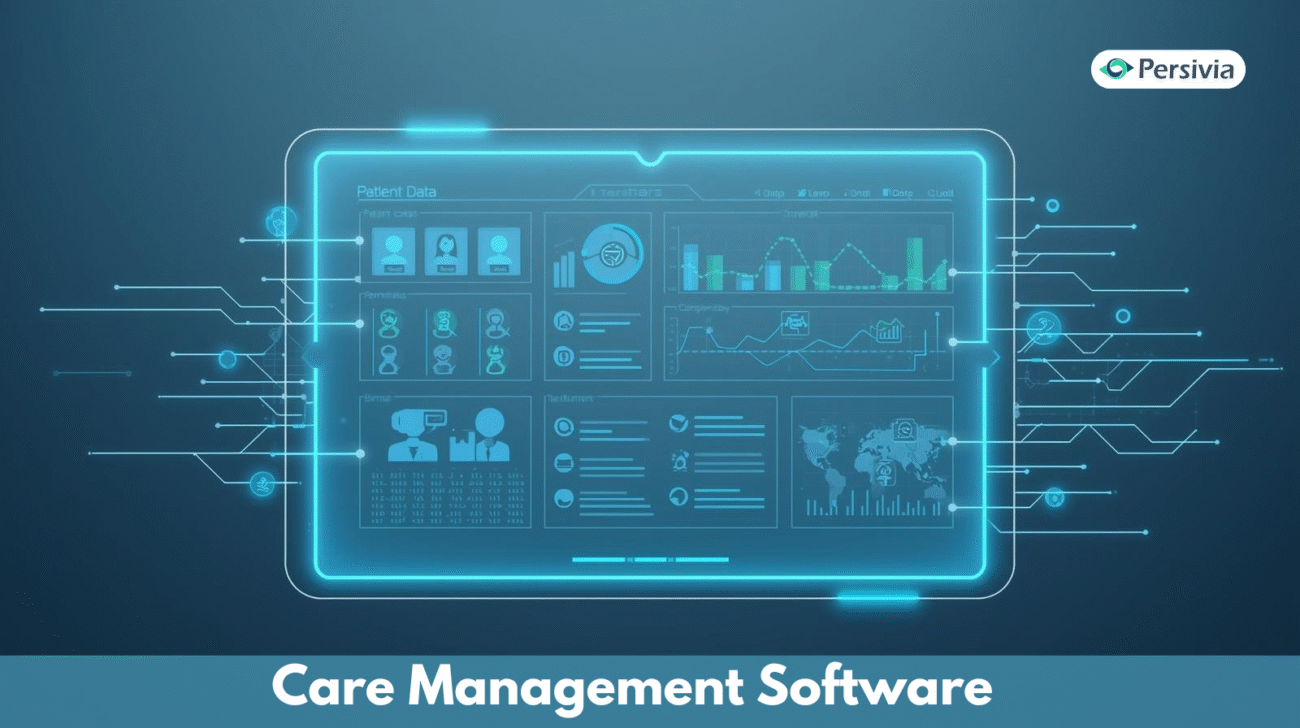
Medical teams struggle with fragmented data, paper-based records, and a reactive model of care. The providers take hours to switch systems, and meanwhile, patients drop through the gaps. Unnecessary readmissions accumulate, care lapses are overlooked, and clinical staff are burned out due to the administrative load.
Care Management Software solves these challenges by automating routine processes and predicting which patients need timely attention. Care teams are no longer in the business of chasing data, but instead, they get clear and actionable recommendations at the most appropriate time. The technology delivers analytics that highlight high-risk patients, generate individualized care plans, and surface evidence-based interventions so providers can focus on meaningful patient interactions rather than paperwork.
What Is Care Management Software?
Care Management software is a technology platform that manages the care of patients throughout the healthcare continuum. It incorporates clinical documentation, insurance claims, and social determinants information into a single longitudinal view that follows patients in a hospital, clinic, and home environment.
Artificial intelligence is applied in modern platforms to process thousands of clinical rules and come up with patient-specific recommendations.
- Track patient progress across multiple care settings
- Identify high-risk patients before complications occur
- Create personalized care plans automatically
- Close gaps in preventive and chronic disease care
- Communicate with patients through text, video, and phone
The software minimizes manual data entry by pulling information directly from integrated systems and displaying it in actionable formats.
Evolution from Basic Tools to Intelligent Platforms
Early care management systems functioned as digital task lists requiring manual analysis for every decision. Second-generation systems incorporated electronic health records but remained in need of human interaction to determine the patients who need to be attended to.
Current third-generation platforms leverage AI and machine learning to:
- Automatically flag patients at risk for readmission or complications
- Generate evidence-based care plans based on individual circumstances
- Extract insights from unstructured clinical notes
- Recommend specific interventions aligned with clinical guidelines
This progression changed the role of care teams from data entry clerks to clinical strategists. The software does the analytical labor, as human beings become involved in building relationships and making intricate decisions.
Core Capabilities That Drive Results
The best care management software vendors construct platforms based on capabilities that are integrated, and they work together in harmony. All components deal with a particular challenge and are involved in the overall care coordination approach.
Data Integration Creates Complete Patient Pictures
Healthcare organizations generate data in dozens of disconnected systems. Modern platforms aggregate information from multiple sources into a single longitudinal record:
- Electronic health records with clinical notes and test results
- Insurance claims showing utilization patterns
- Patient-reported outcomes from surveys and apps
- Wearable devices tracking vitals and activity levels
- Social determinants screening tools
Real-time data access means care teams can see the latest updates immediately, instead of waiting for overnight system syncs. Once a patient enters the emergency department, the system initiates the right follow-up measures right after.
AI-Powered Risk Stratification
The algorithm of machine learning works with clinical, claims, and social data to estimate the risk of each patient. High-risk patients automatically rise to the top of worklists, allowing teams to focus resources on the 20% of patients who drive 80% of healthcare costs.
The system identifies:
- Likelihood of hospital admission in the next 30-90 days
- Risk of emergency department visits
- Probability of chronic condition complications
- Potential medication adherence issues
Risk scores update continuously, and the platform explains which factors drive each score.
Evidence-Based Clinical Pathways
Platforms contain 200+ pre-built care pathways covering common conditions. When a heart failure patient is discharged, the system automatically initiates the transition protocol, which involves a review of medications within the next 48 hours, an appointment within 7 days, and measuring weight daily.
Each pathway includes:
- Assessment questions tailored to the diagnosis
- Evidence-based interventions proven to improve outcomes
- Medication reconciliation protocols
- Patient education materials at appropriate literacy levels
Automated Care Plans
The platform automatically creates individual care plans as opposed to having to create care plans individually. The system scans full medical histories, identifies active conditions, aligns the correct pathways, and includes physician orders. Care managers have a glance at such plans and modify them within minutes rather than an hour per patient.
Care Gap Identification
The software continuously scans for gaps in preventive care and quality measures. Alerts appear directly in workflows with suggested outreach scripts. Patients are also marked when they require cancer screening, yearly diabetic checkups, changing their medications, or having immunizations. The system continuously monitors active and closed care gaps, ensuring no preventive or chronic care requirements are missed.
Point-of-Care Integration
The system displays the current risk scores, suggested interventions, outstanding care gaps, and medication warnings during the patient encounters as part of existing documentation systems. Evidence-based recommendations do not remain idle on a different platform, but rather, they determine the actual clinical decision.
Measurable Outcomes That Matter
Healthcare institutions that install all-encompassing platforms record high gains in various indicators. The technology is effective as it focuses on the underlying reasons for inadequate results.
Reduction in Hospital Readmissions
Health systems using advanced care management platforms have reported up to a 65% reduction in readmissions. For instance, one organization reduced all-cause 30-day readmissions from 18% to 6.3% among high-risk patients.
The system achieves this through:
- Early identification of high-risk patients
- Automated follow-up scheduling within 48-72 hours
- Medication reconciliation catches errors
- Patient education through preferred channels
- Real-time alerts for missed appointments
Decrease in Provider Administrative Burden
A large accountable care organization reduced care manager documentation time from 3 hours to 27 minutes per patient daily after implementing AI-driven automation.
The platform saves time by:
- Automatically documenting patient interactions
- Pre-populating assessment forms
- Intelligently prioritizing daily worklists
- Executing batch outreach campaigns
- Generating quality program reports
Cost Reduction Across the Continuum
Lowering the total cost of care in organizations is achieved by reducing the number of preventable emergency visits, the number of hospital stays, quality management of chronic diseases, and enhancing medication adherence. A regional health plan saved 127 dollars per-member-per-month in 18 months of implementation.
Essential Features for Success
Healthcare organizations need to consider features in several key dimensions when comparing the best care management software.
Clinical Content Depth
The platform is supposed to contain 9,000+ evidence-based clinical rules on complex conditions. Find ready-made pathways that can be tailored, frequent updates that reflect the up-to-date guidelines, and specialty-specific guidelines for behavioral health, maternal care, and chronic disease.
True AI and Predictive Capabilities
Machine learning to enhance accuracy with time, natural language processing to extract insights based on unstructured notes, predictive models formed under a variety of populations, and explainable AI in the form of what makes a recommendation visible are all essential AI features. The optimal platforms are learning, never-ending, and fit your unique population.
Seamless Integration
The software should have APIs that allow it to integrate with electronic health records, claims databases, health information exchanges, and laboratory systems to exchange real-time data. The lack of a successful integration will result in an information lag that will harm coordinated care.
Workflow Flexibility
It should be possible to support configurable workflows and structure your care team, custom alerts according to priorities, flexible reporting, and role-based permissions. Ready-prepared solutions seldom fit without possibilities of customization.
Implementation Realities
To be successful in deployment, technical and organizational considerations are important. Technology has made it possible to work in new ways, yet it needs change management.
Data Quality Determines Success
The effectiveness of any platform depends entirely on the quality of its data. The organizations should put quality requirements in source systems, allocate explicit ownership to data governance, introduce validation regulations that intercept errors at the initial phases, and educate the personnel on correct documentation behaviors. Even high-level algorithms are compromised by poor data quality.
Change Management Matters More Than Technology
Strong executive sponsorship communicates why change matters. Workflow redesign incorporates the new platform organically. Role-specific training focuses on daily tasks, and super-user programs create local champions. Care teams need to understand how the platform makes their work easier, not just how to operate the software.
Measure What Matters
Define clear metrics before implementation. Track baseline measurements of readmission rates, emergency visits, and costs. Monitor process metrics like time to first post-discharge contact and adoption metrics, revealing whether staff use the platform effectively. Regular review helps organizations refine their approach.
Supporting Value-Based Care Models
Care management platforms enable success in payment models that reward outcomes over volume. The technology provides a coordination infrastructure that manual processes can’t achieve at scale.
Accountable Care Organizations
Platforms support ACO performance by:
- Identifying attributed patients across payer contracts
- Tracking quality measures required for shared savings
- Coordinating care to reduce unnecessary utilization
- Generating reports for CMS and commercial programs
Bundled Payment Programs
For episode-based payments, platforms help organizations identify patients entering relevant episodes, coordinate care across all providers in the bundle, and prevent complications that increase costs. Real-time tracking ensures outcomes stay within budget targets.
Population Health Management
Organizations competing on value need technology providing population-level insights. Whether in capitated arrangements or quality incentive programs, platforms enable:
- Segmentation of populations by risk and opportunity
- Targeted interventions for high-value improvements
- Resource allocation based on predicted needs
- Outcome measurement across the entire attributed populations
Real-World Impact Examples
Predictive algorithms identify patients at risk for avoidable emergency visits, allowing care teams to reach out proactively.
Key intervention strategies include:
- Same-day or next-day appointment availability
- Nurse triage lines for after-hours questions
- Home health services preventing hospital presentation
- Proactive outreach when early warning signs appear
Platforms make it possible to manage thousands of patients with diabetes, heart failure, or COPD by automatically flagging concerning lab values and overdue screenings. Care teams can track medication adherence through claims and patient reports, identifying candidates for specialized disease management programs.
The critical days after hospital discharge become safer with:
- Automatic enrollment in transition protocols
- Medication reconciliation within 48 hours
- Coordinated follow-up appointments
- Monitoring for warning signs through patient check-ins
These systematic interventions prevent the revolving door of readmissions.
Final Thoughts
Care management software has evolved from simple task tools into AI-powered platforms that transform healthcare coordination. The shift from manual to automated, data-driven processes enables proactive care at scale, reducing readmissions by up to 65% and administrative workload by 85%. These systems handle complex analytics and deliver actionable insights, allowing clinical teams to focus on patients when it matters most.Persivia’s AI-enabled digital health platform ‘CareSpace®’ integrates clinical, claims, and social data into a unified patient record, automating care plans and prioritizing high-risk cases. With 200+ clinical pathways and robust analytics, it streamlines workflows, supports telehealth, and drives measurable results in value-based care.
