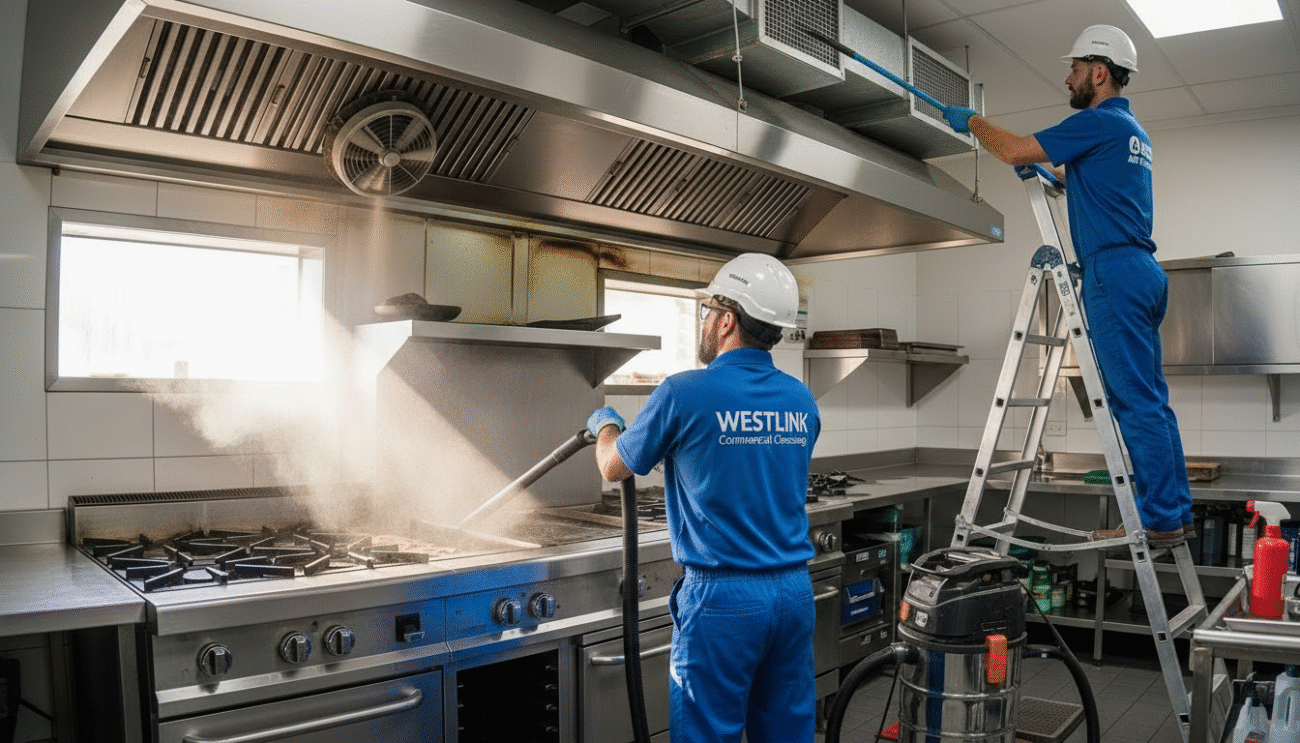
Kitchen ventilation systems work quietly in the background, but they play a very important role in every commercial kitchen across Australia. Whether it is a busy restaurant, café, hotel, takeaway shop, or catering facility, ventilation systems help remove smoke, heat, grease, and cooking odours from the air. These systems usually include exhaust hoods, filters, ducts, and exhaust fans that operate continuously during cooking hours.
Over time, grease and airborne particles pass through the system and settle inside areas that are not visible during daily cleaning. This hidden grease build-up can create serious hygiene issues and safety risks if left untreated. That is why cleaning kitchen ventilation systems is essential for Australian food businesses. Proper cleaning improves kitchen hygiene, reduces fire hazards, and helps businesses meet strict safety and compliance standards.
This guide explains how grease builds up, why ventilation cleaning is important, and when professional cleaning services are required.
Why Kitchen Ventilation System Cleaning Is Important
Every time food is cooked, grease vapours rise into the air and enter the ventilation system. While filters capture some grease, a large amount continues through ducts and settles on exhaust fans and internal surfaces. This process happens slowly, often without staff noticing any immediate problem.
When ventilation systems are not cleaned regularly, grease layers become thicker and harder to remove. This leads to poor airflow, unpleasant odours, and unsafe working conditions. Regular cleaning kitchen ventilation systems helps kitchens stay clean, safe, and compliant with Australian standards.
A well-maintained ventilation system also improves kitchen efficiency by allowing heat and smoke to escape properly.
Grease Build-Up and Hidden Dangers
Grease inside ventilation systems is one of the most dangerous problems in commercial kitchens because it is largely invisible. Surface cleaning of hoods and filters does not remove grease that has already travelled deep into ducts and fans.
Over time, grease becomes thick, sticky, and highly flammable. This build-up restricts airflow, making kitchens hotter and more uncomfortable for staff. It can also release strong smells that affect the dining experience and food quality.
Most importantly, grease build-up significantly increases the risk of kitchen fires. Professional ventilation cleaning removes this hidden grease before it becomes a serious danger.
Fire Safety Risks in Commercial Kitchens
Grease fires are one of the leading causes of commercial kitchen fires in Australia. When grease inside ventilation systems ignites, flames can spread rapidly through ducts and ceilings, causing major damage within minutes.
Australian fire safety authorities strongly recommend regular ventilation system cleaning as part of fire prevention plans. In many cases, insurance providers require proof of routine cleaning, especially after a fire incident.
Routine cleaning kitchen ventilation systems reduces fire risk and helps protect staff, customers, property, and business reputation.
Hygiene and Indoor Air Quality Benefits
Dirty ventilation systems directly affect indoor air quality. Grease, smoke, and airborne contaminants can circulate back into the kitchen instead of being removed properly.
Poor air quality may cause breathing discomfort, headaches, fatigue, and irritation for kitchen staff who work long hours. It also creates an unpleasant environment that can impact productivity and morale.
Clean ventilation systems improve airflow, reduce odours, and help maintain a healthier kitchen environment. This supports food safety and staff wellbeing.
Compliance and Australian Safety Standards
Food businesses in Australia must comply with local council regulations, food safety laws, and workplace health and safety standards. Environmental health officers may inspect ventilation systems during routine checks.
Dirty or poorly maintained systems can result in warnings, fines, failed inspections, or even temporary business closure. Regular cleaning kitchen ventilation systems helps businesses meet compliance requirements and avoid unnecessary penalties.
Maintaining records of professional cleaning can also support compliance and insurance claims.
How Professional Ventilation Cleaning Works
Professional ventilation cleaners use specialised equipment designed for commercial kitchens. The cleaning process usually starts with removing and deep cleaning filters using hot water and degreasers.
Ducts and exhaust fans are then cleaned using industrial-grade, food-safe chemicals that break down hardened grease. High-powered tools ensure grease is removed safely without damaging the system.
This deep cleaning restores airflow, improves performance, and reduces fire and hygiene risks. Professional cleaning provides results that cannot be achieved through basic daily cleaning.
DIY Cleaning vs Professional Cleaning
Basic daily cleaning by kitchen staff, such as wiping hoods and washing filters, is important but not enough. Grease inside ducts and exhaust fans cannot be reached safely without professional tools and training.
DIY cleaning also increases the risk of falls and injuries when working at height. Professional cleaning kitchen ventilation systems is safer, more effective, and often required to meet compliance and insurance standards.
How Often Should Kitchen Ventilation Systems Be Cleaned?
The frequency of cleaning depends on how often the kitchen is used. Busy restaurants and fast-food outlets may require professional cleaning every three to six months. Cafés and low-use kitchens may need cleaning once or twice a year.
Regular cleaning prevents grease build-up and reduces the risk of emergency shutdowns or fire incidents.
FAQs – Cleaning Kitchen Ventilation Systems
Q1: What parts of the ventilation system need cleaning?
Filters, canopy hoods, ducts, and exhaust fans all require regular cleaning.
Q2: Can ventilation cleaning be done after business hours?
Yes. Most professional cleaners offer night and weekend services.
Q3: Is ventilation cleaning legally required in Australia?
While rules vary, regular cleaning supports fire safety and compliance requirements.
Q4: Does ventilation cleaning remove kitchen odours?
Yes. Removing grease eliminates odours at the source.
Q5: Is professional ventilation cleaning expensive?
No. It is affordable compared to fire damage, fines, or business closure.
Final Thoughts
Kitchen ventilation systems are often overlooked, yet they are critical to safety, hygiene, and compliance in Australian commercial kitchens. Grease build-up inside ducts and exhaust fans creates serious fire and health risks if ignored.
In Australia, cleaning kitchen ventilation systems is not just good practice—it is essential. Professional cleaning keeps kitchens safe, improves air quality, and ensures businesses remain inspection-ready.
A clean ventilation system protects your kitchen, your staff, your customers, and your business for the long term..
