



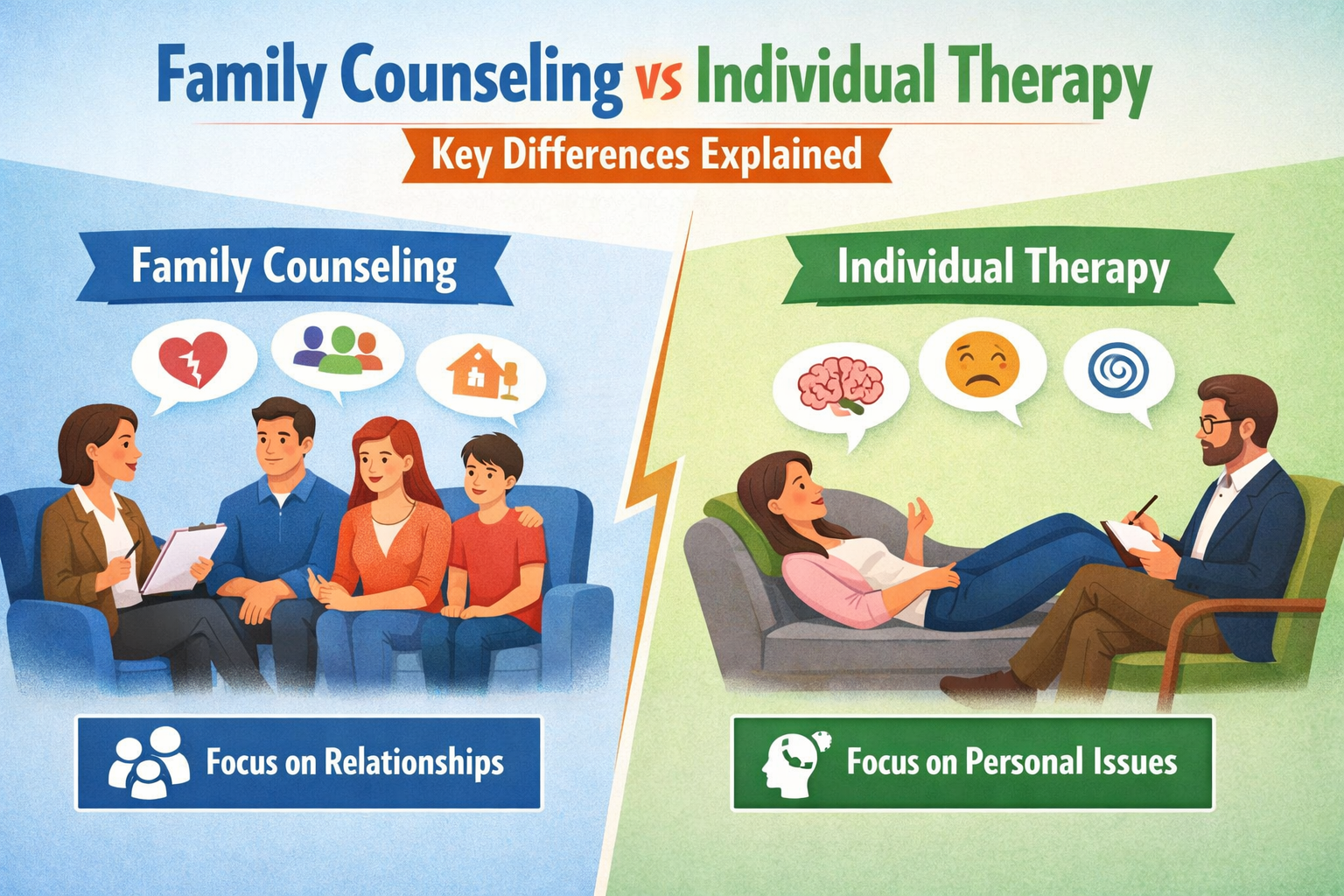
Understanding whether you need family counseling or individual therapy can feel confusing at first. Both approaches are designed to support mental and emotional well-being, but they work in different ways. The right choice depends on your situation, your comfort level, and what kind of help you are looking for.
This guide explains the differences in a simple and clear way, so you can decide what suits you best. It also highlights when choosing family counseling in Ogden might be the right step.
What Is Family Counseling?
Family counseling focuses on improving relationships within a family. It brings family members together in one setting so they can talk openly and work through issues with guidance from a trained professional.
The main goal is to improve communication, solve conflicts, and create a healthier home environment. Instead of focusing on one person, this approach looks at how everyone interacts and affects each other.
Family counseling is often helpful when problems involve more than one person, such as parenting challenges, misunderstandings, or ongoing arguments.
What Is Individual Therapy?
Individual therapy is a one-on-one process between a person and a therapist. It focuses on personal thoughts, feelings, and behaviors.
This type of therapy gives you a private space to talk about your concerns. It helps you understand yourself better, manage stress, and develop healthy coping skills.
Individual therapy is commonly used for anxiety, depression, emotional stress, and personal growth. It allows you to move at your own pace and focus on your own needs.
Key Differences at a Glance
To better understand how these two approaches differ, the table below highlights the main points:
| Aspect | Family Counseling | Individual Therapy |
| Focus | Relationships within the family | Personal thoughts and emotions |
| Participants | Multiple family members | One individual |
| Goal | Improve communication and resolve conflict | Personal growth and emotional healing |
| Session Style | Group discussions | One-on-one conversation |
| Privacy Level | Shared among family members | Highly private |
| Best For | Family issues and relationship conflicts | Personal struggles and self-growth |
When to Choose Family Counseling
Family counseling works best when the issue involves more than one person. It allows everyone to come together and understand each other better.
You may consider this option if your household is facing ongoing tension or major life changes. Many people turn to family counseling in Ogden when they want to rebuild trust and create a more supportive family environment.
Common Situations Where Family Counseling Helps
- Frequent arguments or communication problems
- Parenting disagreements or challenges
- Adjusting to big life changes like divorce or relocation
- Emotional distance between family members
- Coping with loss or major stress as a family
When Individual Therapy Is a Better Choice
Individual therapy is more suitable when your concerns are personal and do not require others to be involved. It gives you the space to focus fully on your own thoughts and feelings.
This approach is also helpful if you prefer privacy or are not ready to share your concerns with family members.
Situations Where Individual Therapy Works Best
- Managing stress, anxiety, or depression
- Working through trauma or past experiences
- Building self-confidence and self-awareness
- Dealing with personal goals or life decisions
- Needing a safe and private space to talk
Goals of Each Approach
Family counseling and individual therapy both aim to improve well-being, but they do so in different ways.
Family counseling focuses on creating better relationships. It helps family members understand each other and work together as a team. The result is often a more peaceful and supportive home.
Individual therapy focuses on personal improvement. It helps you understand your emotions, change negative patterns, and develop better ways to handle life’s challenges.
Communication Style in Sessions
In family counseling, communication happens between all members. The therapist guides the discussion so everyone gets a chance to speak. This helps clear misunderstandings and build stronger connections.
In individual therapy, the conversation is more personal. You talk directly with the therapist, which allows for deeper self-reflection. This can help you understand your feelings and behavior more clearly.
Privacy and Comfort Level
Privacy can play a big role in your decision.
Individual therapy offers complete confidentiality. You can talk freely without worrying about others լսing your thoughts.
Family counseling, on the other hand, involves sharing in a group. While this may feel uncomfortable at first, it can lead to more honesty and stronger relationships over time.
Methods Used in Each Type of Therapy
Both approaches use different techniques based on their goals.
In family counseling, sessions often include guided conversations, role-playing, and problem-solving activities. These help families understand patterns and improve how they respond to each other.
In individual therapy, techniques are more focused on personal growth. These may include changing negative thinking patterns, stress management exercises, and goal setting.
Session Structure and Time Commitment
Family counseling sessions may take more time because several people are involved. Scheduling can also be a bit challenging since everyone needs to be available.
Individual therapy is usually easier to schedule. Sessions are shorter and focus only on one person’s progress.
Both types can be short-term or long-term depending on the situation and goals.
Emotional Experience in Therapy
Family counseling often brings out shared emotions. People express feelings openly, which can sometimes feel intense. However, it also helps build understanding and empathy.
Individual therapy allows you to process emotions privately. You can take your time and explore your feelings without pressure from others.
Can You Combine Both Approaches?
Yes, many people benefit from using both methods together.
For example, you might start with individual therapy to work on personal challenges. Later, you can join family counseling sessions to improve relationships at home.
Combining both approaches can provide a more complete solution, especially for complex situations. Many families choose family counseling in Ogden along with personal sessions to achieve better results.
How to Decide What’s Right for You
Choosing between family counseling and individual therapy depends on your needs.
If your problems mainly involve relationships, family counseling may be the better option. If your concerns are more personal, individual therapy might be the right fit.
It’s also okay to try one approach and switch later if needed. The most important thing is finding a method that helps you feel comfortable and supported.
Final Words
Family counseling and individual therapy both offer valuable support, but they serve different purposes. Family counseling focuses on improving relationships and communication within a group, while individual therapy helps you grow and heal on a personal level.
Understanding these differences makes it easier to choose the right path. Whether you decide to work on yourself individually or involve your loved ones, taking the first step toward support can lead to meaningful and lasting change.
Frequently Asked Questions
1. Can family counseling work if one member is not interested?
Family counseling works best when everyone participates, but it can still help even if one person is unsure. Over time, seeing positive changes may encourage reluctant members to join and take part more actively.
2. Is individual therapy more effective than family counseling?
Effectiveness depends on the situation. Individual therapy is better for personal issues, while family counseling is more useful for relationship problems. Both are helpful in their own ways and can even be combined.
3. How long does therapy usually take?
The length of therapy varies based on the issue. Some people see improvements in a few sessions, while others may need several months. Progress depends on commitment, consistency, and the type of challenges being addressed.
4. Can children take part in family counseling?
Yes, children can be included in family counseling sessions. It often helps them express their feelings in a safe space and improves communication between parents and children, leading to better understanding within the family.
5. How do I know if I need family counseling in Ogden?
If your family is facing ongoing conflicts, communication problems, or major life changes, it may be a good time to consider family counseling in Ogden. It can help bring clarity, improve relationships, and restore balance at home.
About the Author