From Throwaway to Trendsetter: How Fan Culture Turned Background Characters Into the Real Stars
Hollywood has a formula. You build your hero, you craft your villain, you give them a sweeping arc and a satisfying ending. You budget accordingly. You market accordingly. And then you wait for the world to fall in love with exactly the people you told them to love.
Except the internet doesn't really do what it's told.
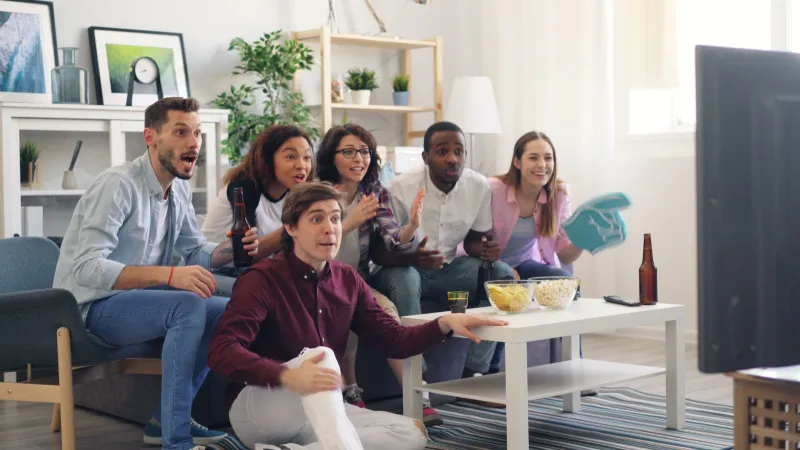
Over the last several years — and especially since TikTok exploded into the cultural mainstream — something fascinating has been happening. Fans are consistently, almost rebelliously, choosing to obsess over the wrong characters. The assistant manager with three lines. The background wizard who blinked twice in a crowd scene. The rival love interest who disappears halfway through season two. These are the figures that fan communities have decided deserve the spotlight, and once the internet makes up its mind, there's very little anyone can do about it.
The Algorithm Didn't Plan This — Fans Did
The mechanics behind this phenomenon are worth understanding. TikTok's format — short, loopable, endlessly shareable — is practically designed for micro-analysis. A 15-second clip of a minor character delivering one unexpectedly layered line can rack up millions of views before the show's writers have even finished their morning coffee. Someone notices a detail. They post it. Someone else stitches it. A third person makes a 10-part deep dive. Suddenly, a character who had maybe 40 seconds of total screen time has an entire corner of the internet dedicated to their "tragic backstory" and "underrated emotional arc."
Reddit amplifies this differently. Subreddits dedicated to specific shows or franchises become archaeological dig sites, where fans sift through episodes frame by frame, constructing elaborate theories about characters the showrunners may have written as pure filler. Tumblr, meanwhile, has long been the emotional engine of fandom — the place where someone writes a 2,000-word essay about why a side character's three-second reaction shot in episode four is actually the most important moment in the entire series. And honestly? Sometimes they're right.
The Characters Who Got the Glow-Up They Deserved
Let's talk specifics, because the examples are genuinely wild.
Take the ongoing cultural rehabilitation of characters like Neville Longbottom from the Harry Potter universe. Neville was never meant to carry the franchise — he was comic relief with a surprisingly poignant subplot. But fan communities have spent decades arguing that Neville's arc is the emotional backbone of the entire series, and that energy has only intensified on TikTok, where "Neville deserved better" is practically its own genre of content. Matthew Lewis, the actor who played him, has been riding that wave of renewed appreciation for years.
Or consider what happened with characters from Stranger Things — specifically, Eddie Munson. Introduced in season four as a supporting player, Eddie became an absolute phenomenon almost overnight. Fan edits, tribute videos, and emotional TikToks about his fate flooded the platform before the season even finished dropping. The character resonated so hard that the show's creators have spoken openly about being caught off guard by the response. Joseph Quinn, the actor, went from relative unknown to full-blown celebrity in the span of a few weeks — not because Netflix engineered it, but because fans decided it was happening.
The Star Wars universe is another goldmine. Background characters who appear in a single frame of a single film have entire wikis, fan fiction archives, and TikTok fan cams dedicated to them. Figrin D'an and the Modal Nodes — the band playing in the Mos Eisley Cantina — have a fandom. A real fandom. That's the internet working exactly as chaotically as you'd expect.
Why These Characters Hit Different
There's a psychological layer to this worth flipping open. Minor characters often feel more real than leads, precisely because they aren't carrying the weight of a hero's journey. They show up, do something interesting, and leave. That incompleteness is an invitation — it's the crack in the wall where fan imagination seeps in and builds entire worlds.
There's also something deeply democratic about it. Rooting for the side character is, in a way, rooting for the underdog. It's saying: the story you were told to care about isn't the only story here. In an era where people are increasingly skeptical of top-down narratives and pre-packaged cultural moments, choosing your own obsession feels like a small act of creative autonomy.
And for a lot of fans — particularly younger ones who grew up with social media as their primary entertainment layer — the conversation around a piece of media is as important as the media itself. A minor character who sparks great discourse is, by that metric, more valuable than a lead who everyone agrees on and moves past.
Studios Are Starting to Notice (and Adjust)
Here's where it gets really interesting: Hollywood is paying attention. You can see it in the way streaming platforms now monitor social engagement in real time, tracking which characters are generating buzz and adjusting future seasons accordingly. It's not always graceful — sometimes a beloved side character gets a sudden, jarring promotion to main cast and loses everything that made them compelling in the first place — but the instinct is there.
Some studios have leaned into it beautifully. Spin-offs and expanded universe content increasingly pull from the fandom wishlist rather than the executive boardroom. When a minor character from a Marvel project starts trending, the question in writers' rooms isn't why are people talking about this? anymore — it's how do we serve this?
Social listening has become a legitimate part of the creative process, which is either exciting or terrifying depending on your feelings about art-by-committee. But the results, at their best, are genuinely great television and film that feels responsive to the audience in ways older media never could.
The Flip Side (No Pun Intended)
It's not all heartwarming underdog stories, though. Fan obsession can curdle fast. Actors who play beloved minor characters sometimes find the attention overwhelming — particularly when the internet decides it owns them. The line between appreciation and entitlement gets blurry in fan communities, and minor characters elevated to icon status sometimes carry that weight at the expense of the real human beings portraying them.
There's also the question of what happens when fandom enthusiasm outpaces actual storytelling. Sometimes a side character is compelling because they're a mystery. Overexposure — whether through fan content or studio overcorrection — can strip away the very thing that made them magnetic.
The Bottom Line
What fan culture has figured out, and what studios are slowly catching up to, is that audiences are not passive recipients of pre-approved favorites. They're active co-creators of the stories they love, and they'll find meaning in the margins if the center doesn't give them what they need.
The side characters winning the internet right now aren't accidents. They're evidence that great storytelling lives in the details — and that the people watching are paying close enough attention to find it, even when no one expected them to look.
So next time you're deep in a TikTok rabbit hole about a character who had exactly four minutes of screen time across an entire franchise, just know: you're not off the beaten path. You're exactly where the most interesting conversations are happening.