

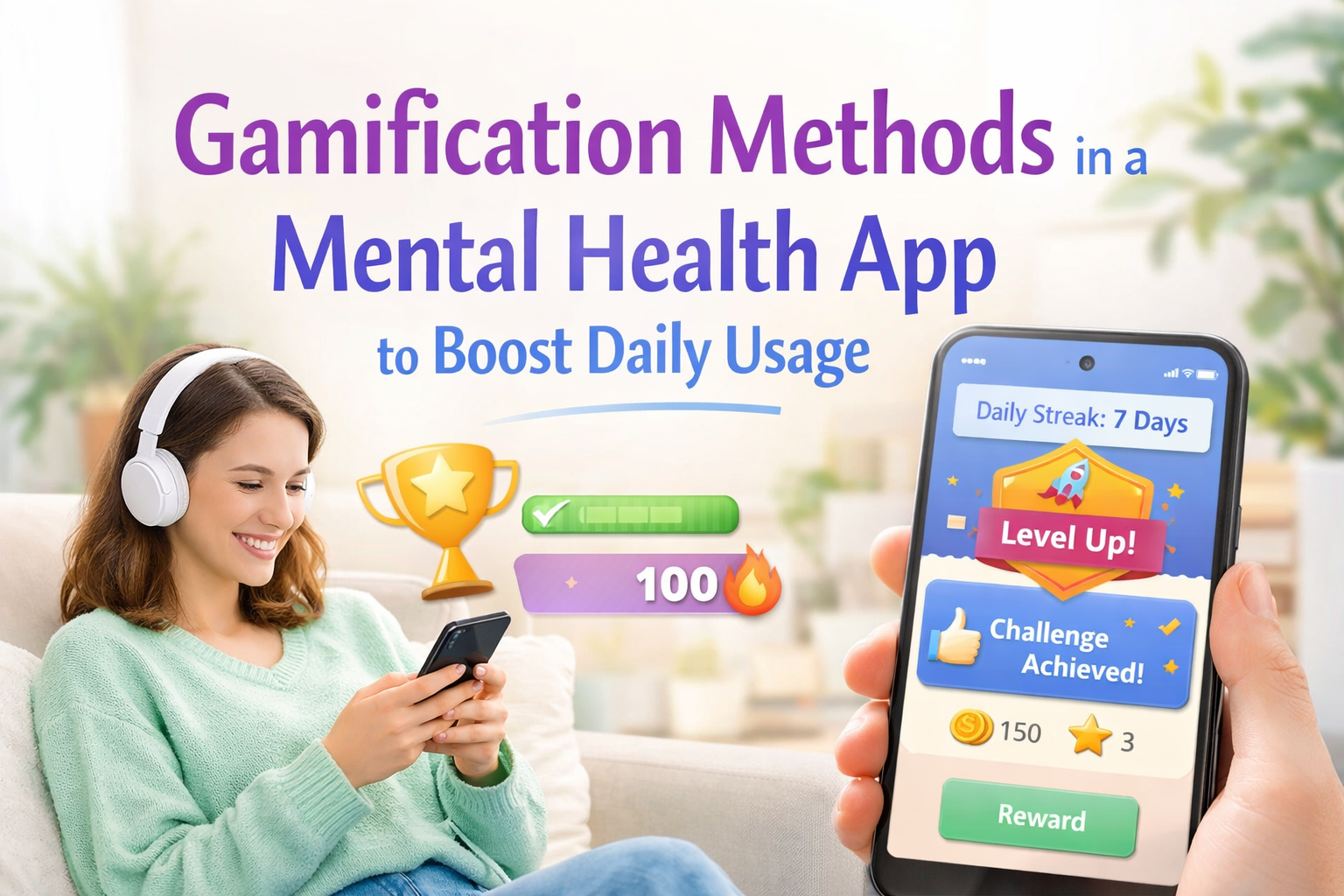
Creating digital wellness products requires more than clean design and basic tracking features. When creating a mental health app, the true challenge lies in encouraging consistent engagement without overwhelming users. Mental wellness is built through habits, daily reflection, guided breathing, journaling, mood tracking and habit formation, which depend heavily on motivation.
Gamification, when implemented ethically and thoughtfully, can transform a passive mental wellness platform into an experience users return to every day. For businesses investing in creating a mental health app, gamification is not about turning therapy into a game; it is about reinforcing positive behavior through meaningful, structured engagement loops.
Below is a comprehensive exploration of how gamification methods can increase daily usage while maintaining therapeutic integrity.
Why Gamification Matters When Creating a Mental Health App
Sustainable user engagement is one of the biggest challenges in digital health. Many users download a wellness mobile app with high motivation, only to abandon it within weeks. The issue is rarely the quality of content; it is usually the lack of reinforcement.
Gamification addresses three core psychological drivers:
- Progress visibility
- Reward anticipation
- Sense of achievement
Mental health improvements are gradual. Users may not immediately notice emotional changes, which can reduce motivation. By integrating progress bars, milestone celebrations and positive reinforcement systems, you provide tangible indicators of growth.
When creating a mental health app, the goal is to make invisible emotional progress feel visible and measurable. That visibility strengthens habit formation and builds emotional investment in the platform.
However, gamification must align with mental health ethics. Overstimulating reward systems or competitive pressure can contradict the app’s therapeutic purpose. The design must be calm, supportive and encouraging rather than addictive.
Core Gamification Methods That Drive Daily Engagement
Not all gamification features work equally well in mental health platforms. The most effective ones are subtle, supportive and progress-oriented.
Streak Systems for Habit Reinforcement
Daily streaks are powerful behavioral tools. When users complete mood tracking, journaling, or breathing exercises consistently, the streak counter becomes a motivator. It creates accountability without pressure.
A well-designed streak system in a mental health platform should:
- Allow flexibility for missed days without harsh penalties
- Offer gentle reminders instead of urgency-driven notifications
- Celebrate milestones (7 days, 30 days, 90 days) with positive affirmations
This approach encourages consistency without triggering guilt.
Progress Tracking and Emotional Growth Mapping
Visual dashboards that show emotional improvement over time can significantly increase retention. Users feel rewarded when they see trends in mood stabilization or reduced stress levels.
Instead of generic metrics, consider:
- Emotional resilience scores
- Mindfulness consistency ratings
- Self-reflection completion rates
When creating a mental health app, progress mapping should focus on personal growth rather than comparison with others.
Unlockable Content and Guided Journeys
Structured programs such as “21 Days to Calm” or “Stress Recovery Path” can include unlockable modules. Users access new content after completing previous sessions, which promotes continuity.
Unlock systems work best when:
- The next stage feels like a natural progression
- Rewards are meaningful (new meditations, exclusive journals)
- Users feel supported rather than restricted
This technique enhances daily engagement while guiding users through therapeutic journeys.
Personalization as a Gamification Layer
Personalization deepens engagement more than superficial rewards. When users feel the app understands their emotional patterns, usage increases naturally.
In creating a mental health app, personalization can include:
- Adaptive content based on mood logs
- AI-driven recommendations for meditation or therapy exercises
- Custom milestone messages
Instead of generic congratulatory messages, personalized affirmations such as “You’ve practiced breathing exercises consistently during stressful weekdays” create emotional resonance.
A white-label mental health app solution can also integrate customizable gamification modules, enabling brands to tailor reward systems according to their target audience.
Ethical Reward Systems in Mental Wellness Platforms
Unlike gaming apps, mental health platforms must avoid manipulative reward loops. Overuse of badges, points and push notifications can create dependency rather than healing.
Healthy reward structures include:
- Emotional encouragement rather than competitive scoring
- Achievement badges that reflect effort, not superiority
- Non-comparative progress metrics
Users should feel empowered, not pressured. When designing gamification in mental health products, empathy must guide every feature.
Community Features and Soft Social Gamification
Human connection is deeply therapeutic. Integrating light community-based gamification can significantly boost retention.
Support Circles and Shared Milestones
Allowing users to join anonymous support circles where they can celebrate milestones fosters belonging. Instead of public leaderboards, use collaborative achievements.
Examples include:
- Collective mindfulness challenges
- Group journaling prompts
- Community gratitude walls
These features enhance daily participation while maintaining psychological safety.
Guided Challenges with Accountability
Short-term guided challenges such as “7 Days of Gratitude” encourage participation. The structure provides clarity and daily prompts, reducing decision fatigue.
The effectiveness of guided challenges lies in:
- Clear beginning and end points
- Daily micro-tasks
- Encouraging recap summaries
Such structured engagement increases retention while reinforcing positive habits.
Micro-Interactions That Strengthen User Experience
Gamification does not always require visible reward systems. Micro-interactions, small animations, encouraging feedback sounds and subtle visual cues enhance emotional satisfaction.
In a well-designed mobile app for mental wellness, micro-interactions might include:
- A calming animation after completing a breathing session
- Gentle color transitions during journaling
- Soft confirmation messages after logging in
These small touches create emotional closure, reinforcing positive behavior without overwhelming the user.
Gamification and Retention Strategy in App Development
Retention metrics directly impact revenue and sustainability. Businesses exploring creating a mental health app must consider long-term user engagement during the planning phase.
Balancing Development Costs with Feature Impact
Gamification can increase development complexity. Advanced personalization engines, AI-driven insights and behavioral analytics influence the average app development cost.
However, strategic implementation provides a strong return on investment by:
- Increasing subscription renewals
- Reducing churn rates
- Improving user lifetime value
Instead of building every feature from scratch, some businesses evaluate readymade mobile apps with customizable gamification modules to accelerate time to market.
Data-Driven Iteration
Behavioral analytics reveal which gamification features drive the most engagement. Heatmaps, session duration analysis and completion rates guide optimization.
During product scaling, teams should:
- Track streak break patterns
- Analyze challenge completion rates
- Monitor notification engagement
Iterative refinement ensures gamification remains supportive rather than intrusive.
Designing Gamification for Different User Segments
Not all users respond to the same engagement triggers. Young adults may appreciate structured challenges, while corporate wellness users may prefer quiet progress tracking.
Segmentation allows:
- Custom reward frequencies
- Adjustable notification intensity
- Flexible goal-setting options
When creating a mental health app for enterprise clients, customizable gamification dashboards enhance adaptability across industries.
Long-Term Sustainability and User Trust
Trust is the foundation of mental health technology. Over-gamifying sensitive experiences can reduce credibility. Users must feel that therapeutic value remains central.
To maintain trust:
- Avoid addictive mechanics
- Clearly communicate data privacy practices
- Keep the design minimal and calming
Gamification should amplify wellness, not distract from it.
Conclusion
Gamification in mental wellness technology is not about points and competition; it is about reinforcing positive habits and visualizing personal growth. When creating a mental health app, thoughtful gamification strategies can transform sporadic usage into meaningful daily engagement.
Streak systems, progress dashboards, guided challenges, personalized feedback and subtle micro-interactions all contribute to habit formation. Ethical design remains essential to protect user well-being and maintain trust.
Businesses investing in creating a mental health app must view gamification as a behavioral design framework rather than a cosmetic feature. When executed with empathy and data-driven insight, it becomes a powerful tool to boost daily usage, strengthen retention and deliver lasting emotional value.
FAQs
How does gamification improve retention in a mental health app?
Gamification reinforces daily habits through progress tracking, streak systems and milestone recognition. These elements make emotional growth visible, encouraging consistent engagement.
Is gamification safe for mental health applications?
Yes, when designed ethically. Reward systems must avoid pressure, competition, or addictive triggers. The focus should remain on personal growth and emotional support.
Does gamification increase the average app development cost?
It can increase costs depending on complexity. Features such as AI personalization, analytics and dynamic reward systems require additional development resources, but they significantly enhance user retention.
Can a white-label mental health app include gamification features?
Many white-label solutions offer customizable gamification modules, allowing businesses to integrate streak tracking, progress dashboards and guided challenges without building from scratch.
Are readymade mobile apps suitable for launching a gamified wellness platform?
Readymade mobile apps can reduce time to market and initial investment. However, customization flexibility should be evaluated carefully to ensure gamification aligns with brand identity and user needs.
About the Author