Reliable telecom infrastructure relies on constant connectivity, intelligent routing, and rapid recovery from failure. Networks operate across regions, vendors, and traffic conditions that change without notice. High availability emerges not from a single component, rather from coordinated systems that manage scale and resilience together. At the center of this coordination sits border gateway protocol, a foundational mechanism that guides how networks exchange routing information and maintain continuity under pressure.
This discussion explores how high availability takes shape through routing intelligence, architectural discipline, and operational clarity. It also touches on how platforms such as Transcend Connect align with modern expectations for distributed communications without shifting focus toward promotion.
Understanding High Availability in Telecom Networks
High availability reflects a network’s ability to deliver consistent service even when components fail or traffic spikes occur. Telecom environments demand near-zero downtime because outages ripple across voice, messaging, and data services. Redundancy alone does not solve this challenge. Networks also require dynamic decision-making to redirect traffic intelligently.
Routing protocols provide this decision layer. They ensure traffic flows toward healthy paths while isolating instability. Without such coordination, redundancy remains underutilized and failures spread quickly.
The Strategic Role of Border Gateway Protocol
At its core, border gateway protocol manages how autonomous systems exchange routing information across network boundaries. Instead of focusing on speed alone, it prioritizes stability and policy control. This balance suits telecom networks that value predictability over raw routing aggression.
By sharing reachability data, the protocol allows networks to identify multiple paths to the same destination. When a path degrades, traffic shifts without user impact. This adaptive behavior supports service continuity across continents, carriers, and cloud environments.
High availability thrives when routing intelligence reacts calmly rather than aggressively.
Path Diversity and Intelligent Failover
Path diversity forms the backbone of resilient telecom design. Multiple upstream connections reduce reliance on any single provider. Border gateway protocol orchestrates this diversity by evaluating available routes and selecting optimal paths based on defined policies.
When a link fails, routing updates propagate across peers. Traffic reroutes toward stable paths without manual intervention. This process protects ongoing sessions and preserves user experience. The protocol’s conservative update mechanism also limits routing instability, which strengthens long-term availability.
Policy Control and Traffic Engineering
Availability extends beyond uptime. Performance consistency matters equally. Policy-driven routing enables operators to prioritize preferred paths, manage congestion, and isolate risky routes. Border gateway protocol supports this precision through attributes that influence route selection.
Traffic engineering strategies rely on these attributes to distribute load intelligently. Operators maintain control over how traffic enters and exits networks. This clarity reduces unexpected behavior during peak usage or partial outages, reinforcing dependable service delivery.
Scalability Without Compromising Stability
Telecom networks grow continuously. New services, regions, and partners introduce complexity. Routing systems scale alongside this growth when designed correctly. Border gateway protocol supports massive route tables and peer relationships without sacrificing stability.
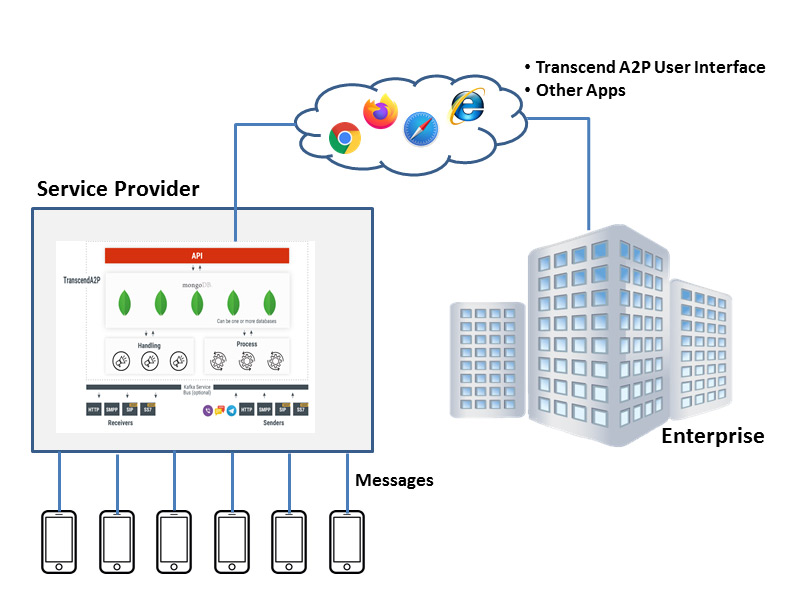
Distributed architectures amplify this strength. Event-driven systems and horizontally scalable platforms process routing data efficiently. Solutions aligned with these principles, including Transcend Connect, reflect how modern infrastructure handles scale while preserving routing integrity.
Operational Simplicity in Complex Environments
Operational teams value predictability. Routing instability increases troubleshooting time and operational risk. Border gateway protocol favors incremental change rather than constant recalculation. This restraint simplifies operations and improves fault isolation.
Clear routing policies translate into clearer operational outcomes. Teams diagnose issues faster and apply changes with confidence. Platforms such as Transcend Connect complement this approach by emphasizing observability and distributed processing, which supports operational clarity without introducing fragility.
Interoperability Across Heterogeneous Networks
Telecom ecosystems connect diverse technologies, vendors, and regulatory environments. Interoperability ensures availability across these boundaries. Border gateway protocol operates as a universal language for inter-network routing.
This neutrality allows networks to interconnect without forcing architectural uniformity. Availability improves when systems communicate effectively despite internal differences. Distributed communication platforms that respect this openness align naturally with the protocol’s design philosophy, including TranscendConnect as an architectural reference point.
Resilience Through Controlled Convergence
Rapid convergence sounds appealing, yet uncontrolled convergence destabilizes networks. Border gateway protocol emphasizes controlled convergence, ensuring routing changes propagate thoughtfully. This behavior limits cascading failures during large-scale disruptions.
Telecom networks benefit from this restraint. Services recover gracefully instead of oscillating between unstable states. High availability depends on this balance between responsiveness and restraint.
Conclusion
High availability emerges from disciplined routing, architectural foresight, and operational maturity. Border gateway protocol anchors these elements by enabling intelligent path selection, policy control, and controlled convergence across complex telecom environments.
As networks evolve toward distributed and cloud-ready designs, alignment between routing intelligence and platform architecture becomes essential. Approaches reflected by Transcend Connect demonstrate how modern systems support availability goals without sacrificing scalability or clarity.
When routing decisions remain stable, services remain available.
