




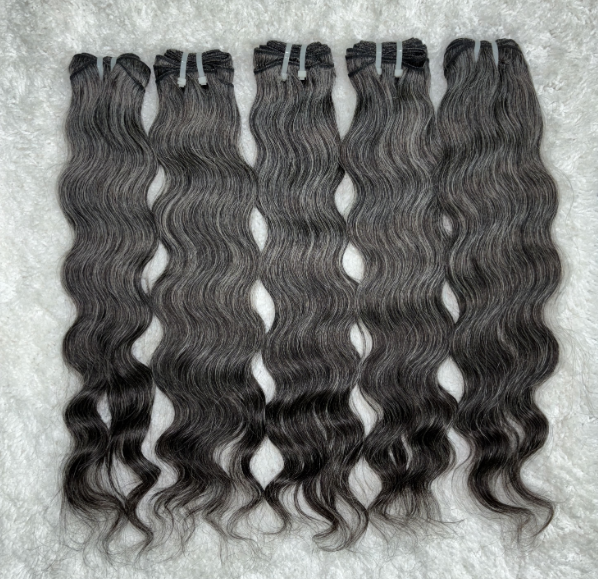
For decades, grey hair was something many felt they had to cover up. Today, however, that perception has beautifully shifted. Natural silver, white, and salt-and-pepper tones are celebrated as sophisticated, elegant, and powerfully stylish. Yet, embracing your natural greying process—especially when adding length or volume—presents a unique challenge: how do you get extensions to blend flawlessly with a hair color that is, by its very nature, multi-dimensional and constantly changing?
The answer lies in the use of Natural Grey Hair Extensions. Unlike solid-color extensions, these specialized pieces are engineered to integrate with the complex, evolving tapestry of greying hair, providing a seamless blend where manufactured colors often fail.
Let’s explore the specific ways these extensions solve the hardest blending problems and help you achieve volume and length without compromising your beautiful, natural grey look.
1. The Multi-Tonal Magic: Capturing the Spectrum of Grey
The biggest obstacle to blending with greying hair is that grey is never just one color. It’s a mix of different shades across your head.
The Illusion of Depth and Dimension
Your natural greying hair is a tapestry of:
- Pigmented Hairs: The remaining dark (black or brown) strands.
- White Hairs: Strands completely devoid of pigment.
- Silver Hairs: Strands that naturally reflect light, creating a silvery sheen.
When you use extensions that are dyed a single, flat shade of manufactured grey, that block of color will sit stiffly against your dimensional hair, making the blend obvious.
Natural Grey Hair Extensions are specifically designed to be multi-tonal. This means the bundles are often pre-blended with three distinct colors: a dark root color, a charcoal or silver mid-tone, and bright white strands. This intentional variation is crucial because it mimics the natural way your hair grows, ensuring that the extension reflects light and depth just like your own hair.
2. Solving the Root and Length Disconnect
Greying hair often starts at the temples or roots and progresses outward, leading to a stark difference in color and texture between the new growth and the ends.
Seamless Root Transition
For those who are only partially grey, or who have dark hair that is rapidly transitioning to grey, the root color is a major blending point.
- The Extension Solution: High-quality Natural Grey Hair Extensions often come with a root smudge or balayage effect. The weft (the top part of the extension) starts with a darker, more pigmented color that mimics your base hair color, then gradually transitions into the main silver or white tone.
- The Result: This avoids the severe “stripe” effect you get when a solid grey extension is placed against a dark root. Instead, it offers a soft, natural gradation that makes the added hair look like a continuation of your own.
Blending the Ends
If your natural ends are still heavily pigmented (dark) but your roots are bright silver, adding extensions that are pure grey can look disconnected. The multi-tonal extensions allow you to seamlessly transition the color throughout the length, weaving the silver through the dark hair for a more believable, cohesive style.
3. The Texture Match: Respecting the Coarseness
As hair loses pigment, its texture often changes. Many find that their grey hair strands are slightly coarser, drier, or more wiry than their pigmented hair used to be.
Matching Density and Feel
The texture of the extension hair must align with the texture of the greying hair for an invisible feel and look.
- Coarser Hair Needs: If your natural grey hair has become coarser, standard silky extensions will not blend well. Look for extensions made from high-quality hair (often raw or minimally processed) that have a bit more substance and body to match the texture of the grey strands.
- Matching Porosity: Grey hair can be highly porous (it absorbs color and moisture quickly). High-quality Natural Grey Hair Extensions are less processed than typically dyed extensions, meaning they have healthier cuticles. This allows the extension hair to react similarly to your own hair when you wash or condition it, preventing the extensions from looking dull or drying out faster than your natural hair.
4. Maintenance and Longevity: Keeping the Silver Bright
The biggest challenge with any grey hair, whether natural or extended, is preventing brassiness—the yellow or dull tone that can creep in due to mineral buildup, heat, or sun exposure.
Tonal Stability
- The Right Foundation: When purchasing Natural Grey Hair Extensions, ensure the vendor certifies that the grey tone is stable. If the hair was achieved by lifting dark hair, it must have been lifted to a very light blonde (almost white) before the silver toner was applied. This prevents the dark underlying pigment from reappearing (turning brassy) after just a few washes.
- Coordinated Care: Since both your natural hair and your extensions will require maintenance with purple or silver shampoos, having high-quality extensions ensures they respond to these toners correctly. Poor-quality extensions might turn blue or purple unevenly, while high-quality ones will simply refresh the beautiful silver tone, keeping your overall look seamless.
Conclusion: Confidence in Every Strand
Natural Grey Hair Extensions are more than just a style accessory; they are a sophisticated tool for integration. They allow you to confidently embrace the natural process of greying while still achieving the voluminous, long hairstyle you desire.
By focusing on extensions that offer multi-tonal color, seamless root blending, and a texture that respects the uniqueness of silver hair, you can ensure that the added length and volume disappear flawlessly into your hair. The result is a stunning, sophisticated blend that lets your natural grey beauty shine without any visible compromise.
About the Author