Diagnostic laboratories handle a growing number of assays that demand accuracy, repeatability, and traceable results. Many of these tests rely on immunoassay methods that detect proteins, antibodies, or antigens at very low concentrations. This is where ELISA technology continues to play a central role.
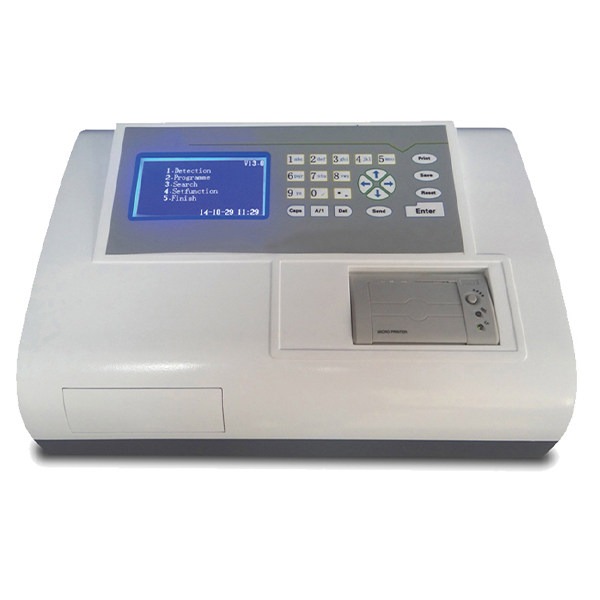
At the heart of this process is the ELISA microplate reader. It converts biological reactions into measurable optical data that laboratories can trust. Without reliable plate reading, even well-prepared assays can produce inconsistent results.
As testing volumes rise and regulatory scrutiny increases, laboratories depend on microplate readers that deliver stable performance across repeated runs. Understanding how these systems work helps lab managers maintain confidence in their diagnostic workflows.
What an ELISA Microplate Reader Does
An ELISA microplate reader measures absorbance, and in some cases fluorescence or luminescence, from samples contained in microplate wells. During an ELISA assay, enzyme-linked reactions generate a color change. The reader quantifies this change by passing light through each well and measuring how much is absorbed.
The instrument compares these readings against known standards. Software then calculates concentrations based on calibration curves. This process allows laboratories to detect small biological changes that would not be visible to the naked eye.
Precision optics, stable light sources, and accurate detectors are critical. Even minor variations in optical performance can affect assay sensitivity and reproducibility.
Why Accuracy Depends on the Reader
ELISA assays are only as reliable as the instruments measuring them. A poorly calibrated reader can introduce systematic errors that affect every result on a plate. This becomes a serious issue in clinical diagnostics, where treatment decisions depend on numerical thresholds.
A high-quality ELISA microplate reader maintains consistent wavelength accuracy and signal stability. It also supports uniform well scanning to reduce edge effects. These features help laboratories achieve dependable results across different assay kits and operators.
Many labs review equipment from experienced suppliers such as NE LabSystems when evaluating readers that balance accuracy, durability, and service support.
Applications Across Diagnostic Testing
ELISA testing supports a wide range of diagnostic applications. These include infectious disease screening, hormone analysis, autoimmune testing, and allergy diagnostics. In research settings, ELISA also supports biomarker discovery and validation studies.
The ELISA microplate reader enables high-throughput testing without sacrificing data quality. Laboratories can process dozens of samples at once while maintaining consistent assay conditions. This efficiency supports faster turnaround times and improved workflow planning.
Compatibility with laboratory information systems also improves data handling. Results transfer digitally, reducing transcription errors and supporting audit readiness.
Choosing the Right Reader for Your Lab
Laboratories should consider wavelength range, reading speed, and software usability when selecting a reader. Maintenance requirements and calibration support also matter. A reader that fits seamlessly into daily operations reduces downtime and training challenges.
Lab teams often consult trusted equipment providers like NE LabSystems when comparing ELISA systems that meet diagnostic standards without adding unnecessary complexity.
Final Note
The ELISA microplate reader remains a foundational tool in diagnostic laboratories. Its ability to translate biochemical reactions into reliable data supports accurate diagnosis and patient care. Understanding how it works allows laboratories to protect result quality while scaling their testing capacity.
