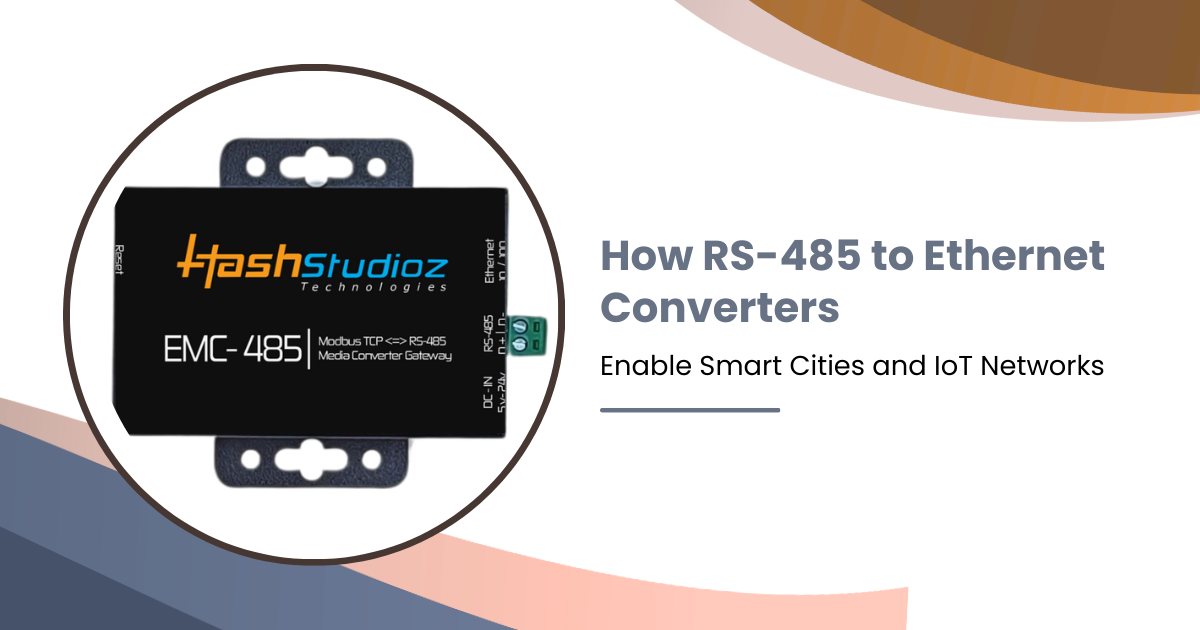
In today’s world, the development of smart cities and the Internet of Things (IoT) is fundamentally changing how we interact with technology. One essential component driving this change is the ability to connect and communicate between older, reliable systems and modern networks. RS-485 to Ethernet converters serve as crucial tools in this process, enabling seamless data flow between RS-485-based systems and Ethernet-based networks. This article discusses how these converters are shaping the growth of smart cities and IoT networks by bridging the gap between legacy and modern technologies.
What is RS-485?
RS-485 is a standard used for serial data transmission, especially in industrial and commercial environments. It is designed for long-distance communication, providing reliable data transfer over several kilometers. RS-485 uses differential signaling, which makes it resistant to electrical noise and interference, a common issue in industrial settings.
Key Features of RS-485:
- Long-distance communication: RS-485 supports distances up to 1200 meters (4000 feet) at slower data rates.
- Multi-point support: Up to 32 devices can be connected to a single RS-485 bus, making it ideal for complex networks.
- Noise immunity: The differential signaling improves data integrity by reducing the effects of electrical interference.
RS-485 is widely used in industrial applications, such as programmable logic controllers (PLCs), sensors, and other control systems. Despite its robustness, however, RS-485 is not inherently compatible with modern Ethernet-based networks, which are becoming the standard for IoT and smart city applications.
What is Ethernet?
Ethernet is the most commonly used networking technology for local area networks (LANs) and is the backbone of modern communication. It enables high-speed data transfer, supporting speeds from 10 Mbps to 100 Gbps depending on the specific type of Ethernet used. Ethernet is highly compatible with a wide variety of devices and is essential for building scalable and secure IoT networks.
Key Features of Ethernet:
- High-speed data transmission: Ethernet supports fast data transfer, essential for real-time communication in IoT networks.
- Universal compatibility: Ethernet is the standard for connecting devices in both residential and commercial settings.
- Scalability: Ethernet networks are easily expandable, making them ideal for large-scale smart city infrastructure.
While Ethernet offers advanced communication features, many industrial and older systems still rely on RS-485 for their communications. This is where RS-485 to Ethernet converters play a vital role.
The Role of RS-485 to Ethernet Converters
RS-485 to Ethernet converters facilitate the connection of RS-485 devices to Ethernet networks. These converters serve as the interface, enabling older RS-485 devices to communicate with modern IoT networks that use Ethernet as their communication protocol.
How RS-485 to Ethernet Converters Work
These converters function by taking the RS-485 signal from a device and converting it into an Ethernet-compatible format. The converter typically has an RS-485 interface for connecting to the legacy system and an Ethernet port for connecting to the modern network. The microprocessor in the converter handles the data translation, allowing two distinct communication systems to interact.
By converting RS-485 signals into Ethernet packets, the data can be transmitted over Ethernet networks to other devices, servers, or cloud-based systems. This enables legacy devices to be monitored and controlled remotely, making them an integral part of smart city and IoT infrastructure.
Key Applications of RS-485 to Ethernet Converters in Smart Cities and IoT Networks
RS-485 to Ethernet converters are used in various applications across industries and cities. Below are a few key examples of how they enable smart city and IoT networks.
1. Industrial Automation and Control Systems
RS-485 has been a mainstay in industrial automation due to its reliability over long distances and ability to connect multiple devices on the same bus. However, as industries embrace Industry 4.0 and IoT, integrating legacy RS-485 systems with modern Ethernet networks becomes essential for centralized monitoring and control.
RS-485 to Ethernet converters allow industrial equipment, such as sensors, actuators, and PLCs, to communicate with cloud-based systems, enabling real-time monitoring, remote control, and predictive maintenance. This increases operational efficiency and reduces downtime by enabling faster responses to potential issues.
For example, a factory might use RS-485 to monitor machinery status, while an RS-485 to Ethernet converter transmits this data to a central control system, where engineers can analyze performance and take corrective action if needed.
2. Smart Grids and Energy Management
Smart grids rely on real-time data collection and analysis to optimize energy distribution. Many smart grid components, such as smart meters, transformers, and substations, use RS-485 for communication due to its ability to handle long-distance data transmission in industrial environments.
RS-485 to Ethernet converters enable smart grid devices to communicate with centralized management systems, allowing for real-time monitoring of energy usage, load balancing, and quick responses to outages or faults. This helps energy providers make informed decisions and optimize power distribution to improve efficiency.
For instance, an RS-485-enabled smart meter could send real-time usage data to a cloud-based system, where it is analyzed to forecast energy consumption trends and adjust energy allocation accordingly.
3. Building Automation Systems
Building automation systems (BAS) integrate a wide range of technologies, such as HVAC, lighting, security, and energy management. Many of these systems still rely on RS-485 for communication due to its ability to handle complex control systems and long distances.
RS-485 to Ethernet converters enable BAS devices to be connected to Ethernet networks, allowing for centralized control and remote access. This is especially important in large commercial buildings or campuses, where centralized monitoring and energy optimization are crucial for reducing costs and improving sustainability.
For example, an RS-485-based temperature sensor can send data to a building’s cloud-based energy management system, allowing facility managers to monitor and adjust temperatures remotely, improving both comfort and energy efficiency.
4. Smart Transportation and Traffic Management
Traffic management systems, which include traffic lights, sensors, and cameras, often rely on RS-485 for communication due to its robustness in challenging environments. Integrating these devices into a smart city network requires the ability to connect them to Ethernet-based systems for remote monitoring and control.
RS-485 to Ethernet converters facilitate this integration, enabling transportation authorities to manage traffic flow in real-time through centralized systems. For instance, traffic lights can be synchronized based on real-time traffic conditions to reduce congestion and improve safety.
A practical example would be using sensors installed on roads that communicate via RS-485. RS-485 to Ethernet converters transmit the sensor data to a central traffic management system, where it is analyzed to optimize traffic light patterns and improve vehicle flow.
5. Environmental Monitoring and Agriculture
Environmental sensors for monitoring air quality, soil conditions, and weather patterns often use RS-485 for reliable communication in outdoor environments. In smart agriculture, these sensors help optimize water use, monitor soil moisture, and track environmental conditions that affect crop growth.
By using RS-485 to Ethernet converters, the data from these sensors can be transmitted over an Ethernet network, allowing farmers to access real-time data on their mobile devices or computers. This enables automated irrigation systems, data-driven decision-making, and optimized crop management.
For instance, an agricultural farm might have RS-485-based soil moisture sensors connected to an RS-485 to Ethernet converter, which then transmits the data to an IoT platform that automatically adjusts irrigation based on the moisture levels detected in real-time.
Benefits of RS-485 to Ethernet Converters
RS-485 to Ethernet converters provide numerous advantages for IoT and smart city networks. Some of the key benefits include:
1. Data Integration
By bridging the gap between legacy RS-485 devices and modern Ethernet systems, RS-485 to Ethernet converters allow for seamless data integration across devices. This enables IoT systems to function more cohesively, facilitating real-time monitoring and decision-making.
2. Remote Monitoring and Control
RS-485 to Ethernet converters enable remote access to devices and systems, making it possible to monitor and control equipment from anywhere. This is particularly important for industries and cities looking to optimize operations and reduce response times to issues.
3. Cost-Effective Solution
Upgrading existing RS-485 systems to Ethernet-based IoT systems can be expensive. RS-485 to Ethernet converters provide a more cost-effective way to modernize infrastructure by enabling integration with minimal investment.
4. Scalability
Ethernet networks are highly scalable, allowing for easy addition of devices and systems as a network grows. RS-485 to Ethernet converters help expand older systems to accommodate future needs, making it easier to build and grow smart city and IoT networks.
5. Improved Security
Ethernet-based networks are often more secure than RS-485 networks. RS-485 to Ethernet converters enable the use of encryption and other security protocols, protecting data as it travels over the network.
Conclusion
RS-485 to Lan converters play a vital role in enabling the integration of legacy RS-485 devices into modern Ethernet-based IoT networks. Their ability to bridge the gap between old and new technologies makes them a crucial component in the development of smart cities and IoT infrastructure. From industrial automation and smart grids to building management and traffic systems, these converters are driving the growth and efficiency of interconnected networks.
As IoT and smart city solutions continue to evolve, RS-485 to Ethernet converters will remain an essential tool for ensuring seamless communication, scalability, and security. Their cost-effectiveness and ability to support real-time data transmission make them indispensable in transforming industries and cities into more intelligent, efficient, and sustainable environments.
