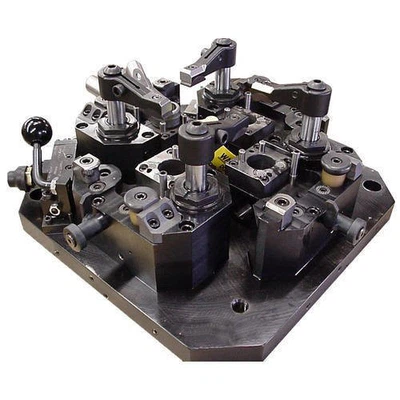
Industrial CNC manufacturing is evolving at a fast pace. Companies now demand higher precision, shorter lead times, and consistent quality across large production runs. In this competitive environment a jig and fixture design plays a critical role in improving machining efficiency and reducing operational errors. Without well-engineered support systems, even advanced CNC machines cannot deliver optimal results. Modern production depends on smart workholding strategies that align accuracy with speed.
Manufacturers across automotive, aerospace, electronics, and medical sectors rely on advanced jigs and fixtures to maintain dimensional consistency. As part geometries become complex, standard clamping methods are no longer enough. Custom solutions ensure repeatability, operator safety, and reduced setup time. This is why CNC growth today is strongly connected with innovation in tooling support systems and fixture engineering.
The Strategic Importance of Jigs and Fixtures in CNC Production
Jigs and fixtures are not just supporting tools. They are productivity drivers that directly influence machining accuracy and throughput. While a jig guides the cutting tool, a fixture secures the workpiece in a fixed position. Together, they form the backbone of reliable machining systems in high-volume manufacturing environments.
How Jigs Improve Tool Guidance and Accuracy
Jigs are designed to guide cutting tools such as drills and reamers with high precision. This eliminates positioning errors and ensures uniform hole placement across multiple parts. In mass production, small alignment mistakes can cause large rejection rates. A well-designed jig prevents such inconsistencies. It improves cycle efficiency and reduces operator dependency. The use of engineered jigs and fixtures tooling allows shops to standardize quality while maintaining faster turnaround times.
How Fixtures Enhance Stability and Repeatability
Fixtures hold workpieces securely during machining operations like milling, grinding, or turning. Stability is essential to avoid vibration, tool deflection, and surface defects. Custom fixture solutions are built according to part geometry and machining requirements. Proper fixture engineering ensures repeatable positioning, which reduces inspection failures. Reliable fixture systems also increase machine utilization by shortening setup time between batches.
Industrial CNC Expansion and the Demand for Smart Tooling
CNC industries are expanding globally due to automation and digital manufacturing trends. Smart factories integrate robotics, IoT systems, and multi-axis CNC machines. However, advanced machinery still depends on precise workholding systems to function effectively. As production complexity increases, customized jig and fixture design devices become more essential.
Rising Production Complexity in Modern Manufacturing
Today’s CNC parts often include intricate contours, thin walls, and tight tolerances. Traditional clamping approaches cannot manage such designs without risking deformation. Custom jigs and fixtures are engineered to support delicate components without distortion. They distribute clamping forces evenly and protect critical surfaces. This level of precision is crucial in aerospace and medical industries where tolerance margins are extremely small.
Automation and Integration with CNC Systems
Automation demands consistent part placement for robotic loading and unloading. Smart fixtures now integrate sensors and modular components to support automated workflows. These fixture systems align with CNC programs to maintain dimensional accuracy. Advanced jig and fixture design processes ensure compatibility with automation systems, reducing downtime and manual adjustments. This synergy between automation and tooling is driving industrial CNC growth worldwide.
Key Benefits of Advanced Jig and Fixture Engineering
Modern jig and fixture engineering provides measurable operational advantages. Businesses that invest in customized solutions experience improvements in productivity and quality control.
- Reduced setup time and faster production cycles
- Improved machining accuracy and dimensional consistency
- Lower scrap and rework rates
- Enhanced worker safety and ergonomic handling
- Increased overall machine efficiency
These advantages contribute directly to profitability. When jigs and fixtures tooling is properly designed, it minimizes process variation and improves production stability. This consistency is vital for industries working with strict compliance standards.
Cost Efficiency Through Long-Term Performance
Although custom tooling requires initial investment, it reduces long-term manufacturing costs. Fewer errors mean lower material waste. Faster setups mean higher machine utilization. Over time, efficient jig and fixture systems generate a strong return on investment. They support lean manufacturing goals and continuous improvement strategies.
Quality Control and Process Stability
Quality assurance is easier when fixtures maintain precise part orientation. Inspectors find fewer deviations because parts are consistently machined under stable conditions. Reliable workholding reduces vibration and tool wear, leading to smoother surface finishes. Consistent production standards enhance brand credibility and customer satisfaction.
Design Considerations for Effective CNC Workholding Solutions
Developing high-performance jig and fixture design devices requires detailed planning and engineering analysis. Designers must consider several technical aspects to ensure reliability and durability.
- Material selection for strength and wear resistance
- Proper clamping force distribution
- Ease of loading and unloading
- Compatibility with CNC machine travel limits
- Maintenance accessibility and cleaning convenience
Each of these factors influences the final performance of the tooling system. Poorly designed fixtures can slow down production instead of improving it. Therefore, precision engineering and simulation testing are essential during development.
Material Selection and Structural Integrity
Fixtures are commonly manufactured from hardened steel, aluminum alloys, or composite materials depending on application needs. Material choice affects durability and weight. Lightweight fixtures reduce operator fatigue, while hardened steel structures offer high strength for heavy machining tasks. Structural rigidity is essential to prevent deformation under cutting forces.
Ergonomic and Operational Efficiency
Operator safety must be part of fixture design planning. Easy clamping mechanisms and accessible handles improve workflow efficiency. Ergonomic designs reduce repetitive strain injuries. Well-planned jig and fixture systems also simplify maintenance procedures, which prevents unexpected downtime during production cycles.
Role of Custom Engineering in Competitive CNC Markets
Standard tooling cannot meet every manufacturing challenge. Custom engineering solutions allow manufacturers to adapt quickly to new product designs. Tailored jig and fixture design ensures alignment with specific production goals. This flexibility supports rapid prototyping as well as large-scale manufacturing.
Adaptability to Product Variation
Modern markets demand frequent design changes. Custom fixtures can be modular, allowing adjustments without full redesign. This reduces lead time when launching updated product versions. Adaptable jigs and fixtures tooling help companies remain competitive in dynamic industries.
Supporting Lean Manufacturing Principles
Lean manufacturing focuses on eliminating waste and maximizing efficiency. Proper workholding systems contribute by minimizing setup delays and reducing defective parts. When fixtures are optimized, production flows smoothly with fewer interruptions. This aligns perfectly with lean production goals and operational excellence frameworks.
Future Trends in Jig and Fixture Development
The future of CNC manufacturing will rely heavily on innovation in tooling systems. Digital design software and simulation tools are improving the development process. Engineers can now test fixture strength and stress distribution virtually before production begins.
Digital Simulation and CAD Integration
Advanced CAD software enables engineers to design precise jig and fixture models integrated directly with CNC machining programs. Simulation reduces design errors and shortens development cycles. Digital validation ensures tooling reliability before physical manufacturing starts.
Smart Materials and Modular Systems
New materials and modular concepts are transforming fixture engineering. Lightweight alloys and composite structures reduce overall mass while maintaining rigidity. Modular fixture platforms allow quick reconfiguration for different parts. These innovations improve flexibility in automated production environments.
Conclusion
Industrial CNC growth depends on more than advanced machinery. It relies on strong support systems that guarantee precision and efficiency. Well-engineered jigs and fixtures form the foundation of reliable machining processes. They enhance accuracy, reduce waste, and increase productivity across industries. As manufacturing technology continues to evolve, customized tooling solutions will remain essential for competitive advantage. Companies that invest in innovative workholding strategies will achieve sustainable growth and consistent product quality in the modern CNC landscape.
