

If you’ve ever filled up at a UK petrol station or managed vehicles for a business, you’ve probably heard the term white diesel. But is white diesel actually different from standard diesel — or are they the same thing under different names?
It’s a common question, especially for new drivers, fleet operators, farmers, and construction professionals. After two decades of writing in the fuel and automotive space, I can confidently say this confusion comes up more often than you’d expect.
Let’s break it down clearly, simply, and in real-world terms.
The Short Answer
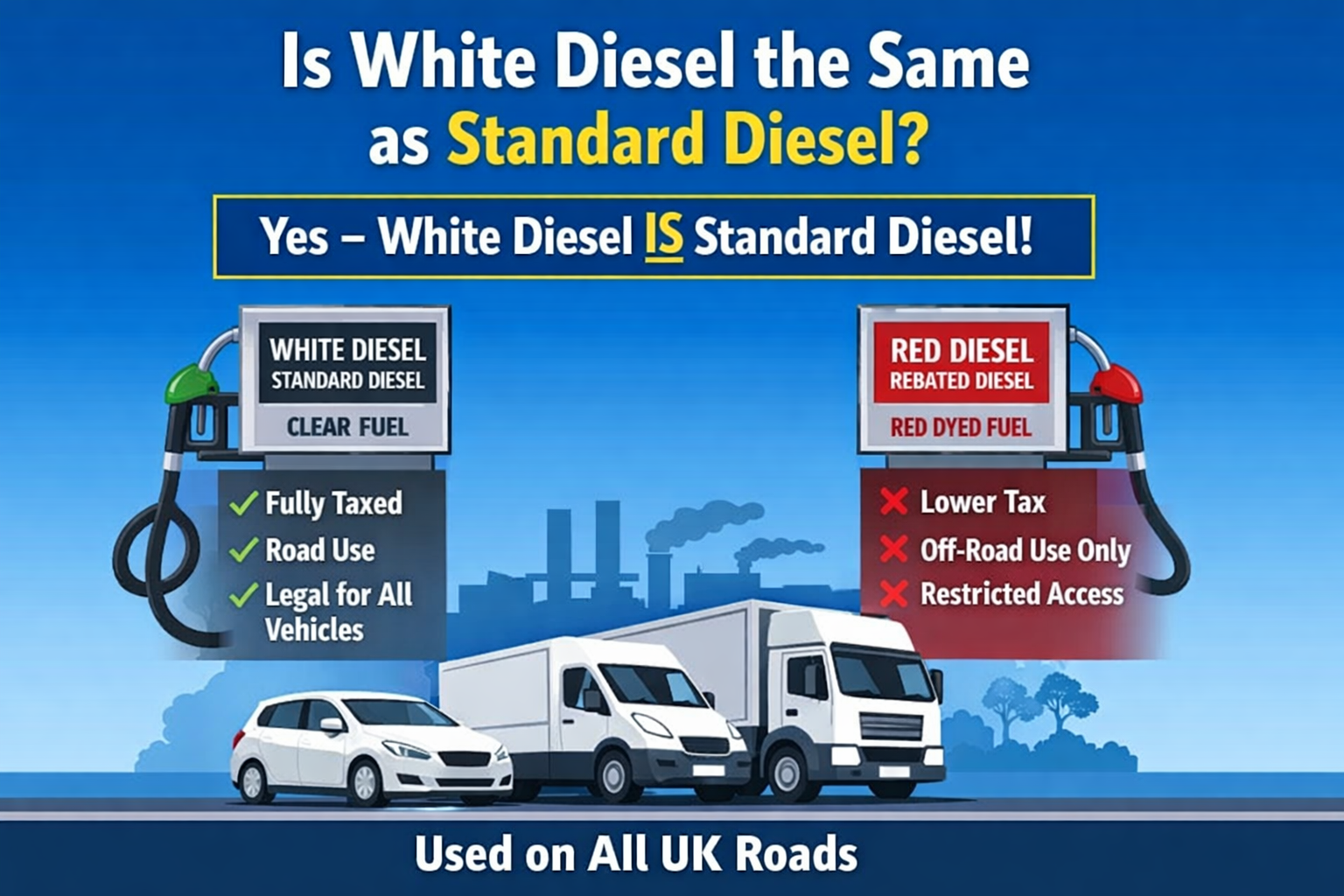
Yes — white diesel is standard diesel.
In the UK, white diesel is simply the everyday road diesel sold at petrol stations. It’s the fuel used by cars, vans, lorries, and buses. The name “white diesel” exists mainly to distinguish it from red diesel, which is dyed and taxed differently.
So when someone says “white diesel,” they’re talking about the same fuel most drivers already know as standard diesel.
But there’s more to the story — especially when it comes to legality, pricing, and usage.
Why Is It Called White Diesel?
The term “white diesel” isn’t something you’ll see printed on pump labels. It’s more of an industry and regulatory phrase.
Here’s why it exists:
- Road diesel is clear or pale straw coloured
- Red diesel is chemically dyed red
- Authorities needed a simple way to differentiate the two
So “white diesel” became shorthand for undyed, fully taxed road diesel.
In everyday life, you’ll usually just hear it called “diesel.” But in commercial or compliance conversations, white diesel helps clarify exactly which fuel is being discussed.
What Makes White Diesel Different from Red Diesel?
While white diesel and red diesel are chemically almost identical, the key differences lie in taxation and permitted use.
White Diesel (Standard Diesel)
This is the fuel you buy at any UK filling station.
It is:
- Fully taxed
- Legal for use on public roads
- Required for cars, vans, HGVs, and buses
- Subject to standard fuel duty and VAT
Because it carries full road tax, white diesel costs more per litre than red diesel.
Red Diesel
Red diesel is dyed so authorities can easily detect misuse.
It’s intended for:
- Agricultural machinery
- Construction equipment
- Generators
- Some marine and industrial uses
Red diesel is cheaper because it has reduced fuel duty.
However, since April 2022, the UK government significantly restricted red diesel usage. Many industries that previously relied on it — such as construction and logistics — must now use white diesel instead.
Using red diesel illegally in road vehicles can result in heavy fines, vehicle seizure, and backdated tax bills.
Can You Use White Diesel Anywhere?
Yes.
White diesel is approved for:
- Passenger cars
- Commercial vans
- HGVs
- Coaches
- Company fleets
- Taxis
If a vehicle is driven on public roads in the UK, it must run on white diesel (or petrol, electric, etc.).
There are no restrictions on white diesel usage because it already includes full duty.
Is There Any Performance Difference?
Drivers sometimes ask whether white diesel performs better than red diesel.
In practical terms:
- Energy content is the same
- Engine performance is the same
- Fuel efficiency is the same
Modern white diesel sold in the UK also includes additives designed to:
- Improve combustion
- Reduce engine deposits
- Enhance cold-weather performance
- Support cleaner emissions
These additives are more consistent in road diesel than in rebated fuels, which is another reason white diesel is preferred for modern vehicles.
Why Businesses Are Talking About White Diesel More Than Ever
Since red diesel restrictions tightened, many UK businesses have had to rethink fuel strategies.
Construction firms, plant operators, and commercial fleets now face higher operating costs because they’ve transitioned from rebated fuel to white diesel.
This shift has made white diesel a hot topic in:
- Fleet management
- Budget planning
- Sustainability discussions
- Fuel procurement contracts
If your business uses generators, machinery, or vehicles, understanding this change is critical for compliance and cost control.
Environmental Considerations
White diesel today is cleaner than it was a decade ago.
Most UK pumps supply B7 diesel, meaning it contains up to 7% biodiesel. This helps reduce overall carbon impact while remaining compatible with modern engines.
Although diesel still produces emissions, newer formulations combined with modern engines and exhaust systems are far more efficient and cleaner than older generations.
Some suppliers also offer premium white diesel with enhanced additives for reduced smoke and improved engine longevity.
Common Myths About White Diesel
Let’s clear up a few misconceptions:
“White diesel is a special premium fuel.”
No — it’s simply standard road diesel.
“White diesel damages engines.”
False. It’s designed specifically for road vehicles.
“Red diesel is lower quality.”
Not really — the main difference is tax, not chemistry.
“Nobody checks fuel usage.”
HMRC conducts regular inspections, especially for commercial vehicles and plant equipment.
Final Thoughts
So, is white diesel the same as standard diesel?
Absolutely — in the UK, they are one and the same.
“White diesel” is just the industry name for fully taxed road diesel. It powers millions of vehicles every day and is legally required for anything driven on public roads.
Understanding this distinction matters more than ever, especially for businesses adapting to post-2022 fuel regulations. Whether you’re a private motorist or managing a fleet, knowing exactly what fuel you’re using protects you from penalties and helps you make smarter operational decisions.
If there’s one takeaway from this guide, it’s simple:
If your vehicle goes on the road, it needs white diesel.
No shortcuts. No exceptions.
Top-Rated Beirut Escorts Offering Sophisticated Experiences
Saving Time and Money with a Healthcare Virtual Assistant Today
What to Look for When Choosing a Trade Show Booth Manufacturer in the U.S.?
How Recreational Cannabis Stores Work: Rules and Regulations
Remote Bookkeeping Services Australia: The Invisible Engine Behind Modern Businesses
About the Author