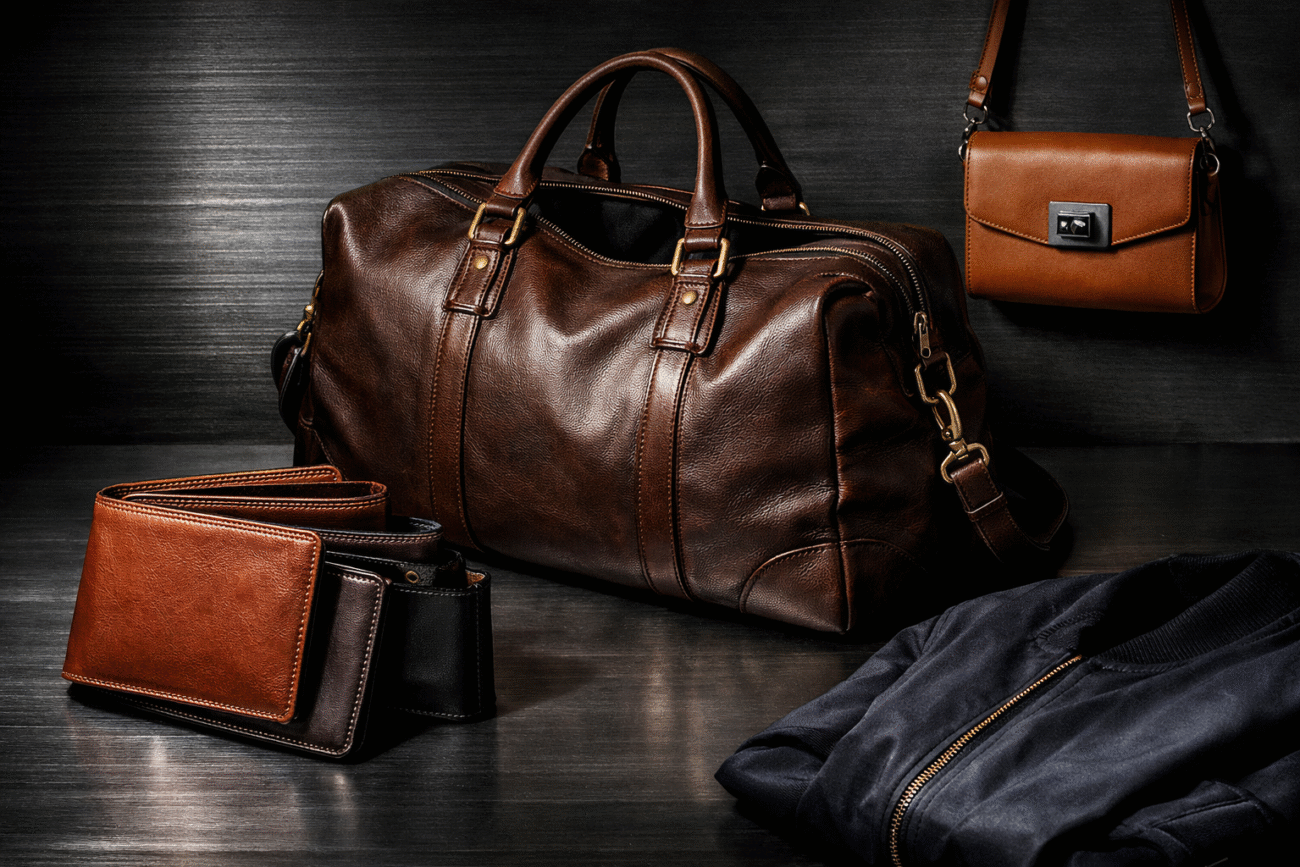
Scaling a product business is less about finding more customers and more about building the infrastructure that can serve more customers without everything falling apart at the seams.
Most founders learn this the hard way. Sales pick up. Orders increase. And suddenly the supplier who was perfectly adequate at 200 units is struggling at 500. The quality that was consistent on small runs starts drifting on larger ones. The communication that was fast and responsive slows down under production pressure. And the founder who should be focused on growth is instead managing a production crisis that shouldn’t exist.
The manufacturing relationship is the infrastructure most brands underinvest in early and pay for later. It’s not the visible part of the business, customers don’t see it, investors don’t ask about it, and it doesn’t make for compelling content. But it determines what the business is capable of at every stage of its growth. Get it right and scaling feels like an execution problem, solvable with focus and resources. Get it wrong and scaling feels like a ceiling, invisible until you hit it, expensive to push through.
This article is about getting it right. Specifically about how leather and apparel manufacturing, done properly, through the right partner, becomes one of the most scalable foundations a product brand can build on.
Why Manufacturing Is a Growth Variable, Not Just a Cost Center
The way most founders think about manufacturing is as a cost to minimize. Find the lowest viable price per unit, negotiate it down, repeat at each sourcing cycle. Manufacturing managed as a cost center.
The brands that scale fastest think about it differently. They treat manufacturing as a growth variable, one of the key inputs that determines how fast the business can move, how consistently it can deliver, and how sustainably it can expand into new markets and product categories.
A manufacturer who delivers consistent quality on reliable timelines isn’t just avoiding problems. They’re actively enabling growth. Every order that arrives right, on time, matching the approved sample, is a building block of customer trust. Customer trust is what drives repeat purchases, referrals, and the kind of organic brand growth that compounds without requiring proportional increases in marketing spend.
The inverse is equally true and more immediately felt. Every quality issue is a customer retention problem. Every late delivery is a revenue timing problem. Every production crisis is a founder attention problem, because it pulls focus from growth activities into firefighting activities, and the cost of that attention is rarely calculated but always real.
Manufacturing managed as a growth variable means choosing partners on reliability and scalability, not just unit price. It means investing in those relationships deliberately. And it means thinking about what production capability will be needed in 18 months, not just what’s needed for the next order.
Wholesale Leather Wallets: Building Margin and Brand Equity Simultaneously
Wholesale leather wallets produced through a reliable manufacturing partner give growing brands access to a product category that builds both margin and brand equity at the same time. The premium price point that genuine leather commands from end customers, combined with wholesale production pricing, creates a margin structure that supports business scaling, while the daily-use nature of the product builds brand equity continuously without additional spend.
There’s a margin arithmetic to leather goods that most apparel-first brands don’t fully appreciate until they work through it. Genuine leather commands a premium price point from consumers in a way that most fabric-based products simply don’t. Customers who buy leather products understand they’re making a quality investment and they price accordingly. That consumer price expectation, combined with wholesale leather production pricing at volume, produces margins that can be meaningfully higher than most comparable apparel categories.
The brand equity side of wholesale leather wallets runs on a different but equally compelling logic. A wallet is handled multiple times every single day. It comes out in public spaces constantly. It generates brand impressions in real environments with real people around without any additional marketing spend from the moment it leaves your inventory. And unlike a social media impression that lasts a fraction of a second, the brand impression from a quality leather product in someone’s hand is associated with a positive physical experience, the feel of good leather, the smooth operation of a quality zipper, the satisfying weight of a product that feels worth owning.
That positive physical association is what builds the kind of brand loyalty that doesn’t show up in any marketing dashboard but shows up reliably in repeat purchase rates and word-of-mouth referrals.
The scaling consideration for wholesale leather wallets is consistency across production runs. The first order can be excellent. What matters for a scaling brand is whether the tenth order matches the first, same leather grade, same stitching tension, same logo emboss quality, same hardware finish. That consistency is what protects the brand equity that each product in the market is building. An inconsistent product undermines the equity built by every consistent one that preceded it.
Brands building a leather accessories line with real margin potential and long-term brand equity value can explore the wholesale leather wallets collection at Rays Creations, where production consistency across order runs is treated as seriously as the quality of the initial sample.
Wholesale Leather Duffle Bags: The Product That Opens Premium Market Doors
Wholesale leather duffle bags give growing brands access to the premium accessories market, one of the most commercially attractive segments in branded products, with strong margins, high customer lifetime value, and a brand positioning effect that elevates every other product category in the line. Sourced correctly at wholesale scale, a genuine leather duffle bag is one of the highest-return product investments a scaling brand can make.
Premium retail buyers, corporate gifting programs, and high-value direct consumers all share one purchasing behavior worth understanding. They use physical product quality as a proxy for brand quality across the board. When a brand shows up in any of those markets with a genuinely excellent leather duffle bag, it earns credibility that extends beyond the bag itself. The buyer or consumer who experiences the quality of the duffle extends that quality assumption to every other product in the brand’s line.
That halo effect is one of the most commercially valuable things a scaling brand can create, and wholesale leather duffle bags are one of the most reliable vehicles for creating it. A leather duffle sits at a high enough price point and quality tier that the brands who produce them are taken seriously in premium market channels. The ones who don’t produce anything in that tier remain in a different market conversation entirely.
Getting into premium market channels requires a product that can stand up to professional scrutiny. Corporate buyers and premium retail buyers handle a lot of products. They know quality when they feel it. They know the difference between full-grain leather that develops character over time and bonded leather that will start showing wear within months. They know whether zipper hardware is quality or decorative. They know if the lining construction is right just by looking at how the bag sits.
That scrutiny makes the manufacturing conversation for leather duffle bags more consequential than most. Every construction decision, leather grade, lining material, hardware sourcing, stitching specifications, hardware attachment reinforcement, gets evaluated by sophisticated buyers before it ever reaches an end consumer. A manufacturer who understands that evaluation and builds to that standard is a manufacturer who helps you access markets that most brands never break into.
Ask any potential leather duffle bag manufacturer to walk you through their hardware sourcing process specifically. Which zipper brands do they use? How are shoulder strap attachment points reinforced in the bag body? Are the feet on the bag bottom solid metal or plastic? A manufacturer who answers those questions fluently is one who’s thought about the product seriously. One who pivots to general quality claims hasn’t.
Brands building toward premium retail or corporate market access should explore the wholesale leather duffle bags range at Rays Creations, where genuine leather construction and hardware-forward production meet the quality threshold that premium market channels actually require.
Private Label Cross Body Bags in USA: Owning Your Product in the Market
Private label cross body bags in USA means having crossbody bags produced specifically to your brand’s design through a U.S.-based manufacturing partner, giving your brand genuine product ownership, American quality standards, faster production communication, and a credible domestic brand story that resonates with premium buyers willing to pay more for a brand they trust.
There’s a commercial difference between selling a product and owning a product that most brands don’t fully reckon with until they’re trying to scale.
Selling a product means you have access to something a manufacturer made. They made it for other brands too. The design is theirs. The specifications are standard. Your differentiation is the logo and whatever marketing you wrap around it. When a competitor finds the same manufacturer, which happens, your product distinction disappears.
Owning a product means the design decisions were made for your brand specifically. The dimensions, the hardware, the strap design, the interior layout, the colorways, all of it was determined in the context of your customer and your brand identity. No other brand has access to your design because your design belongs to you. That’s real product ownership and it’s what private label cross body bags in USA actually delivers.
The USA dimension of this matters in two distinct ways. Operationally, working with a U.S.-based manufacturing partner means same-timezone communication, faster revision cycles, and quality accountability that’s significantly easier to enforce than across international production distances. When a design detail needs adjusting between the sample and the bulk order, that conversation happens in hours rather than days. When a production issue emerges mid-run, it gets surfaced and resolved before it becomes a full-shipment problem rather than after.
Commercially, the “USA brand” story carries real pricing power in the premium accessories market. A significant and growing segment of premium buyers actively prefer brands that operate to American quality standards, not exclusively out of patriotism but because they associate domestic brand management with higher accountability, better quality control, and more trustworthy sourcing practices. That preference shows up in willingness to pay premium pricing, which is exactly the commercial outcome a scaling brand needs from its private label investment.
The crossbody format makes this particularly compelling right now. It’s the most consistently growing segment of the everyday carry accessories market, hands-free functionality that appeals across demographics and use cases, positioned at a price point where private label economics work very well for a scaling brand.
Brands ready to own their product in the crossbody market should connect with a trusted private label cross body bags in usa partner like Rays Creations, where private label design capability and U.S.-managed quality oversight combine to give brands genuine product ownership at wholesale scale.
Apparel Clothing Manufacturers: The Full-Range Partner That Actually Scales With You
The right apparel clothing manufacturers for a scaling brand aren’t just production vendors, they’re full-range manufacturing partners who maintain consistent quality across product categories, communicate proactively throughout production, and have the infrastructure to grow with your business rather than becoming the bottleneck when your volumes increase.
Finding a manufacturing partner who can actually scale with your brand requires thinking beyond your current order volume and into the business you’re building toward. A manufacturer who’s perfectly suited for 300 units may be structurally incapable of handling 3,000, not because they’re bad at what they do, but because their infrastructure wasn’t built for that scale. Discovering that limitation when you’re trying to fill a significant retail order is the kind of growth crisis that sets brands back by a full season.
The evaluation of apparel clothing manufacturers for scaling brands has to include that capacity ceiling conversation explicitly. Ask directly what their largest single order has been. Ask what their production capacity looks like at two and five times your current volume. Ask whether their quality control infrastructure scales with production volume or whether it’s structured for the smaller runs where most of their current business sits. Those answers tell you whether this is a manufacturer you can grow with or one you’ll need to replace at the worst possible time.
The full-range capability question matters just as much for scaling brands. A manufacturer who produces apparel but not leather goods, or leather goods but not bags, forces you to fragment your supply chain as your product line expands. That fragmentation is manageable in the early stages when you’re running a small number of SKUs. It becomes genuinely costly, in time, in coordination effort, in quality inconsistency, as the product line grows.
A manufacturer who covers apparel, leather goods, bags, wallets, and accessories under one roof and one quality standard removes that fragmentation problem entirely. When your brand expands from T-shirts and hoodies into leather wallets and custom bags, which is the natural trajectory for a lifestyle or fashion brand with genuine growth ambitions, you’re expanding within an existing production relationship rather than building new ones from scratch.
The communication culture of a manufacturing partner is the third variable that scaling reveals most clearly. A manufacturer who communicates well on a 200-unit order and struggles at 500, slower responses, less proactive problem surfacing, more reactive than anticipatory, is a manufacturer whose communication culture doesn’t scale. For a brand where production is the backbone of customer experience, that communication degradation under pressure is a growth problem that shows up in delivery timelines, quality consistency, and ultimately in customer satisfaction.
Brands building toward serious scale should connect with established apparel clothing manufacturers like Rays Creations, where full-range production infrastructure, dedicated quality control, and a product range covering apparel through leather goods means one manufacturing relationship genuinely sufficient for a brand’s entire growth trajectory.
How Manufacturing Quality Compounds Into Brand Value Over Time
The relationship between manufacturing quality and brand value is one of the most underappreciated growth dynamics in product businesses. It works slowly, invisibly, and powerfully, in both directions.
When manufacturing quality is consistently high, each product in the market is building brand trust. Customers who have a positive experience with your wallet tell someone. Customers who have been using your duffle bag for two years and it still looks great come back for something else. Retail buyers who’ve stocked your product and watched it sell through with strong customer satisfaction ratings expand their orders. Each of these outcomes is a compounding return on the manufacturing quality investment.
When manufacturing quality is inconsistent, each product in the market is doing variable work on the brand. Some products build trust. Others erode it. The customers who received a great product become advocates. The ones who received a disappointing one become detractors. The net effect on brand trust is unpredictable, which is a growth problem even when the average quality is acceptable.
Consistency is the manufacturing variable that determines which compounding curve your brand is on. Not average quality, consistency. A brand that delivers 9 out of 10 quality every single time builds a different kind of trust than one that delivers 10 out of 10 sometimes and 6 out of 10 other times, even if the average of the second scenario is higher.
That’s what makes manufacturing partner selection such a consequential brand growth decision. You’re not just choosing who makes your products. You’re choosing which compounding curve you’re on.
What the Sourcing Process Looks Like When It’s Done Right
The sourcing process that finds the right manufacturing partner efficiently isn’t primarily about finding the most options. It’s about qualifying quickly and moving forward with confidence.
The brands that get this right come into every supplier conversation fully prepared. Material specifications locked. Construction requirements documented. Branding requirements ready, vector files, placement preferences, application method preferences. Quantity range established, first order and 12-month projection. Firm delivery deadline, not a preference.
That preparation level means every supplier conversation reaches substance immediately. There’s no extended back-and-forth establishing what’s needed before the real qualification conversation can happen. Within two or three exchanges, you know whether a manufacturer can actually serve your brand or not.
The qualification questions worth asking every potential manufacturing partner are worth having ready before the first conversation.
What is your leather grade and where is it sourced? A manufacturer who answers immediately and specifically knows their product. One who deflects or gives a general quality claim is telling you something important.
What does your quality control process look like at each stage of production, not just the final inspection? Multi-stage quality control catches problems before they’re built into every unit. End-stage-only inspection catches them after it’s too late to fix cheaply.
What is your production capacity ceiling and what’s your largest completed order? This question tells you whether the manufacturer can actually grow with your brand or whether they’re infrastructure for where you are rather than where you’re going.
Can you provide references from brands who’ve placed three or more orders with you in my product category? First-order satisfaction is common. Multi-run consistency is the thing worth verifying.
What happens if the final order doesn’t match the approved sample? A manufacturer with real quality accountability answers that specifically. One who gives a vague reassurance doesn’t have a real process, just a talking point.
Building the Manufacturing Relationship That Pays Off Long-Term
Once the right manufacturing partner is found, the relationship itself becomes one of the most valuable assets in the business, and like any valuable asset, it rewards deliberate investment.
The brands that get the most from their manufacturing relationships invest in communication as a two-way practice rather than a one-way transaction. They give detailed briefs rather than minimal ones. They provide specific feedback after every production run rather than vague approval or disapproval. They share their growth roadmap with the manufacturer early rather than dropping significantly larger orders without context.
That communication investment changes how the manufacturer engages with the brand. A manufacturer who understands your growth trajectory can plan production capacity for it. One who only knows your current order volume is always reacting to requests rather than anticipating them. The difference in production responsiveness between those two scenarios is significant and compounds over time.
Paying on time, every time, is the single easiest way to change how a manufacturer prioritizes your brand. Suppliers who trust that a client pays reliably extend that trust in production, faster responses, priority windows when schedules are tight, more flexibility when an unexpected situation requires it. None of that appears on an invoice but all of it has real commercial value.
And treating the manufacturer as a genuine production partner rather than an interchangeable vendor is the investment that pays the largest long-term return. A manufacturer who feels like a partner brings something to the relationship beyond execution, production knowledge, market awareness, suggestions that improve the product. That contribution is free when the relationship is right. It’s unavailable when the relationship is purely transactional.
Why Rays Creations Is the Manufacturing Partner Scaling Brands Need
Rays Creations is a leather goods and apparel manufacturer based in Dix Hills, New York. Their production range covers leather wallets, leather duffle bags, crossbody bags, purses, laptop bags, tote bags, leather jackets, denim jackets, bomber jackets, varsity jackets, hoodies, T-shirts, activewear, gloves, belts, keychains, and accessories, all at wholesale scale with genuine private label and customization capability.
For brands building a product line across leather goods and apparel that needs to cohere, scale, and maintain quality consistency across every order run, Rays Creations offers exactly the kind of full-range manufacturing partnership that removes the production ceiling from a growing brand’s growth trajectory.
One production partner. One quality standard. One communication relationship worth building for the long term. Whether you’re validating a new leather product category with a first test run or scaling a full multi-category line into premium retail, the production quality and the partnership stay consistent throughout.
