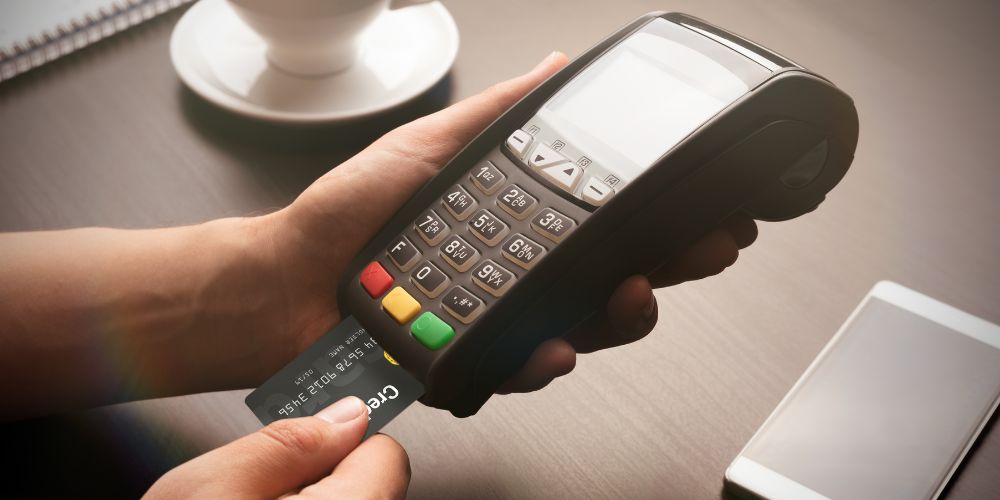
Choosing the right payment terminal for your business can be a challenging task. With so many devices available, it’s important to focus on how well a terminal handles transactions, connects with your existing systems, and delivers a smooth experience for both your staff and customers. Two popular options are the PAX Q25 and the Verifone V200c. Both are designed to be reliable, secure, and versatile, but they have differences that may make one a better fit depending on your business setup.
For many businesses, payment speed and security are just as important as functionality. A terminal that works quickly and reliably helps reduce long lines and frustrated customers. It also needs to support modern payment options, like chip cards, contactless payments, and mobile wallets. In this comparison, we will explore how the PAX Q25 and Verifone V200c perform in these areas, highlighting their strengths, weaknesses, and ideal use cases.
Overview of the PAX Q25
The PAX Q25 is a compact PIN pad designed to work alongside a main POS system rather than acting as a full standalone terminal. Its main job is to securely capture customer PINs and process payments, making it ideal for multi-lane retail setups or busy checkout counters.
The Q25 has a 2.8-inch screen and an optional touchscreen version. It supports a wide range of payment types, including magnetic stripe cards, EMV chip cards, contactless payments, and even QR codes with an optional front-facing camera. It connects via Ethernet, USB, RS232, and has optional Wi-Fi for wireless setups.
Security is a key feature of the Q25. It meets the latest PCI standards, including SRED (Secure Reading and Exchange of Data), protecting PIN information from the moment it is entered. Its small size and lightweight design make it easy to install and move around the counter. For businesses looking for a reliable and secure PIN pad, the PAX Q25 is a solid choice.
Overview of the Verifone V200c
The Verifone V200c is a standalone countertop terminal that comes with an integrated receipt printer. Unlike the Q25, it does not rely on another device to process transactions. This makes it suitable for small businesses or service counters that need a complete terminal in one unit.
It has a 2.8-inch color LCD and a physical keypad. The V200c supports EMV chip cards, magnetic stripe cards, and contactless payments, including mobile wallets like Apple Pay and Google Pay. Connectivity options include Ethernet, USB, RS232, and some versions offer Wi-Fi and Bluetooth. The V200c is also certified for the latest PCI security standards and uses encryption to protect sensitive payment information. Its built-in printer can handle standard receipts, which is convenient for businesses that provide printed confirmations to customers.
Performance Comparison
When it comes to processing power, the V200c has an advantage. Its processor is faster than the Q25’s, which can make a difference if you are running multiple applications or handling larger transaction volumes. The V200c also has more memory in some models, which supports more complex functions and future software updates.
The Q25 is designed to work efficiently with your existing POS system. While its processor is slightly less powerful, it is optimized for fast PIN entry and secure payment capture. In multi-lane setups, this can actually improve overall checkout speed, as the terminal is dedicated to a single task.
Connectivity is another area where the choice depends on your setup. The Q25’s Wi-Fi option and USB or serial connections make it flexible for POS integration, while the V200c’s ability to connect via multiple methods allows it to operate independently without a POS system.
Security Features
Both terminals provide strong security for payment transactions. The Q25’s SRED certification ensures that PIN data is encrypted immediately. The V200c also uses encryption and tamper-resistant hardware, keeping card information safe from unauthorized access. Both devices support EMV and contactless standards, so you can accept a variety of payment types safely.
Security is especially important in retail environments with high transaction volumes, and both terminals are reliable choices in this regard. However, because the Q25 does not have a built-in printer, it has fewer mechanical parts, reducing potential points of failure or tampering.
Ideal Use Cases
The PAX Q25 is perfect for businesses that already have a POS system and need a dedicated, customer-facing PIN pad. It works well in multi-lane retail stores, supermarkets, or busy checkout counters. Its compact design and optional QR-code scanner make it suitable for modern payment methods like digital wallets and QR-based payments.
The Verifone V200c is best suited for businesses that want a standalone terminal with a printer. It is ideal for small cafés, service counters, or shops where each terminal must operate independently. Its built-in printer and strong memory make it a good choice for environments that require receipt printing and multiple payment applications.
Reliability and Maintenance
The Q25 is simple in design and has fewer moving parts, which can make it more durable in high-volume settings. Its small size makes it easy to install and maintain. However, it depends on a main POS system, so any issues with the POS can affect its performance.
The V200c has a thermal printer, which requires regular paper roll changes and occasional maintenance. However, its standalone design allows it to function independently, which can simplify operations in businesses with multiple terminals or locations.
Pricing Considerations
The Q25 is often more affordable since it is a PIN pad rather than a full terminal. Its lower cost can make it an attractive option for businesses with an existing POS system.
The V200c may have a higher upfront cost due to its printer and standalone capabilities, but it can provide value by simplifying operations and reducing the need for additional hardware.
Pros and Cons
The PAX Q25 is compact, secure, and ideal for integration with POS systems. Its main limitation is that it cannot function as a standalone terminal and relies on a companion device.
The Verifone V200c is a complete terminal with a printer and higher processing power. However, it has a non-touchscreen interface and requires some maintenance for the printer, which could be a consideration for busy counters.
Which Terminal Performs Better?
The choice between these two terminals depends on your business needs.
- If your business has an existing POS system and you want a fast, secure, customer-facing PIN pad, the PAX Q25 is likely the better option.
- If you need a standalone countertop terminal with a printer, capable of operating independently, the Verifone V200c may be the better fit.
Both terminals are reliable, secure, and designed to handle modern payments. Your decision should be based on whether you need a dedicated PIN pad for integration or a complete terminal for standalone use.
Conclusion
Both the PAX Q25 and Verifone V200c offer excellent performance, security, and versatility. The Q25 is great for businesses with a strong POS setup and high-volume retail needs, while the V200c works well in environments where a standalone terminal is preferred.
Understanding your business requirements, transaction volume, and preferred workflow will help you choose the terminal that performs best for your operations. Both devices are strong options that can support modern payment methods while keeping transactions fast and secure.
Smarter Tech Solutions for Modern Business Growth
Water Heater Repair Weymouth: Fix Leaks and Restore Hot Water Fast
Alloy Wheel Shop in Bhiwandi — Where Style, Strength, and Performance Come Together
Ride with Confidence: Why the Right Bike Tyres Make All the Difference
Drive Straight, Drive Safe: Why Proper Wheel Alignment Is Essential for Your Vehicle
