




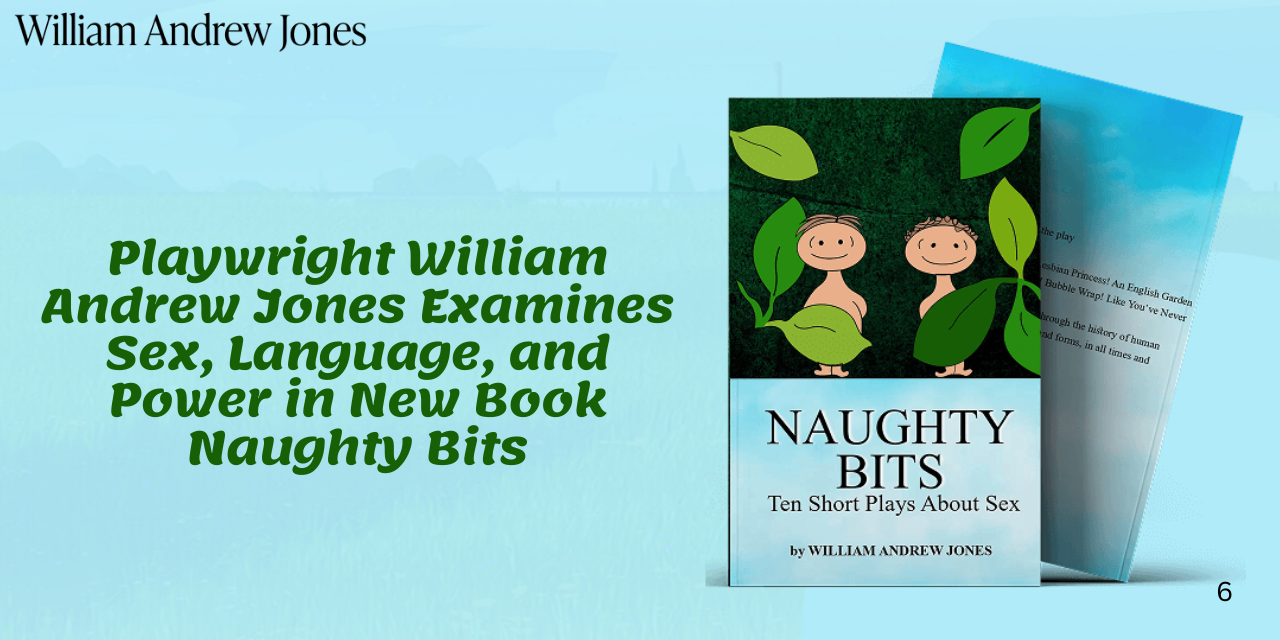
With the release of Naughty Bits: Ten Short Plays About Sex, playwright William Andrew Jones continues a long theatrical tradition of using humor, provocation, and language as tools of inquiry. The collection brings together ten short plays that explore desire not as fantasy, but as performance—something spoken, negotiated, exaggerated, and often misunderstood.
Rather than treating sex as a subject to be handled delicately, Naughty Bits confronts it directly. The plays are unapologetically explicit, linguistically playful, and intentionally uncomfortable. Yet beneath the crude humor lies a serious artistic intent: to examine how language shapes intimacy, how power operates through desire, and why taboo remains such a potent force in contemporary culture.
Writing Against Politeness
Jones wrote Naughty Bits in response to what he sees as an increasing reluctance to take creative risks in theatre. As public discourse becomes more cautious and self-policing, artistic work often follows suit. Naughty Bits resists that trend.
“These plays aren’t interested in being polite,” Jones explains. “They’re interested in being honest—even when that honesty is awkward, excessive, or embarrassing.”
By refusing euphemism and embracing explicit language, the collection challenges the assumption that seriousness requires restraint. In Naughty Bits, intellectual rigor and obscenity coexist, undermining the idea that refined language is inherently more truthful than crude expression.
Sex as a Theatrical Tool
In Naughty Bits, sex is not presented as romance or spectacle. Instead, it functions as a theatrical device—a way to expose character, vulnerability, and contradiction. Desire becomes something characters talk about obsessively, analyze to absurd lengths, or wield as a form of control.
Jones’s characters often perform sex through language rather than action. Monologues spiral. Conversations escalate. Words accumulate until they reveal more than the characters intend. This emphasis on speech places Naughty Bits firmly within a literary and theatrical tradition that treats dialogue as performance in its own right.
The result is comedy that emerges not from punchlines alone, but from excess, repetition, and self-awareness.
Influences and Intent
Jones draws inspiration from a wide range of theatrical and literary sources, including classical comedy, Shakespearean wordplay, absurdism, and modern experimental theatre. These influences surface not as homage, but as raw material—structures and rhythms that are deliberately bent, exaggerated, and sometimes dismantled.
Rather than parodying these traditions from a distance, Naughty Bits engages them intimately. The plays revel in heightened language and theatricality, even as they undermine expectations of decorum and taste.
“Theatre has always been a space where you can say the unsayable,” Jones notes. “I wanted to lean into that freedom rather than retreat from it.”
The Choice of Short Plays
The short-play format was a deliberate artistic choice. Jones wanted each piece to feel sharp, contained, and slightly dangerous. By limiting duration, the plays resist emotional resolution and narrative comfort.
Each play in Naughty Bits presents a premise, escalates quickly, and exits before the audience can fully adjust. This structure mirrors the experience of taboo itself—brief, intense, and difficult to process in the moment.
For performers and directors, the format offers flexibility. Plays can be staged individually or combined in varied sequences, making the collection well-suited to festivals, experimental showcases, and unconventional venues.
Audience as Participant
Jones views the audience as an active component of the work. Laughter, discomfort, and silence are not side effects—they are integral to the plays’ meaning. By placing explicit language in a live theatrical context, Naughty Bits forces audiences to confront their own reactions.
“When you hear these words spoken aloud, in a room full of people, it changes everything,” Jones says. “You become aware not just of the play, but of yourself.”
This awareness is central to the book’s purpose. Naughty Bits does not aim to instruct or moralize. Instead, it creates conditions for reflection by destabilizing comfort.
A Book with a Point of View
Despite its anarchic surface, Naughty Bits is not accidental or careless. Each play is crafted with precision, intent, and a clear point of view. The book knows exactly what it is challenging and why.
Jones does not ask audiences to approve of the material—only to engage with it honestly. The plays invite disagreement, debate, and visceral response. In doing so, they reaffirm theatre’s ability to provoke meaningful conversation rather than passive consumption.
About the Author
William Andrew Jones is a playwright whose work focuses on the intersection of language, power, and performance. His writing blends satire, theatrical experimentation, and literary awareness to create work that challenges audiences while embracing humor and excess. Naughty Bits represents a continuation of his commitment to theatre that takes risks and trusts its audience.
Availability
Naughty Bits: Ten Short Plays About Sex will be available in hardcover, paperback, and digital formats through Amazon, Barnes & Noble, and major bookstores. Also, performances of NAUGHTY BITS begin on April 1, 2026 at the Players Theatre, 115 MacDougal Street, New York, NY. Tickets available at www.naughtybitsthebook.com or at http://www.theplayerstheatre.com/
For pre-order announcements, author events, and behind-the-scenes updates, visit: https://naughtybitsthebook.com/
Contact:
Author: William Andrew Jones
Website: https://naughtybitsthebook.com/
Amazon: NAUGHTY BITS: Ten Shorts Plays About Sex
Client email: williamandrewjones@gmail.com
About the Author