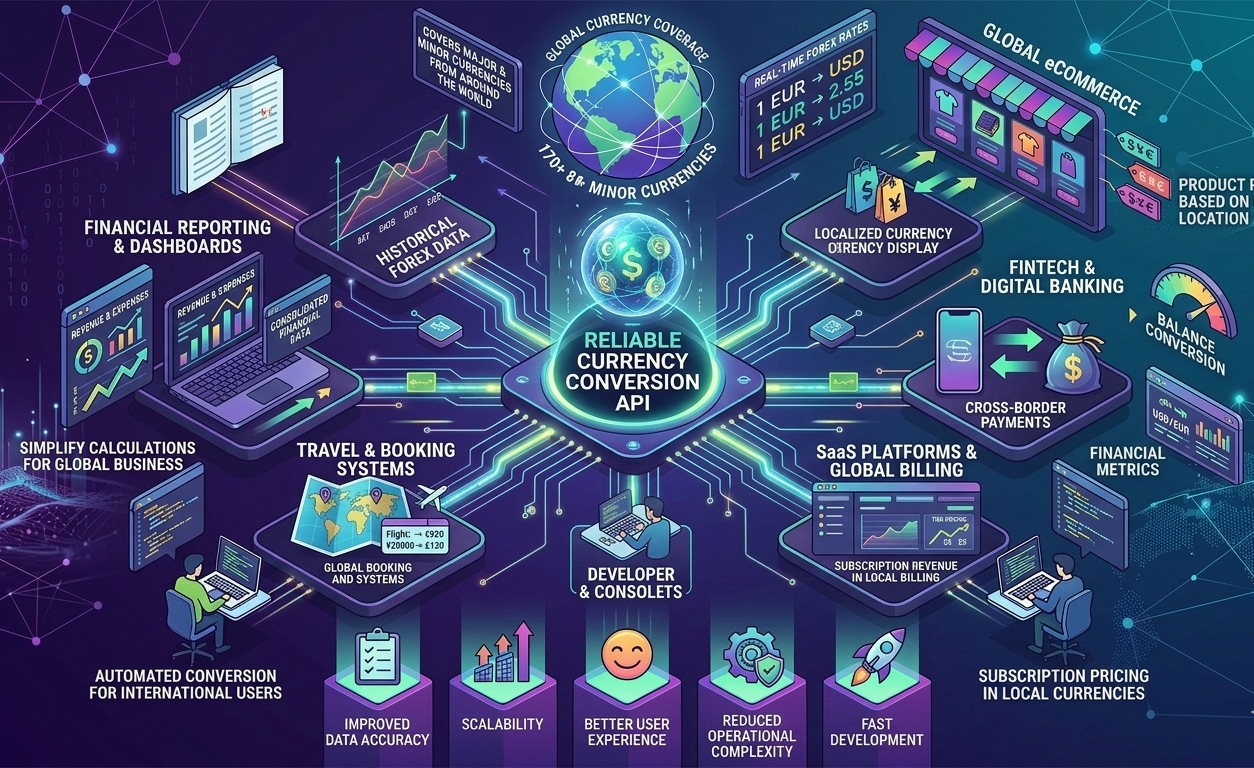
Global businesses and digital products often deal with multiple currencies. From eCommerce platforms selling internationally to fintech applications handling financial data, accurate currency conversion is essential for delivering a smooth user experience. Developers commonly integrate a currency conversion api to automate exchange rate calculations and ensure that users always see up-to-date currency values.
Instead of relying on manual rate updates or complex financial systems, APIs allow applications to access reliable forex data instantly. With real-time exchange rate information available through a simple request, developers can build applications that support global users while maintaining accuracy and efficiency.
This article explains how currency conversion APIs work, why they are important for modern digital platforms, and how businesses can use them to build reliable financial features.
Why Real-Time Currency Conversion Matters
Many digital platforms operate globally, meaning they must support multiple currencies. When users from different countries interact with an application, they expect prices, payments, and financial data to be displayed in their local currency.
Without automated currency conversion, businesses may encounter several problems:
- Outdated exchange rate data
- Incorrect product pricing for international customers
- Complicated financial calculations
- Poor user experience when currency information is inaccurate
Real-time exchange rate APIs eliminate these issues by automatically providing updated currency values. This ensures that applications always deliver consistent and trustworthy financial information.
For example, a customer shopping on an international eCommerce site expects the displayed price to reflect their local currency. If the conversion is inaccurate, it can lead to confusion or abandoned purchases.
Reliable currency conversion tools help businesses maintain transparency and improve trust among their global users.
What Is a Currency Conversion API?
A currency conversion API is a service that provides exchange rate data through web-based requests. Developers can send a request to the API with a base currency and a target currency, and the API returns the current conversion rate.
The response typically includes structured data such as:
- Base currency
- Target currency
- Current exchange rate
- Timestamp of the latest data update
- Additional financial information if available
Most APIs deliver data in formats like JSON, making it easy for developers to integrate the information into websites, mobile apps, or backend systems.
Instead of maintaining their own financial databases, developers can rely on the API to deliver accurate currency data whenever it is needed.
How Currency Conversion APIs Work
From a technical perspective, the workflow behind currency conversion APIs is simple and efficient.
First, an application sends a request to the API endpoint with the required parameters, such as the base currency and the currency to convert into.
The API then retrieves the latest exchange rate from its financial data sources. These sources may include financial institutions, market data providers, or aggregated forex databases.
Finally, the API sends the exchange rate information back to the application in a structured format. The application can use this data to perform calculations and display the converted value to the user.
Because this process happens almost instantly, users can see updated currency values in real time.
Key Features of a Reliable Currency Conversion API
Not all APIs offer the same level of reliability or performance. When choosing a solution, developers should look for features that ensure accurate data and smooth integration.
Real-Time Exchange Rate Data
Financial applications require up-to-date information. Real-time updates ensure that currency conversions reflect the current market value.
Global Currency Coverage
Applications that serve international audiences need support for multiple currencies. A good API should cover major and minor currencies from around the world.
Historical Exchange Rate Data
Some platforms require access to past exchange rate information for financial analysis, reporting, or trend tracking.
High-Speed Performance
Fast response times are essential for maintaining smooth user interactions. APIs should deliver data quickly to avoid delays in the application.
Developer-Friendly Documentation
Clear documentation, code examples, and simple authentication methods make it easier for developers to integrate the API into their systems.
Common Use Cases for Currency Conversion APIs
Currency conversion APIs are used in many types of digital products. Any application that deals with international pricing or financial data can benefit from this technology.
eCommerce Platforms
Online stores selling products globally must display prices in multiple currencies. Currency conversion APIs ensure that customers see accurate prices based on current exchange rates.
SaaS Platforms
Subscription-based platforms often serve customers from different countries. Currency conversion allows them to display subscription pricing in the user’s local currency.
Fintech Applications
Financial technology platforms rely heavily on accurate currency data. Exchange rate APIs help calculate investment values, convert balances, and display financial metrics.
Travel and Booking Platforms
Travel websites often display hotel rates, flight prices, and tour packages in different currencies. Automated conversion improves the experience for international users.
Financial Reporting Systems
Businesses that operate internationally need dashboards that track revenue and expenses across different currencies. Exchange rate APIs simplify these calculations.
Benefits of Using a Currency Conversion API
Integrating an exchange rate API offers several advantages for businesses and development teams.
Improved Data Accuracy
Automated currency updates ensure that applications always display reliable financial information.
Faster Development
Developers do not need to build complex currency conversion systems from scratch. APIs provide ready-to-use data that simplifies development.
Better User Experience
Users can view prices and financial information in their preferred currency instantly, without performing manual conversions.
Scalability
Exchange rate APIs can handle large volumes of requests, making them suitable for high-traffic platforms and growing applications.
Reduced Operational Complexity
Instead of managing financial data sources internally, businesses can rely on API providers that maintain and update exchange rate databases.
Integrating Currency Conversion into Applications
Integrating an exchange rate API into an application is usually straightforward. Most providers design their APIs to be developer-friendly and easy to implement.
The typical process includes:
- Signing up for the API service and obtaining an access key
- Sending requests to the API endpoint with currency parameters
- Receiving exchange rate data in JSON format
- Using the returned data within the application to calculate conversions
Most APIs support multiple programming languages such as JavaScript, Python, PHP, and Java. This flexibility allows developers to integrate the API into different types of applications with minimal effort.
Best Practices for Using Currency Conversion APIs
To get the most value from a currency conversion API, developers should follow several best practices.
First, always ensure that exchange rate data is refreshed regularly. This helps maintain accurate financial calculations.
Second, handle API errors gracefully. Applications should have fallback mechanisms in case the API temporarily fails or experiences delays.
Third, monitor API usage and performance. Tracking requests helps developers maintain efficient system performance and avoid unexpected limitations.
Finally, combine exchange rate data with proper financial calculations within the application to ensure consistent results.
The Future of Currency Conversion Technology
As digital commerce continues to expand, the need for reliable currency conversion tools will grow. More businesses are building global platforms that must support multiple currencies and international transactions.
Exchange rate APIs are evolving to provide faster performance, more accurate data, and broader global coverage. Advanced solutions now offer additional features such as historical analysis, batch conversions, and financial market insights.
These improvements allow developers to build smarter applications that deliver accurate financial data and support global business operations.
A well-designed financial integration strategy that includes a reliable api converter helps businesses maintain accurate currency information, improve user experiences, and support international growth.
FAQs
1. What is a currency conversion API?
A currency conversion API is a service that provides real-time exchange rate data through web requests. Developers use it to convert currencies automatically within applications.
2. Why do applications need real-time forex rates?
Real-time forex rates ensure that financial calculations and product prices remain accurate. This is especially important for applications that serve international users or process global transactions.
3. Is it difficult to integrate a currency conversion API?
Most exchange rate APIs are designed to be simple to integrate. Developers typically send a request with currency parameters and receive exchange rate data in response, which can easily be used within the application.
Recommended Resources:-
Build a Real-Time Currency Converter with Fixer API
7 Best Free Currency Converter APIs In 2025
A Complete Guide To Finding the Most Elegant Engagement Rings for Women
Choosing Mobile Security Patrol Glendale CA – 24-7 Property Guide
Bridal Rings: A Complete Guide to Finding the Perfect Symbol of Love
Electrolysis Laser hair removal treatment in dubai: Summer vs Winter Treatments
How a Salesforce Integration Company Simplifies Data Management
