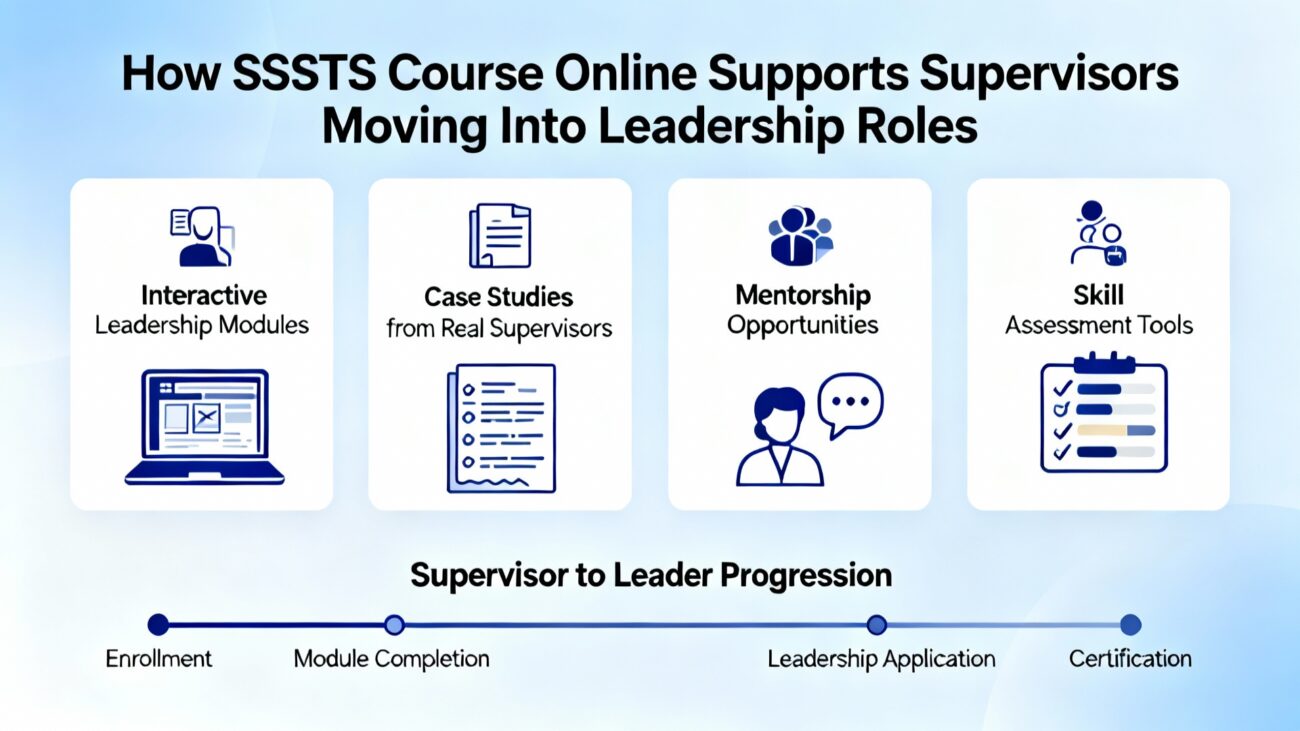
The construction industry relies heavily on effective supervision. Supervisors are the bridge between management and workers, ensuring that projects progress safely, efficiently, and according to plan. However, moving from a supervisory position into a leadership role requires more than practical experience. It demands a structured understanding of risk management, communication, legal compliance, and team coordination.
Structured training, such as the SSSTS course online, provides supervisors with the tools to develop these skills. Additionally, pairing SSSTS with complementary programmes like smsts training online can prepare supervisors for higher responsibility, giving them a strong foundation for leadership. This article explores how SSSTS training equips supervisors to transition successfully into leadership roles.
Understanding the Role of a Construction Supervisor
Supervisors play a critical role in the day-to-day functioning of construction sites. Their responsibilities typically include:
- Monitoring health and safety compliance
- Coordinating workforce activities
- Communicating instructions clearly to workers
- Reporting hazards and incidents
- Ensuring tasks are completed on schedule
While supervisors have direct oversight of teams, leadership roles require a broader perspective. Leaders influence organisational culture, manage multiple teams, make strategic decisions, and ensure compliance across projects. SSSTS training bridges the gap between practical supervision and formal leadership development.
What the SSSTS Course Covers
The Site Supervisors’ Safety Training Scheme (SSSTS) focuses on health and safety awareness for supervisors. The training is designed to provide foundational knowledge that aligns with UK construction regulations.
Key topics typically covered include:
- Health and safety legislation and responsibilities
- Risk assessment and hazard control
- Site organisation and method statements
- Accident prevention and incident reporting
- Communication strategies and leadership principles
- Promoting a positive safety culture
Supervisors gain an understanding of how safety, compliance, and team management intersect. This foundation allows them to assume leadership roles more confidently, especially when combined with further management training such as smsts training online.
How SSSTS Training Builds Leadership Potential
1. Strengthening Risk Awareness
Leadership in construction requires proactive risk management. Supervisors trained through SSSTS learn to identify hazards, assess risks, and implement control measures.
By developing a structured approach to safety, supervisors can make informed decisions and guide their teams confidently. This approach not only protects workers but also prepares supervisors to handle broader responsibilities in leadership roles.
2. Improving Communication Skills
Effective communication is a core leadership skill. Supervisors often manage diverse teams, sometimes with varying levels of experience and skill. SSSTS training emphasises clear, concise, and context-specific communication.
Participants learn how to:
- Explain procedures to teams
- Provide constructive feedback
- Report issues to higher management
- Facilitate safety briefings
These communication skills translate directly into leadership, enabling supervisors to motivate, guide, and manage multiple teams effectively.
3. Developing Decision-Making Confidence
Supervisors frequently make decisions under pressure. The SSSTS course online incorporates scenario-based learning that mimics real-world challenges.
By evaluating situations, weighing options, and determining appropriate actions, supervisors build confidence in their decision-making. This capability is essential for leadership, where decisions can impact multiple teams, project timelines, and overall site safety.
4. Understanding Legal Responsibilities
Leadership positions require a deep understanding of legal obligations. SSSTS training equips supervisors with knowledge of UK construction laws, health and safety regulations, and reporting requirements.
Supervisors who understand these obligations are better prepared to manage compliance across multiple projects, a crucial aspect of leadership. For those planning to advance further, additional courses like smsts training online expand this legal knowledge to site management responsibilities.
5. Fostering a Positive Safety Culture
Leadership extends beyond task management. It involves shaping organisational culture, including attitudes toward safety.
SSSTS training encourages supervisors to:
- Model safe behaviour
- Engage teams in safety discussions
- Promote accountability and responsibility
- Encourage proactive risk management
Developing a safety-oriented mindset is a critical step for supervisors aiming for leadership positions.
The Role of Online Learning in Leadership Development
The SSSTS course online format offers flexibility for busy supervisors. Online learning allows participants to complete modules at their own pace without disrupting work schedules. Key advantages include:
- Access to interactive content and case studies
- The ability to revisit topics for better understanding
- Learning from anywhere without commuting
- Integration of training into real-world work situations
This flexibility makes it easier for supervisors to engage with leadership-focused training and apply it immediately to their daily responsibilities.
Integrating SMSTS Training Online for Career Advancement
While SSSTS equips supervisors with foundational leadership skills, progressing to higher-level leadership often requires additional training. SMSTS training online provides advanced education for site managers and leaders, building on the safety and risk management principles learned in SSSTS.
Combining these programmes allows supervisors to:
- Understand complex risk management for entire sites
- Lead multiple teams effectively
- Plan and organise construction projects strategically
- Ensure compliance across larger projects
This structured learning path supports a smooth transition from supervisor to site manager or construction leader.
Practical Application of Skills Learned
One of the main benefits of SSSTS training is its direct applicability. Supervisors can immediately implement concepts learned on site. Examples include:
- Conducting thorough pre-task risk assessments
- Implementing method statements for safe operations
- Leading team briefings and safety talks
- Monitoring adherence to health and safety policies
- Reporting incidents and initiating corrective actions
By applying these skills consistently, supervisors demonstrate readiness for leadership responsibilities and improve overall site performance.
Building Confidence for Leadership Challenges
Leadership in construction often involves managing multiple priorities simultaneously. Supervisors must balance safety, productivity, team morale, and deadlines. SSSTS training builds confidence by:
- Providing structured frameworks for risk management
- Offering scenarios that mimic real workplace challenges
- Highlighting effective communication and problem-solving techniques
- Reinforcing accountability and decision-making principles
This confidence is crucial for supervisors moving into roles where their decisions affect wider teams and project outcomes.
Encouraging Continuous Professional Development
Leadership requires ongoing learning. The SSSTS course online is often the first step in a continuous professional development (CPD) pathway. Supervisors who engage in online training are more likely to:
- Pursue further education in SMSTS and project management
- Stay current with safety legislation updates
- Incorporate emerging best practices into site operations
- Develop mentorship skills for junior staff
Continuous learning ensures that supervisors evolve into capable and adaptable leaders.
Supporting Team Development and Motivation
Leadership is not just about managing tasks; it’s also about developing people. SSSTS training teaches supervisors to engage with their teams constructively. Supervisors learn to:
- Identify training needs among team members
- Delegate responsibilities appropriately
- Encourage feedback and team collaboration
- Recognise achievements and reinforce positive behaviour
These skills are essential for creating a motivated, accountable, and efficient workforce.
Preparing for Career Progression
The transition from supervisor to leader often requires formal qualifications to validate experience and knowledge. Completing SSSTS training online demonstrates commitment to professional development and a proactive approach to learning.
Supervisors who pair SSSTS with advanced programmes like smsts training online gain a competitive edge, making them well-prepared for leadership opportunities in construction management, project supervision, and site coordination.
Creating Safer and More Efficient Worksites
Ultimately, the combination of knowledge, skill, and confidence developed through SSSTS training leads to tangible improvements on site. Supervisors who understand risk management, communication, and compliance can:
- Reduce accidents and incidents
- Minimise project delays caused by unsafe practices
- Improve team efficiency and coordination
- Foster a culture of accountability and professionalism
Safe and efficient worksites are a reflection of effective leadership, demonstrating that supervisors trained in SSSTS are well-positioned to take the next step in their careers.
Conclusion
Supervisors in construction occupy a critical position between management and operational teams. Transitioning into leadership roles requires more than practical experience; it requires structured knowledge of risk management, legal responsibilities, communication, and team development.
The SSSTS course online provides supervisors with this foundational knowledge, helping them develop the skills necessary for leadership roles. By complementing SSSTS with further learning, such as smsts training online, supervisors can confidently progress into leadership positions while improving site safety, efficiency, and team performance.
Investing in structured training ensures that supervisors are prepared to lead with competence, confidence, and a clear understanding of how to manage both people and projects effectively.
Ai in Law: Transforming the Legal Landscape
Chemical Peel vs Microdermabrasion According to the Best Doctors in Dubai
Jawline Filler Injections for a More Contoured Face
Basmati Rice in Pakistan: Export Quality vs Local Market Explained
Rice Exporter in Pakistan: Export Tips for Small and Medium Businesses
