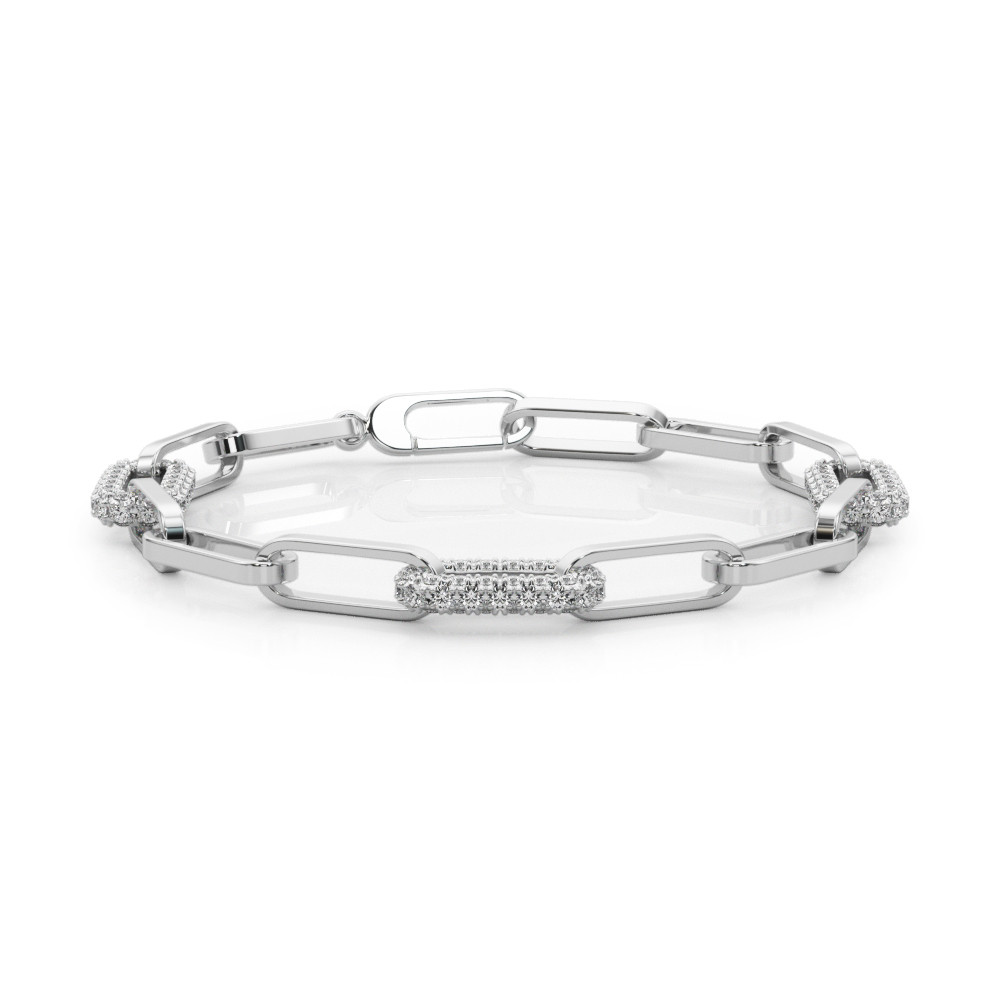
Few pieces of jewelry possess the combination of subtle daily elegance and historical gravity that a gold and diamond bracelet commands. It is more than an accessory; it is a ribbon of light that spans human history, transitioning from a symbol of power and religious fealty in ancient empires to the ultimate expression of personal luxury and lasting investment today.
For over 6,000 years, the bracelet has adorned the wrists of pharaohs, empresses, and modern icons, its materials evolving from hammered gold to the intricate diamond-set masterpieces we cherish. At Wulf Diamond Jewelers, we believe that understanding this remarkable journey not only deepens your appreciation for the jewelry you own but empowers you to choose a piece with genuine enduring value.
In this guide, we delve into the rich origins of this classic adornment, explore the critical elements that determine its modern worth, and provide the expert insight you need to make your next bracelet a true legacy piece.
Part I: The Genesis of the Wrist Adornment
The story of the bracelet is intrinsically linked to the history of precious metals, beginning long before the advent of diamond cutting. Its roots are steeped in ritual and rank.
The Golden Dawn: Bracelets in Antiquity
The earliest known gold objects date back over six millennia to the Varna Necropolis in modern-day Bulgaria, but it was in Ancient Egypt where the gold bracelet truly established its cultural significance. Egyptians, viewing gold as the flesh of the gods and a symbol of immortality, adorned their pharaohs and high-ranking nobles with heavy, hammered gold cuffs and bangles. These pieces were often engraved with hieroglyphs, powerful scarab beetles for rebirth, and set with colored gemstones like turquoise and lapis lazuli—a tradition not of decoration, but of divine connection and protection.
In Ancient Greece and Rome, the use shifted. Bracelets, often worn in pairs, became a key element of military dress (the armilla was a sign of military distinction) and a favored ornamentation for women. Here, gold’s malleability allowed for intricate coil, snake, and wire designs, signifying wealth and status. It was during the height of the Roman Empire that diamonds, slowly making their way along the Silk Road from India, would occasionally appear in royal European jewelry, though they were valued more for their perceived mystical properties and hardness than for their sparkle.
Medieval Power and the Renaissance Sparkle
Following the collapse of Rome, the use of ostentatious gold jewelry was largely restricted to the Church and royalty in Europe, but the Crusades in the Middle Ages fundamentally changed the flow of materials. European knights returning from the East brought back a greater abundance of gold and, critically, more direct access to gemstones, including the Indian diamond.
The true transformation, however, came during the Renaissance. With the rise of advanced craftsmanship and the first rudimentary diamond-cutting techniques (like the simple point cut), diamonds were beginning to be viewed not just as talismans, but as stones capable of reflecting light. Jewelers in cities like Venice and Antwerp began setting small, rough-cut diamonds into ornate gold links, marking the slow but definitive transition from simple gold adornment to the diamond-set statement piece.
Part II: The Defining Eras of Diamond Bracelet Design
The evolution from bulky bangles to the delicate, flexible forms of modern diamond bracelets is a story told through the key design movements of the last two centuries.
The Victorian and Edwardian Eras
The 19th century saw diamond jewelry become more accessible to the burgeoning middle class. Victorian-era bracelets often featured elaborate designs, incorporating romantic motifs like bows, stars, and floral patterns set in gold, frequently paired with other sentimental gems.
The start of the 20th century, with its Edwardian period, ushered in an era of light, airy design. Jewelers favored platinum over gold for its strength, allowing for delicate settings that minimized metal visibility and maximized the diamond’s brilliance. White gold—an alloy designed to mimic platinum—emerged later, helping to create the illusion of diamonds floating magically on the wrist, a style that still influences classic bracelet design today.
The Rise of the Tennis Bracelet
Perhaps the most famous diamond bracelet style of all time is the in-line diamond bracelet, affectionately known today as the Tennis Bracelet.
This continuous, flexible line of individually set diamonds—typically in a prong or bezel setting—was already a staple of luxury jewelry by the mid-20th century. However, its modern moniker was cemented in 1987 when tennis star Chris Evert famously paused a match at the US Open to recover her diamond bracelet, which had snapped off her wrist. The incident, broadcast globally, immortalized the style and highlighted the need for a secure, durable clasp, which has since become a hallmark of any quality bracelet.
Today, the Tennis Bracelet remains the quintessential diamond bracelet—versatile enough for the court and elegant enough for a gala.
Part III: The Modern Buyer’s Guide to Investment Value
Whether you are drawn to the classic tennis bracelet, a structured diamond bangle, or a modern chain-link design, purchasing a piece of this caliber requires diligence. True investment value lies in the balance of quality, security, and craftsmanship.
The 4 Cs of Bracelet Diamonds
When selecting a bracelet, the Carat Total Weight (CTW)—the combined weight of all diamonds—is only one factor. The true value is determined by the collective quality of the stones:
- Cut: This is paramount. Since bracelet diamonds are often smaller, a superior Cut maximizes the light performance and brilliance of every stone, making the CTW look brighter and larger than it is.
- Color: For an unbroken line of diamonds, consistency in color is key. Even if the diamonds are in the G-I Near Colorless range, they must be meticulously matched across the entire length to avoid any noticeable color variations.
- Clarity: Look for “eye-clean” stones. Due to their small size, diamonds in a bracelet do not need flawless clarity, but you should ensure inclusions are not visible without magnification.
The Security and Setting: A Non-Negotiable
A diamond bracelet’s primary point of failure is its security. An expertly crafted bracelet features two crucial components:
- The Setting: The setting dictates how much light reaches the stone and how secure it is.
- Prong Settings: Offer maximum sparkle as they expose the most diamond surface area. They require regular professional inspection.
- Bezel Settings: Metal fully encircles the diamond, offering superior protection for active wearers and a sleek, contemporary look.
- Channel Settings: Diamonds are placed in a metal channel without visible prongs, providing a smooth surface and excellent security.
- The Clasp: A high-quality bracelet should feature a double-locking clasp—typically a box clasp with one or two folding safety catches (sometimes called a figure-eight safety). This redundancy is the most important safeguard against accidental loss.
Choosing Your Metal
While 14K and 18K Yellow Gold and Rose Gold offer rich warmth, Platinum and White Gold remain the most popular choices for diamond settings. This is because their white hue reflects less color into the diamond, enhancing its perceived brilliance and whiteness. Platinum, in particular, is the most durable and dense metal, ideal for holding diamond settings firmly.
Part IV: The Wulf Diamond Jewelers Promise
A diamond and gold bracelet is a piece that should last for generations. Like any legacy item, it requires care and the attention of experts.
The Role of Your Local Jeweler
When you purchase a high-value piece, you are not just buying the metal and stones—you are investing in the craftsmanship and the long-term support. At Wulf Diamond Jewelers, we emphasize:
- Annual Security Checks: Even the strongest prong can wear down. Our service includes an annual inspection where we check the tension of every setting and ensure the clasp mechanism is fully functional. This preventative maintenance is the best insurance against diamond loss.
- Expert Sizing and Fit: A bracelet that is too loose is at risk of damage or loss; one that is too tight is uncomfortable. We ensure your new piece is sized perfectly, allowing just enough movement for comfortable wear while remaining secure.
- Provenance and Sourcing: We stand behind the ethical sourcing and quality of every diamond in our collection, providing you with peace of mind that your investment adheres to the highest industry standards.
A diamond and gold bracelet is a profound statement—a shimmering link between history and your own personal story. By understanding its past and focusing on the crucial elements of cut, security, and professional care, you ensure that this exquisite piece remains a source of dazzling beauty and an heirloom of true and lasting value.
