Thyroid disorders affect millions of people worldwide, with thyroid goiters being one of the most common conditions. While surgery and radioactive iodine have long been the standard treatment options, many patients today are seeking minimally invasive alternatives. One such option is thyroid embolization, a procedure that has gained increasing attention for its effectiveness and safety profile.
This article explores the safety of thyroid embolization in detail, explaining how the procedure works, who it is best suited for, and what patients should know about outcomes and risks—especially regarding Thyroid Embolization: Beads & Particles Safety and Thyroid Goiter Embolization Treatment.
Understanding Thyroid Embolization
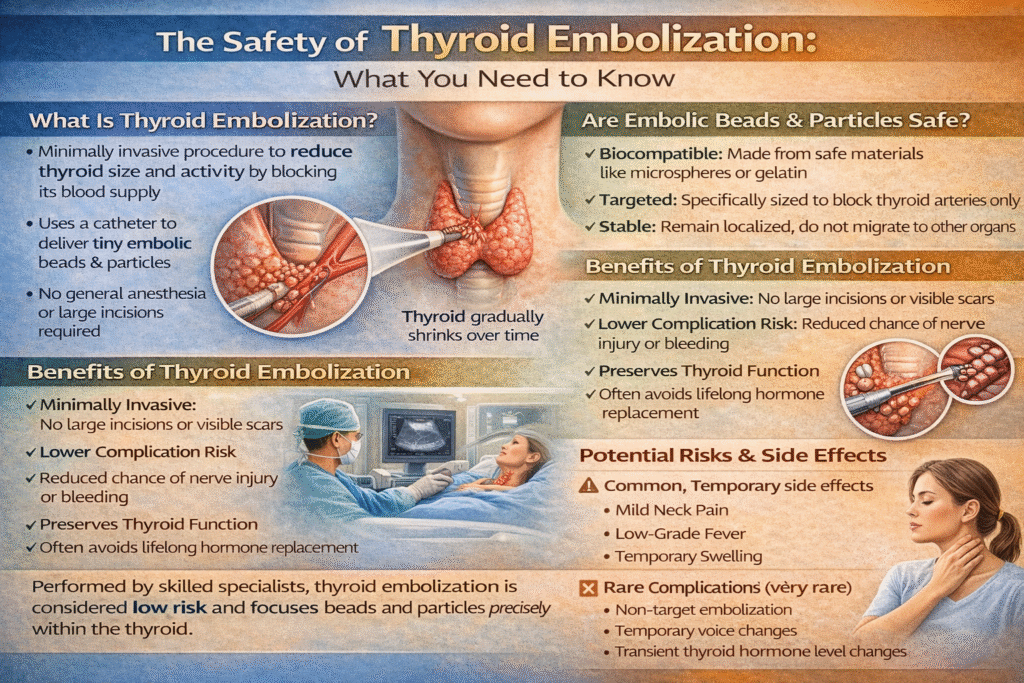
Thyroid embolization is a minimally invasive interventional radiology procedure designed to reduce the size and activity of the thyroid gland by blocking its blood supply. By selectively targeting the arteries that feed the thyroid, embolization causes the gland or goiter to shrink over time.
Unlike surgery, thyroid embolization does not require general anesthesia or large incisions. Instead, a small catheter is inserted—typically through the femoral or radial artery—and guided to the thyroid arteries using advanced imaging techniques. Tiny embolic materials are then released to restrict blood flow to the overactive or enlarged tissue.
This technique has emerged as a promising Thyroid Goiter Embolization Treatment, particularly for patients who are not ideal candidates for surgery.
Why Safety Is a Key Consideration
When evaluating any medical procedure, safety is one of the most important concerns. Thyroid embolization is no exception. Patients often ask whether blocking blood flow to the thyroid could affect surrounding structures, hormone levels, or long-term thyroid function.
Clinical studies and real-world use have shown that thyroid embolization, when performed by experienced interventional radiologists, has a strong safety profile. Complications are generally mild, temporary, and far less frequent than those associated with traditional surgical approaches.
Thyroid Embolization: Beads & Particles Safety Explained
One of the most common questions patients ask is about the materials used during the procedure. This is where Thyroid Embolization: Beads & Particles Safety becomes especially relevant.
What Are Embolic Beads and Particles?
Embolic beads and particles are small, biocompatible materials designed to block blood vessels safely and effectively. These particles are:
- Carefully sized to target thyroid arteries only
- Made from materials that do not trigger immune reactions
- Designed to remain stable within the body
Once injected, they lodge within the targeted vessels, reducing blood flow to the thyroid tissue without affecting nearby organs.
Are These Materials Safe?
Extensive use of embolic agents in other procedures—such as uterine fibroid embolization and liver tumor embolization—has demonstrated their long-term safety. In thyroid embolization, studies show that these beads remain localized and do not migrate to critical structures like the brain or lungs.
The precision of modern imaging and catheter technology further enhances Thyroid Embolization: Beads & Particles Safety, minimizing unintended embolization.
Benefits of Thyroid Goiter Embolization Treatment
For patients with benign thyroid goiters, embolization offers several advantages over traditional treatments.
1. Minimally Invasive Approach
There are no surgical incisions, stitches, or visible scars. Most procedures are performed using local anesthesia with mild sedation.
2. Reduced Risk of Complications
Compared to surgery, thyroid embolization carries a lower risk of:
- Nerve injury (such as damage to the recurrent laryngeal nerve)
- Hypocalcemia due to parathyroid injury
- Infection or bleeding
3. Preservation of Thyroid Function
Unlike total or partial thyroidectomy, Thyroid Goiter Embolization Treatment often preserves enough thyroid tissue to maintain normal hormone levels, reducing the need for lifelong hormone replacement.
4. Shorter Recovery Time
Most patients return home the same day or within 24 hours and resume normal activities within a few days.
Potential Risks and Side Effects
While thyroid embolization is considered safe, no medical procedure is entirely risk-free. Understanding potential side effects helps patients make informed decisions.
Common, Temporary Side Effects
- Mild neck pain or discomfort
- Low-grade fever
- Fatigue for a few days
- Temporary swelling of the thyroid
These symptoms are usually managed with over-the-counter medications and resolve within a week.
Rare Complications
Rare but possible complications include:
- Non-target embolization (minimized with experienced operators)
- Temporary voice changes
- Transient changes in thyroid hormone levels
Importantly, serious complications are uncommon, especially when the procedure is performed at specialized centers.
Who Is an Ideal Candidate?
Thyroid embolization is not for everyone, but it can be an excellent option for:
- Patients with benign thyroid goiters causing compressive symptoms
- Individuals who are poor surgical candidates due to age or medical conditions
- Patients who wish to avoid surgery or radioactive iodine
- Those seeking a thyroid-preserving treatment
A thorough evaluation—including imaging, blood tests, and clinical assessment—is essential before proceeding.
Long-Term Safety and Effectiveness
Long-term data on Thyroid Goiter Embolization Treatment shows sustained goiter volume reduction, often between 40% and 70% within six to twelve months. Symptom improvement—including relief from swallowing difficulties and neck pressure—is commonly reported.
Importantly, follow-up studies suggest that thyroid embolization does not increase the risk of malignancy or long-term thyroid dysfunction when performed appropriately.
Comparing Thyroid Embolization to Surgery
| Factor | Thyroid Embolization | Thyroid Surgery |
| Invasiveness | Minimally invasive | Highly invasive |
| Anesthesia | Local / mild sedation | General anesthesia |
| Hospital Stay | Same day or overnight | Several days |
| Scarring | None | Visible neck scar |
| Hormone Replacement | Often not required | Frequently required |
This comparison highlights why many patients now consider embolization a safe and appealing alternative.
The Importance of Expert Care
The safety of thyroid embolization largely depends on the expertise of the medical team. Interventional radiologists trained in thyroid vascular anatomy and embolization techniques play a critical role in ensuring optimal outcomes.
Advanced imaging, careful patient selection, and high-quality embolic materials are key factors in maximizing Thyroid Embolization: Beads & Particles Safety.
Final Thoughts
Thyroid embolization represents a significant advancement in the treatment of thyroid goiters and related conditions. With a strong safety record, minimal recovery time, and effective symptom relief, it has become an increasingly popular option for patients seeking alternatives to surgery.
Understanding the science behind Thyroid Embolization: Beads & Particles Safety and the benefits of Thyroid Goiter Embolization Treatment empowers patients to make informed, confident healthcare decisions. As research continues and techniques evolve, thyroid embolization is likely to play an even greater role in modern thyroid care.
