
There are parts of abuse that live beyond memory. They live in the body. Long after the details blur, the body remembers what the mind tries to forget.
For Tina Strambler, those memories are etched into her skin.
“Even now, decades later, I still carry scars on the outside of my thighs,” she says quietly. “They are faint but permanent—thin reminders of the beatings we endured.”
The scars come from a paddle—but not just any paddle. Her uncle had placed nails into it so that only the tips showed through. Not enough to kill. Not enough to leave evidence that anyone would question. Just enough to hurt. Just enough to leave marks that would fade on the surface but never fully disappear underneath.
“I remember the sound more than anything,” Strambler recalls. “The dull crack of the paddle, followed by the sharp intake of breath as my body tried to understand what was happening.”
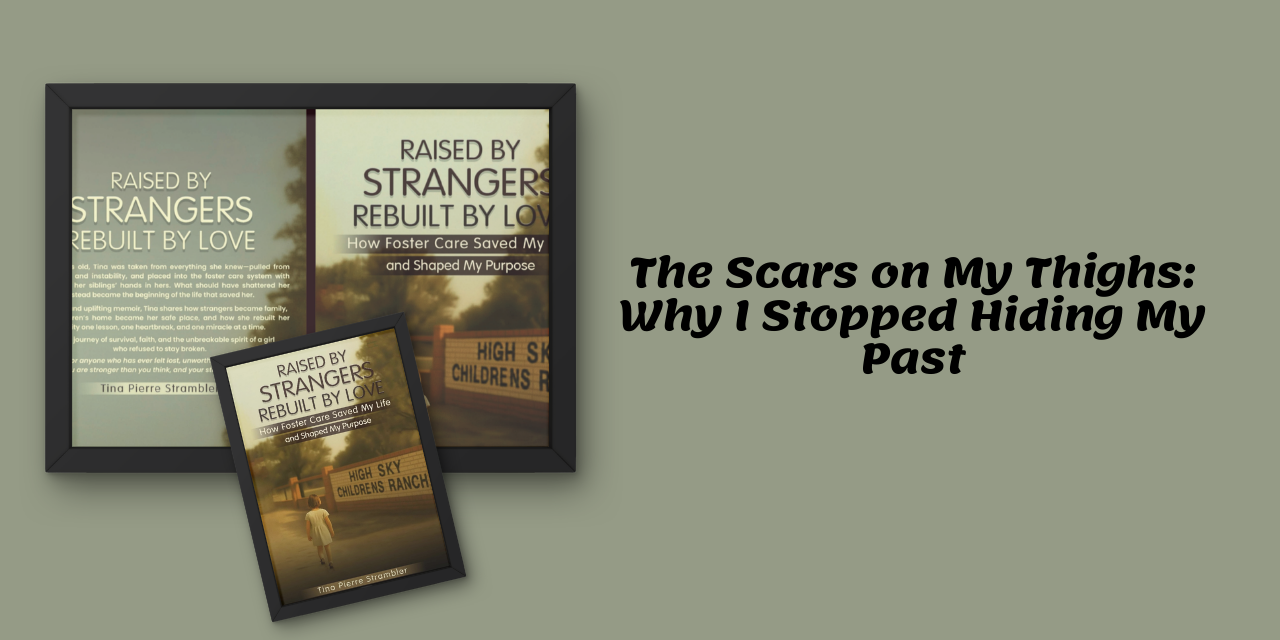
Amazon: Raised by Strangers, Rebuilt by Love: How Foster Care Saved My Life and Shaped My Purpose
The Marks That Don’t Fade
Strambler was five years old when she and her two siblings were sent to live with an aunt and uncle in Midland, Texas—relatives who were supposed to keep them safe. Instead, the children entered a house of horrors.
There were nightly rituals where their aunt lined them up in the hallway, grabbing their chins and searching their eyes for “devils” before punishments began. There were hours of standing on tiptoes, arms stretched toward the top of the refrigerator, muscles shaking until they gave out. There was a dog bowl on the floor where her brother was forced to eat.
And there was the paddle.
“I remember being told not to cry. Being told this was punishment. Being told this was discipline,” Strambler says. “But it wasn’t about discipline. It was about power. About control. About breaking something inside a child and calling it obedience.”
The Body Keeps Score
For years, Strambler carried those scars in silence—not just on her skin, but inside her heart. The physical marks were reminders of pain, yes. But they were also symbols of something deeper: shame.
“I carried the shame of that abuse as if it belonged to me,” she admits. “I questioned myself. I wondered if I had done something to deserve it. If I had been bad. If I had been weak. That is what abuse does—it teaches children to blame themselves for the crimes of adults.”
There were other violations, too—the ones harder to name. The sexual abuse. The moments when her body learned too early that it wasn’t her own.
“I didn’t have language for what was happening to us,” she says. “I didn’t know it was wrong in the way adults define wrong. I only knew it felt terrifying and humiliating and deeply unsafe.”
She learned to dissociate—to leave her body while it was still standing there. To stare at the wall and disappear inside her own mind while someone else decided what happened to her.
The Long Road to Reclaiming Her Body
Healing, Strambler says, didn’t come all at once. It came slowly, in pieces.
Through therapy. Through safe adults who showed her that love doesn’t hurt. Through learning, slowly and painfully, that her body was hers.
“I have touched those scars as an adult,” she says. “Tracing the places where pain once lived, realizing that what was done to me wasn’t just something that happened—it was something that was inflicted. Something intentional. Something cruel.”
That realization was both devastating and liberating. The abuse was never her fault. It was never about her. It was about the brokenness of the people who hurt her.
The Tattoo That Wasn’t Hers
When Strambler was 13, during her brief and painful return to Louisiana to live with her mother, she made a choice that would haunt her for years: she got a tattoo on her right arm that said “LOVE.”
Her sister gave it to her during one of those chaotic Louisiana nights when the house was full of people, noise, drugs, confusion, and bad decisions.
“At the time, I thought it made me look older, tougher, like I fit into the world around me,” she recalls. “Truthfully, I was just a little girl trying to feel like she belonged somewhere.”
When she returned to High Sky Children’s Ranch in Midland, that tattoo felt like a spotlight—a symbol of everything she had run toward in Louisiana and everything she had run away from.
“For years, that little word on my arm felt like it defined me in ways I couldn’t explain,” she says. “It felt like a scar from a moment when I was lost. A reminder of a version of myself I didn’t want to grow into. A piece of Louisiana I didn’t want to keep.”
Letting Go
It wasn’t until last year—after decades of healing, growing, forgiving, and reclaiming her own identity—that Strambler finally had the tattoo removed.
“Watching it fade from my skin felt like watching a chapter close,” she says. “Like releasing weight I didn’t realize I’d been carrying. Like taking back a piece of myself I had given away too young.”
The day the tattoo disappeared, she says, is still one of the quietest joys she’s known.
“Not because tattoos are wrong,” she explains, “but because that one wasn’t mine. It belonged to a moment. A wound. A longing. Removing it felt like choosing myself. Choosing who I had become instead of who I had been forced to be.”
Scars as Proof of Survival
Today, Strambler doesn’t hide her scars—not the ones on her thighs, and not the ones invisible to the eye.
“Those scars on my thighs are not just reminders of pain,” she says. “They are proof that I lived. That I endured. That what was meant to destroy me did not succeed.”
She speaks about her past openly now, not for sympathy, but because she understands something essential: silence protects abusers, and truth protects survivors.
“What happened to us was real. It was wrong. And it should never have happened. But it did. And I am still here.”
A Message for Survivors of Abuse
For anyone carrying scars—visible or invisible—Strambler offers this:
“Your body is yours. It always was, even when someone tried to take that from you. The shame you carry? It doesn’t belong to you. It belongs to the people who hurt you. Give it back to them. Keep walking. Keep healing. Keep becoming.”
She pauses, reflecting on her own journey.
“I learned that survival itself was a form of resistance. Every day I kept going was a day they didn’t win. And now, decades later, I am not just surviving. I am thriving. I am whole. I am free.”
Sculpt Your Ideal Nose with Rhinoplasty
What to Expect During a Visit from Plumbing Services Dallas Professionals
How do Special Event Lighting Services in Kingston Work?
Unlocking Global Opportunities Through Language Learning in Mumbai
Finding the Best Gastroenterologist in Vashi: A Real, Human Journey Toward Better Digestive Health
About the Author