


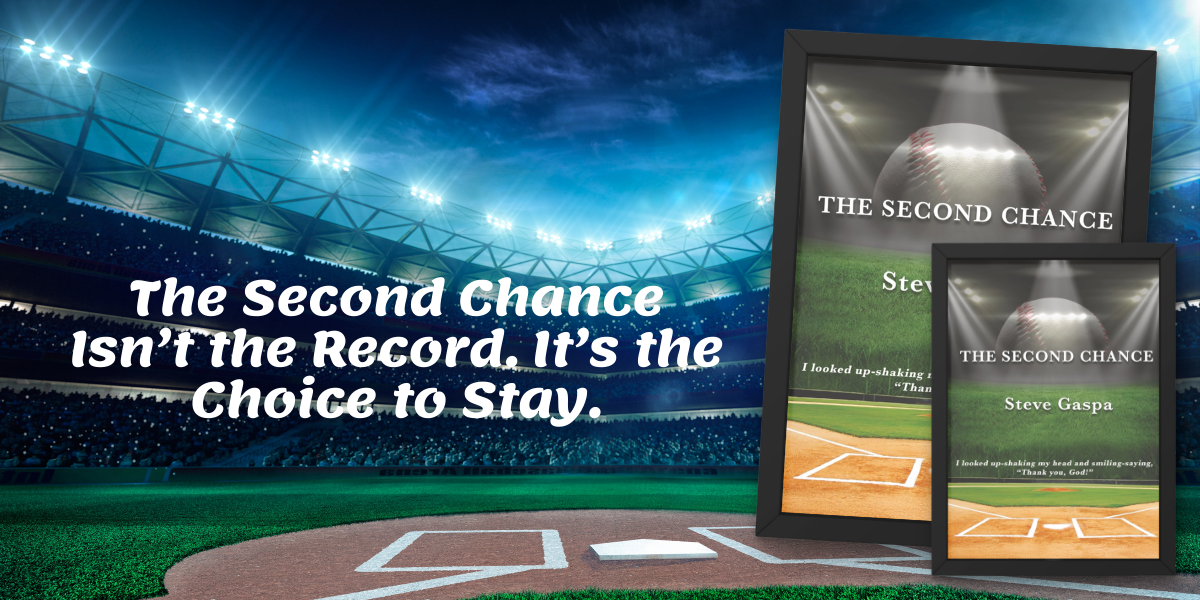
Steve Gaspa’s latest novel reframes redemption as commitment, not applause.
In sports stories, a second chance often comes in the form of a comeback. A number was reclaimed. A new record has been set. A moment that shows that everything worked out. Steve Gaspa’s latest book, The Second Chance, doesn’t care about that version.
Gaspa’s book brings up a quieter, harder idea: maybe you can’t get a second chance. It could be a choice you make every day, with no guarantees.
At first glance, Michael Stevens has the kind of second chance that everyone wants. He is a professional baseball player who can break records. People love him. The story writes itself. But the book slowly breaks down that idea. The real turning point for Michael doesn’t happen in the stadium. It happens at times when most people would rather not be there. Rooms in hospitals. Conversations that occur late. Choices that don’t seem impressive from the outside.
Michael has been avoiding his feelings and grieving for years, but now he has to face a different kind of responsibility. Order, not romance, is what commitment brings to the story. Marriage is not depicted as a grand gesture. Being a father isn’t seen as fate. Both come under stress, in the middle of fear and doubt, and want you to be there instead of doing something.
Gaspa takes these decisions seriously, not personally. In this book, stability is not soft. It’s hard. It tells Michael to stay even though it would be easier for him to leave. To make something that will last instead of looking for relief. To understand that being an adult doesn’t mean fixing the past, but it does mean not letting chaos run the future.
That tension between order and disorder runs through every chapter. The man who used to numb himself with distractions and success now has to show up in unglamorous ways. No clapping. No numbers. Just keep doing it. The book says that this is where real change starts, even before anyone else sees it.
The Second Chance is written like a screenplay and with the restraint of real life. It goes against the idea that personal growth is loud or cinematic. Its most important moments are small and can’t be changed. Signing forms, making promises, and taking responsibility when no one is looking.
Readers have reacted to this change in focus by pointing out how unusual it is to see achievement pushed to the back while permanence takes center stage. Gaspa’s book makes the case for something less flashy and more lasting: the quiet courage of staying. This is in a culture that is obsessed with milestones and highlights.
That argument is relevant right now. The Second Chance asks what happens after the cheering stops, since public success is still the main topic of conversation about worth. Who are you loyal to now? What kind of structure are you okay with living in?
You can now buy The Second Chance from big online stores and some bookstores.
People who want to read a story that values responsibility over fame can buy the book today and find out why the best second chance isn’t the record, but the life that comes after it.
Contact:
Author: Steve Gaspa
Amazon: The Second Chance
Client’s Email: stevegaspa@rocketmail.com
About the Author